


What an Autonomous Fleet Support Hub in Sacramento
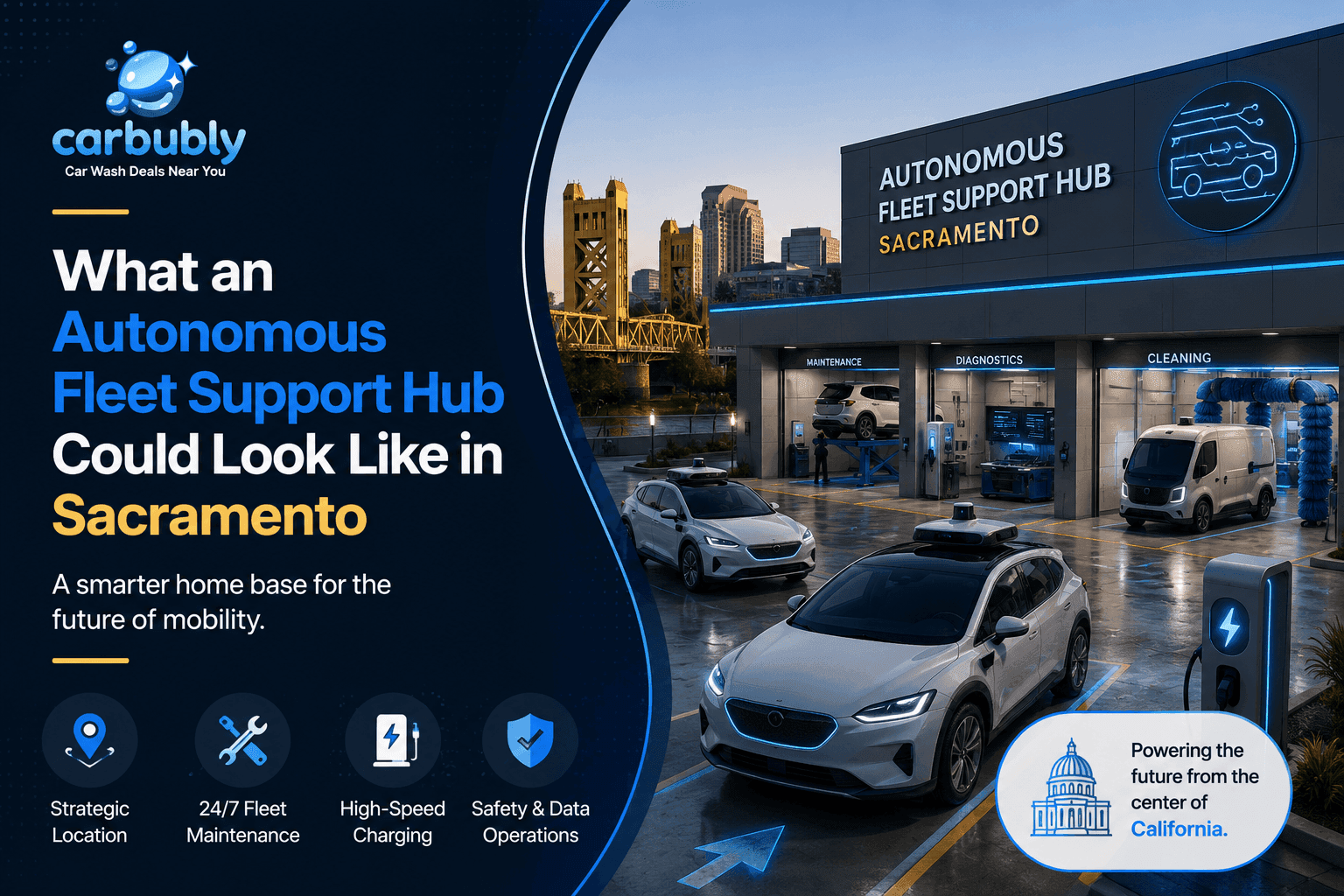
An autonomous fleet support hub Sacramento could look like a local operations center where autonomous, electric, shared, or high-use vehicles are charged, cleaned, inspected, maintained, updated, staged, and prepared for safe daily service.
The idea sounds futuristic, but the actual work is very practical. Any vehicle that drives many hours a day needs support. It needs a place to charge, a place to be cleaned, a checklist for tires and glass, a plan for sensor areas, a process for software or diagnostic reviews, and a team that can decide whether it is ready to go back on the road.
For Sacramento, this topic is especially interesting because the region sits inside California’s larger autonomous vehicle conversation. The California DMV authorizes autonomous vehicle testing and deployment through permit categories such as testing with a safety driver, driverless testing, and deployment, while Sacramento’s own mobility and curb-management work touches the streets, parking, curbs, and public spaces those vehicles would use.
This guide explains what an autonomous fleet support hub could include, why Sacramento is a logical place to discuss it, how vehicle cleaning and detailing would fit into the system, and what everyday drivers can learn from the same idea. For local drivers comparing “Exclusive car wash deals, only on Carbubly.”, the lesson is simple: clean, reliable vehicle care depends on matching the right service to the right need.
Key Takeaways
An autonomous fleet support hub is not just a parking lot; it is a working operations site for charging, cleaning, inspection, maintenance, staging, and vehicle readiness.
Sacramento is a useful place to discuss this because it connects state policy, regional roads, local streets, suburbs, commuter routes, and future mobility planning.
Autonomous and high-use EV fleets may need exterior cleaning, sensor-area care, interior resets, glass cleaning, wheel cleaning, tire checks, and software diagnostics.
Cleaning matters because autonomous and driver-assistance vehicles often rely on cameras, sensors, glass, lights, and clear exterior surfaces.
Future fleet hubs would need responsible water handling, EV-safe service procedures, trained staff, local coordination, and clear operating checklists.
Carbubly is a marketplace for car wash deals that helps drivers discover, compare, purchase, and redeem offers from trusted local car wash and detailing providers.
What Is an Autonomous Fleet Support Hub?
An autonomous fleet support hub is a physical or operational base that helps keep a fleet of vehicles ready for service. It could support self-driving vehicles, electric vehicles, robotaxis, delivery vehicles, shared shuttles, rideshare fleets, rental fleets, or other high-use vehicles that need regular care.
The word hub is important. This would not be a random parking lot where cars sit overnight. A true support hub would be organized around repeated tasks that keep vehicles working safely and dependably.
A future hub could include:
EV charging stations
Vehicle staging lanes
Exterior wash areas
Interior reset bays
Sensor and camera cleaning stations
Tire and wheel inspection zones
Windshield and glass cleaning areas
Light maintenance bays
Software update or diagnostics stations
Dispatch and fleet-monitoring systems
Staff work areas
Parts and cleaning-supply storage
Water capture or drainage systems
Incident review and vehicle hold areas
The main job is simple: make sure vehicles are clean, charged, inspected, and ready before they return to the road.
For a Sacramento autonomous fleet support hub, this could mean serving vehicles that move between downtown Sacramento, state office areas, medical centers, airport routes, transit connections, shopping districts, and nearby cities such as Citrus Heights, Roseville, Rancho Cordova, Folsom, Elk Grove, Davis, and West Sacramento.
Why Sacramento Is a Practical Place to Discuss This
Sacramento is California’s capital, but it is also a real-world transportation region. It has commuters, state workers, students, families, delivery routes, transit riders, suburban travel patterns, and major highway connections. That mix makes it a useful place to think about how future autonomous and connected fleets might actually operate.
Sacramento is not San Francisco, Los Angeles, or San Jose. Its road network, neighborhoods, suburbs, weather patterns, parking needs, and daily travel habits are different. A fleet-support model that works in a dense downtown environment may need adjustment for Sacramento’s wider regional routes and suburban connections.
The City of Sacramento describes its mobility, parking, and curb-management work as supporting access, local businesses, and efficient use of city curbsides. That matters because future fleets would need places to stop, stage, charge, pick up passengers, drop off riders, and return for service.
A Sacramento hub could be useful because it may connect:
Downtown Sacramento service areas
State government travel
Airport and hotel routes
Medical and university-area trips
Suburban commute corridors
Delivery and logistics routes
EV charging infrastructure
Car wash and detailing providers
Fleet maintenance vendors
Transit and first-mile or last-mile mobility
That does not mean Sacramento already has a fully built autonomous fleet hub. It means the city has the right kind of transportation mix to make the concept worth discussing.
What Do the Statistics Say?
A few trusted sources help explain why fleet support, cleaning, charging, and inspection would matter.
The road network is already shared by millions of vehicles. The Federal Highway Administration reported 284,614,269 registered motor vehicles in the United States in 2023 in its State Motor-Vehicle Registrations table. Any future autonomous fleet would operate alongside a large number of human-driven cars, SUVs, trucks, vans, Teslas, EVs, delivery vehicles, and work vehicles.
California has a formal autonomous vehicle permit structure. The California DMV authorizes manufacturers to test and deploy autonomous vehicles under categories including testing with a safety driver, driverless testing, and deployment. This means a fleet hub would not exist apart from regulation; it would support vehicles operating under specific rules and conditions.
Sacramento has official local AV information. The City of Sacramento describes autonomous car services as robotaxis or driverless vehicles and provides local information for residents. This is useful because future fleet operations affect real streets, curbs, parking, public works, and mobility planning.
Vehicle washing has environmental considerations. The EPA explains that outdoor vehicle washing can cause detergent-rich water to flow into storm drains, and that the water may contain nutrients, metals, and hydrocarbons. A fleet hub with repeated cleaning activity would need responsible water-handling procedures.
Fleet-style vehicle washing can involve contaminants. EPA guidance on municipal vehicle and equipment washing notes that wash water can include sediment, detergents, oils, grease, and heavy metals. That supports the need for planned wash areas, drainage, and responsible cleaning practices.
The takeaway is clear: an autonomous fleet support hub is not just about advanced software. It is about operations, infrastructure, compliance, water handling, maintenance, cleaning, and vehicle readiness.
How Would an Autonomous Fleet Support Hub Work?
An autonomous fleet support hub would work in cycles. Vehicles would leave the site, operate in approved service areas, return for charging or inspection, receive cleaning or maintenance, and then go back into service.
A typical cycle might look like this:
A vehicle completes a route, shift, test run, or passenger-service period.
The fleet system checks battery level, mileage, service status, and vehicle condition.
The vehicle returns to the hub or is directed to a service area.
Staff inspect tires, glass, lights, wheels, body panels, cameras, and sensor zones.
The vehicle receives the right cleaning level.
Interior spaces are reset if passengers used the vehicle.
Charging or software diagnostics happen during downtime.
Maintenance issues are flagged.
The vehicle is staged for the next shift.
A good hub would not rely on guesswork. It would use checklists, service logs, inspection notes, cleaning records, charging schedules, and clear rules for when a vehicle is ready or not ready.
The hub would need to answer simple but important questions:
Which vehicles are ready for service?
Which vehicles need charging?
Which vehicles need exterior cleaning?
Which vehicles need interior resets?
Which vehicles have sensor-area issues?
Which vehicles have damage?
Which vehicles need deeper maintenance?
Which vehicles should stay out of service?
That is the unglamorous side of future mobility, but it is what makes a fleet dependable.
What Would Be Inside the Hub?
A useful support hub would likely have several working zones.
EV charging and staging
Many future autonomous or connected fleets are likely to be electric. Charging would be one of the most important parts of the site.
A charging and staging area may include:
Level 2 chargers
DC fast chargers
Queue lanes
Battery-status monitoring
Safe parking layout
Fire-safety planning
Staff access paths
Vehicle dispatch lanes
Charging schedules
Charging affects everything. If the vehicles are not charged at the right time, they cannot serve riders, routes, or delivery tasks.
Exterior cleaning and sensor care
The exterior cleaning area would handle more than shine. It would focus on visibility, readiness, and consistency.
This area may include:
Touchless wash access
Hand wash stations
Glass cleaning tools
Wheel cleaning
Bug removal
Lower-panel cleaning
Camera-area cleaning
Lidar or sensor-zone inspection
Headlight and taillight cleaning
Drying and final checks
Autonomous and driver-assistance vehicles may rely on cameras, radar, lidar, exterior lights, glass, and sensor areas. Dirt, bugs, dust, pollen, road film, rain residue, or bird droppings can collect around those areas. A hub would need a process to check and clean them.
Interior reset bays
For shared vehicles, the inside matters just as much as the outside. A passenger may not notice a software update, but they will notice crumbs, fingerprints, odors, trash, sticky cup holders, or dirty mats.
Interior reset tasks may include:
Trash removal
Lost item check
Vacuuming
Mat cleaning
Seat wipe-down
Interior glass cleaning
Cup holder cleaning
Odor check
Touchpoint sanitizing
Seat belt inspection
Door-handle check
For high-use vehicles, interior cleaning may need to happen several times during an operating day, depending on service type and passenger volume.
Inspection and light maintenance
A fleet hub would need inspection routines for both safety and reliability.
Staff may check:
Tire pressure and tread
Wheel damage
Windshield chips
Wipers
Lights
Cameras
Sensor housings
Body damage
Door operation
Charge port condition
Interior damage
Warning alerts
Software messages
Some issues would be fixed on-site. Others would send the vehicle to a repair partner.
Software and operations support
Autonomous and connected vehicles depend on software. A hub may include an operations area for diagnostics, dispatch, fleet monitoring, incident review, and remote support.
This may involve:
Vehicle health dashboards
Software update scheduling
Diagnostic reports
Route assignment
Incident review
Service logs
Charging status
Cleaning status
Maintenance tickets
A fleet hub would combine physical vehicle care with digital operations.
Why Cleaning Matters for Autonomous Fleets
Cleaning matters because autonomous fleets are high-use vehicles. They may be on the road for long shifts, carrying passengers, driving through weather, collecting road grime, and depending on exterior systems to understand the road environment.
A clean vehicle can support:
Better passenger trust
Clearer glass
Better-looking service
Easier visual inspections
Cleaner camera and sensor areas
More comfortable interiors
Faster readiness checks
Better maintenance visibility
This does not mean cleaning alone makes an autonomous vehicle safe. Safety depends on many systems, rules, sensors, software, operations, maintenance, and human oversight. But cleaning is part of the larger readiness process.
Sacramento conditions could create routine cleaning needs, including:
Tree pollen
Dust from dry lots and construction
Rain residue
Bug splatter from freeway driving
Brake dust
Mud during wet weather
Bird droppings near shaded parking areas
Interior wear from passengers or cargo
A support hub would need to handle these issues repeatedly, not just occasionally.
Service Comparison: Which Cleaning Options Would a Fleet Use?
Different cleaning methods would fit different fleet needs.
Touchless car wash: Useful for light exterior dirt, pollen, rain spots, and lower-contact cleaning. Drivers and fleet operators can explore touchless car wash services when avoiding brush contact is a priority.
Hand car wash: Useful for bugs, dirty wheels, mirrors, lower panels, sensor-adjacent areas, and delicate exterior surfaces. Compare hand car wash services when an automatic wash may not be enough.
Full-service detailing: Useful when interiors need deeper care, including seats, mats, glass, cup holders, odors, stains, or cargo areas. You can book full-service car detailing when the vehicle needs a more complete reset.
Mobile detailing: Useful when vehicles need cleaning at a depot, office, fleet lot, charging hub, or approved parking location.
Express wash: Useful for quick exterior maintenance between deeper cleaning cycles.
A fleet hub would likely use multiple options. Light dust does not need the same response as heavy bugs, dirty wheels, or a passenger spill.
How to Choose the Best Option Today
Even if you do not operate a fleet, the same thinking helps you choose better car care.
Best for budget
Choose the most affordable service that actually solves the cleaning problem.
Good budget choices may include:
Express wash for light exterior dust
Touchless wash for lower-contact exterior cleaning
Hand wash for bugs, wheels, and lower panels
Interior add-ons when the outside is already clean
Full-service detailing only when deeper cleaning is needed
A low price is useful only if the service fits your vehicle.
Best for convenience
Choose a provider near your real routine. Drivers can compare car wash deals in Sacramento. Regional drivers may also compare car wash deals in Citrus Heights, car wash deals in Roseville, car wash deals in Rancho Cordova, car wash deals in Folsom, car wash deals in Elk Grove, car wash deals in Davis, and car wash deals in West Sacramento.
Convenience is not only distance. It is timing, package clarity, service type, redemption rules, and whether the provider can handle your vehicle.
Best for protection and detailing
Choose more careful service when the vehicle has:
Cameras or sensors
Tesla or EV-specific needs
Ceramic coating
Paint protection film
Vinyl wrap
Dark paint
Bug buildup
Dirty wheels
Interior stains
Pet hair
Odors
Passenger wear
For Tesla owners, review Tesla’s car wash guidance before automatic wash situations. Follow the current owner manual and provider instructions.
What Local Businesses Could Support a Fleet Hub?
An autonomous fleet support hub would not operate alone. It would likely need help from local businesses and service partners.
Possible support partners could include:
Car wash providers
Mobile detailers
Full-service detailing shops
EV charging operators
Tire shops
Glass repair providers
Body shops
Fleet maintenance vendors
Tow and roadside support
Security providers
Parking lot operators
Cleaning supply vendors
Software and diagnostics teams
Car wash and detailing providers could become especially useful if they can explain their services clearly.
A strong provider listing should include:
Wash type
Fleet availability
Mobile service options
EV-safe procedures
Tesla experience
Sensor-area cleaning approach
Interior reset options
Wheel cleaning
Glass cleaning
Odor treatment
Water and power requirements
Service area
Appointment rules
Deal redemption steps
Fleet operators and everyday drivers both benefit when service details are clear.
Common Mistakes to Avoid
Thinking a hub is only a parking lot. A real hub needs charging, cleaning, inspections, maintenance, software checks, and staging.
Ignoring cleaning and detailing. High-use vehicles need clean exteriors and interiors to remain useful and trusted.
Assuming every vehicle needs the same wash. Light dust, bug splatter, sensor-area grime, dirty wheels, and interior mess require different services.
Forgetting water handling. Fleet cleaning should account for runoff, drainage, and environmental practices.
Treating EV charging as an afterthought. Charging determines when vehicles can go back into service.
Skipping inspections. Tires, glass, lights, cameras, charge ports, and exterior damage need routine checks.
Overlooking public trust. People are more likely to trust vehicles that are clean, maintained, and easy to understand.
Making unsupported predictions. Autonomous fleets depend on regulation, technology, safety, economics, and public adoption.
Ignoring local street realities. Sacramento has curbs, parking rules, construction, emergency vehicles, bike lanes, events, and neighborhoods.
Forgetting local providers. Car washes, detailers, tire shops, charging operators, and maintenance businesses could all support future mobility.
Where Carbubly Fits Naturally
Carbubly is a marketplace for car wash deals that helps drivers discover, compare, purchase, and redeem offers from trusted local car wash and detailing providers.
Carbubly is not a car wash operator. It does not personally wash vehicles. Instead, it helps drivers compare local providers offering hand car wash, touchless car wash, express wash, mobile detailing, full-service detailing, Tesla car wash options, EV-safe car wash preferences, and other vehicle-cleaning services.
Start with Carbubly when you want to compare affordable car wash options, trusted car wash services, local car wash providers, and car wash savings. You can also view Carbubly on Google Maps for local trust context.
In a future autonomous fleet support hub Sacramento scenario, the same comparison logic becomes even more useful. Fleet operators, drivers, and everyday vehicle owners all need to know what service fits the vehicle, where it is available, what is included, and whether the provider can handle EVs or sensor-heavy vehicles.
Final Tips Before Imagining a Sacramento Fleet Hub
Use this checklist to evaluate whether an autonomous fleet support hub is practical:
Does the site have enough space for staging?
Is EV charging available?
Can vehicles enter and exit safely?
Are cleaning and detailing areas planned?
Is runoff handled responsibly?
Are sensor, glass, and camera cleaning procedures clear?
Are interiors inspected between high-use shifts?
Is there a maintenance workflow?
Are software updates and diagnostics supported?
Are staff trained for EVs and autonomous systems?
Are emergency procedures defined?
Does the hub connect well to Sacramento service areas?
Are local providers included in the support network?
Is the system useful for real routes, not just demonstrations?
A support hub works only when it handles the boring details well.
Conclusion: Autonomous Fleet Support Hub Sacramento
An autonomous fleet support hub Sacramento could become a practical part of the region’s future mobility system. It would not be just a place to park self-driving cars. It would be where vehicles are charged, cleaned, inspected, updated, staged, repaired, and prepared for the next trip.
Sacramento is a logical place to discuss this because it connects state policy, local streets, regional travel, EV adoption, and everyday vehicle needs. A future fleet hub would need more than advanced software. It would need charging, cleaning, water handling, safety procedures, maintenance, trained staff, public trust, and local service providers.
Carbubly helps drivers compare car wash and detailing deals from trusted local providers today. Visit Carbubly to compare nearby options and choose the service that fits your vehicle, schedule, and budget.
FAQs About an Autonomous Fleet Support Hub in Sacramento
1. What is an autonomous fleet support hub Sacramento?
An autonomous fleet support hub Sacramento would be a local operations site where autonomous, electric, shared, or high-use vehicles are charged, cleaned, inspected, maintained, updated, and staged for service.
2. Why would Sacramento need an autonomous fleet support hub?
Sacramento could need one if autonomous or high-use EV fleets grow. Vehicles would need charging, cleaning, inspections, software checks, maintenance, safe staging, and clear service records.
3. Is an autonomous fleet support hub the same as a car wash?
No. A support hub may include car washing and detailing, but it would also include charging, maintenance, inspections, dispatch systems, software checks, and fleet operations.
4. Why does cleaning matter for autonomous fleets?
Autonomous and driver-assistance vehicles may rely on cameras, sensors, lights, glass, and exterior surfaces. Cleaning can support visibility, vehicle readiness, passenger trust, and daily operations.
5. Would a fleet hub use touchless car washes?
It could. Touchless washing may be useful for light exterior dirt, while hand washing or detailing may be better for bugs, wheels, interiors, and sensor-adjacent areas.
6. Could local detailers support autonomous fleets?
Yes. Local detailers could support fleets with interior resets, mobile detailing, odor treatment, wheel cleaning, glass cleaning, sensor-area care, and EV-aware service options.
7. What services would a fleet hub need besides cleaning?
A fleet hub may need EV charging, tire checks, glass inspection, software updates, diagnostics, maintenance, staging, dispatch support, security, and emergency procedures.
8. Would Tesla vehicles use this type of hub?
Tesla vehicles or other EVs could use similar fleet-support services if they are part of rideshare, rental, delivery, shuttle, robotaxi, or high-use vehicle operations.
9. What is the biggest challenge for a Sacramento fleet hub?
The biggest challenge is coordination. A hub needs space, charging, water handling, local approvals, trained staff, maintenance systems, service routes, and public trust.
10. Where can Sacramento drivers compare car wash deals now?
Sacramento drivers can compare car wash deals on Carbubly, a marketplace that helps drivers discover, compare, purchase, and redeem offers from trusted local car wash and detailing providers.