


Touchless vs Express Car Wash in Sacramento: Which Is Better for Your Daily Driver?
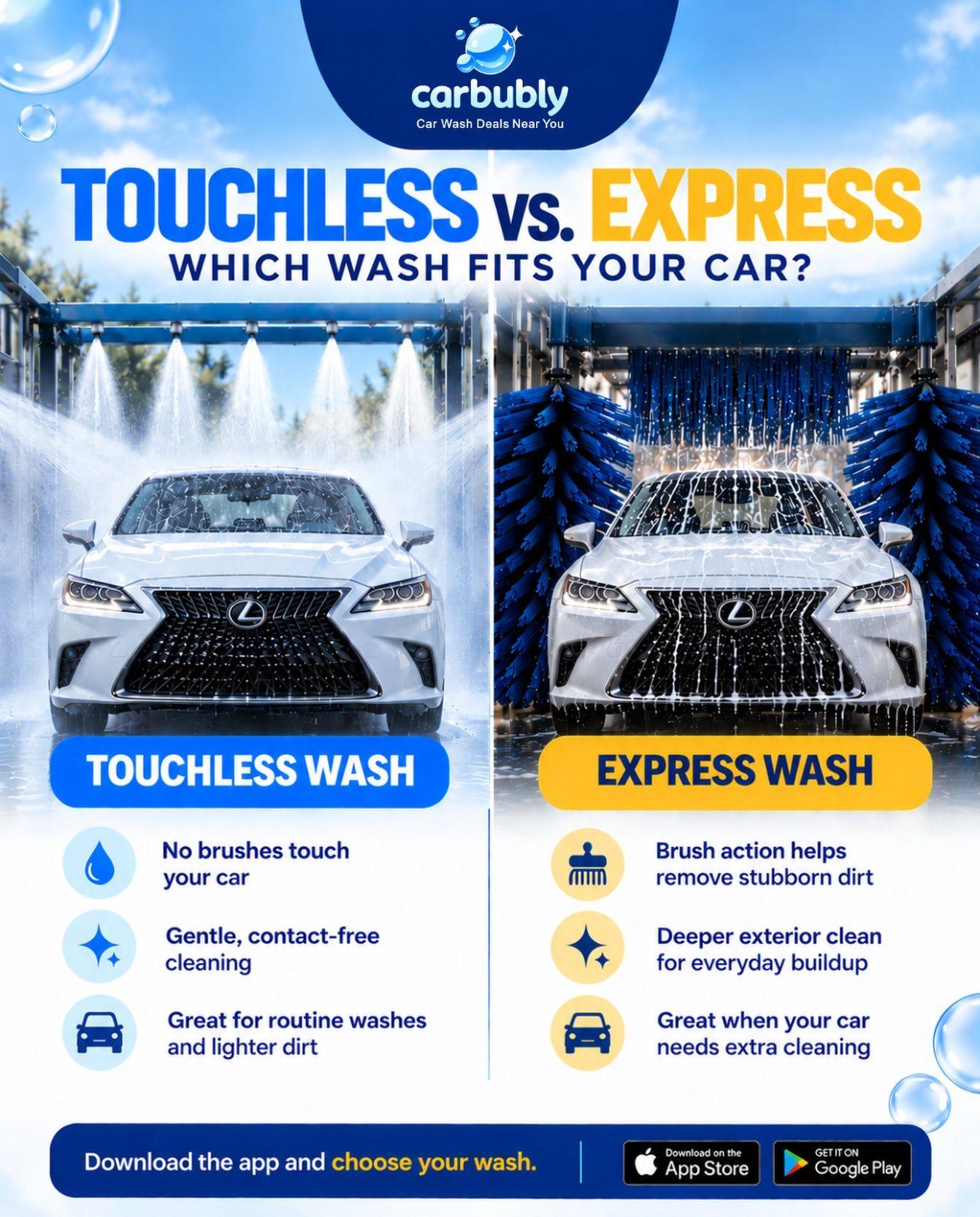
For most Sacramento daily drivers, a soft-touch express car wash offers faster throughput, stronger physical dirt removal, and predictable pricing, while a touchless car wash reduces the risk of brush-related contact scratches but relies heavily on chemical concentration to compensate.
Key Takeaways
Touchless car washes use high-pressure water and chemicals only, which eliminates brush contact but may leave behind road grime that requires stronger chemical agents to dissolve.
Express car washes use soft foam or cloth media that physically agitate the surface, providing more effective cleaning action but introducing a small risk of contact marks on poorly maintained equipment.
California law requires all newly permitted car washes to use at least 60 percent recycled water, which applies to both touchless and express facilities operating in Sacramento.
The Sacramento Suburban Water District prohibits new conveyor car washes that do not use a recirculation system, meaning compliant local facilities are already operating under water-conservation standards.
No independent peer-reviewed study has compared touchless and express wash formats head-to-head, so claims from car wash brands about superior paint safety are industry-generated, not independently verified.
For daily drivers with factory or ceramic-coated paint in good condition, either format is generally acceptable when the facility maintains its equipment properly.
What Is the Difference Between a Touchless and an Express Car Wash?
A touchless car wash is an automated wash format that cleans a vehicle's exterior using high-pressure water jets and chemical solutions, with no physical media contacting the paint surface at any point during the cycle. A soft-touch express car wash (commonly called a tunnel wash or conveyor wash) moves your vehicle through a tunnel where foam brushes, cloth strips, or textile mitts make direct contact with the paint to physically agitate and remove contaminants.
The core engineering trade-off between these two formats comes down to mechanical action versus chemical action. Touchless systems must compensate for the absence of physical scrubbing by applying higher chemical concentrations and water pressure. Express systems use gentler chemistry but rely on the contact media to do the mechanical work of loosening dirt.
In practice, this means touchless washes are more dependent on the quality and freshness of their chemical solutions, while express washes are more dependent on the cleanliness and maintenance schedule of their brush or cloth media. The key point is that neither format is inherently risk-free, and facility maintenance standards are the largest variable in both cases.
How Does Each Wash Type Affect Your Car's Paint?
Paint damage risk in any automated wash format is a function of abrasive contact, chemical aggressiveness, and the presence of embedded contaminants in wash media. According to a 2025 PMC study on automotive coating materials, modern factory paint systems include clear-coat layers that are vulnerable to micro-abrasion from repeated contact with abrasive surfaces.
For touchless washes, the primary risk vector is chemical concentration. High-alkaline or high-acid pre-soaks used to loosen road film can degrade wax layers, sealants, and softer ceramic coatings over time if used repeatedly. The absence of brush contact does not eliminate the risk of finish degradation.
For express washes, the primary risk is embedded grit in the wash media. A cloth strip or foam brush that has not been cleaned properly between cycles can act as a fine-abrasive against the clear coat. A 2025 PMC study on reclaimed water and automotive coatings found that the visual quality of automotive coatings can be affected by water quality and contaminant exposure, reinforcing that wash facility standards matter significantly. The bottom line is that a well-maintained express tunnel with clean soft-cloth media and quality chemistry poses a low risk to a daily driver with standard factory paint.
Which Wash Cleans More Effectively for Sacramento's Road Conditions?
Sacramento's road environment presents specific contamination challenges that affect wash choice: valley dust, agricultural residue from surrounding farmland, brake dust from stop-and-go commuter traffic, and tree sap from urban canopy coverage. Physical agitation provided by express wash media is generally more effective at removing these bonded surface contaminants than chemical action alone.
Touchless washes can struggle with heavy road film, caked bug splatter, and bird drop etching without extended pre-soak dwell time. In a region with significant summer heat, contaminants bake onto clear-coat surfaces quickly, which further reduces the effectiveness of pressure-only cleaning. This does not mean touchless washes are ineffective, but it does mean your results will vary more based on how contaminated your vehicle is when you arrive.
For drivers who wash weekly or more frequently, lighter contamination loads mean touchless systems perform closer to par with express systems. For drivers who wash every two to four weeks, the accumulated contamination common in Sacramento's commuter corridors may exceed what a touchless system reliably removes. The key point is that wash frequency affects which format performs better for your specific situation.
What Are Sacramento's Water Regulations for Car Washes?
California's car wash water laws are among the most stringent in the United States, and they directly affect which facilities you can choose in Sacramento. Under California law, all newly permitted car washes must use at least 60 percent recycled water in day-to-day operations, according to reporting confirmed via carwash.com's coverage of the California recycling law.
The Sacramento Suburban Water District explicitly prohibits new conveyor car washes and new commercial laundry systems that do not incorporate a recirculation system. This means any compliant express tunnel wash operating in Sacramento is already required to recycle water, which also has a paint-safety implication: recirculated water quality and filtration standards at your local facility affect the chemical load contacting your paint. The City of Sacramento's water conservation guidance also reinforces that commercial car washes are preferred over home driveway washing from a stormwater runoff and conservation standpoint.
The EPA's guidance on vehicle washing notes that most car wash facilities are legally required to treat or reuse their water, in contrast to home driveway washing where wastewater can flow directly into storm drains and waterways. The bottom line is that choosing any licensed commercial car wash in Sacramento, touchless or express, is the environmentally preferable choice compared to washing at home, and both formats must comply with the same local water reuse standards.
Side-by-Side Comparison: Touchless vs Express Car Wash
The table below compares both formats across the factors most relevant to Sacramento daily drivers.
Factor
Touchless Car Wash
Express Car Wash
Physical contact with paint
None
Yes, soft foam or cloth media
Primary cleaning mechanism
Chemical + high-pressure water
Mechanical agitation + chemistry
Heavy contamination removal
Moderate to low
Moderate to high
Risk of contact marks
None from media
Low when equipment is well-maintained
Chemical exposure risk
Moderate to high
Low to moderate
Cycle time
Typically 3-6 minutes
Typically 1-3 minutes
Compatibility with ceramic coatings
Generally safer
Check with coating manufacturer
Water recycling compliance (CA)
Required for new permits
Required for new permits
Cost range (Sacramento market)
Generally higher per wash
Often lower; membership plans common
Effectiveness on baked-on valley dust
Lower without pre-soak
Higher with physical agitation
Use this table as a starting framework. Actual results vary by individual facility, equipment age, and how recently the wash media or chemical lines were serviced.
Is a Touchless Wash Safer for Ceramic Coatings and Paint Protection Film?
Ceramic coatings and paint protection film (PPF) require specific wash protocols that differ from standard factory-paint care. Most ceramic coating manufacturers recommend avoiding brushes or any abrasive contact media, making touchless washes the recommended automated option for coated vehicles, provided the chemical solutions used are pH-neutral or coating-safe.
The concern with soft-touch express washes on ceramic-coated vehicles is not that foam or cloth media will strip the coating in a single pass, but that repeated contact over many wash cycles can gradually reduce the coating's hydrophobic properties and surface gloss. For PPF, the concern is edge lifting if high-pressure nozzles are directed at film seams. If your Sacramento daily driver carries a professional-grade ceramic coating, consulting the coating installer's care guidelines before selecting a wash format is the recommended first step.
For uncoated factory paint, which is the most common scenario for daily drivers in the Sacramento area, a well-maintained express tunnel carries a very similar risk profile to a touchless system. The key point is that coating type is the most important factor in deciding whether to prioritize touchless format.
What Is the Speed and Cost Advantage of an Express Wash?
Express car wash tunnel systems are engineered for throughput, typically completing a full wash cycle in one to three minutes once your vehicle enters the tunnel. This speed advantage is meaningful for Sacramento commuters who wash during lunch breaks or before or after work. Touchless systems typically require longer cycle times because chemical pre-soaks need dwell time to loosen contaminants before the rinse cycle.
On cost, express wash facilities in the Sacramento market frequently offer monthly unlimited membership plans that reduce the per-wash cost significantly compared to single-visit pricing. Touchless facilities sometimes offer similar membership structures, but express tunnels are more commonly associated with high-volume membership pricing models. This makes express washes a cost-effective choice for daily drivers who wash frequently.
The speed and cost combination makes express washes the practical default for most Sacramento daily drivers who are not washing a specialty or coated vehicle. The bottom line is that if time and budget are primary factors, express washes have a measurable structural advantage over touchless formats.
Can Poor Facility Maintenance Make Either Wash Type Harmful?
Facility maintenance quality is the single most important variable in predicting whether any automated car wash, touchless or express, poses a risk to your vehicle's finish. An express tunnel with clean, regularly inspected soft-cloth media and properly diluted chemistry is safer than a touchless system running over-concentrated chemicals through worn nozzles with poor pressure calibration.
For express washes, key maintenance indicators include how frequently the facility cleans or replaces its cloth or foam media strips, whether the recirculated water system is filtered to prevent grit re-deposition, and how recently the chemical injection ratios were calibrated. For touchless systems, key maintenance factors include nozzle condition, chemical solution freshness, and pre-soak contact pressure settings. You can ask staff at any Sacramento facility about their maintenance schedule, and a quality operator will answer without hesitation.
The Wikipedia entry on car wash operations notes that the transition to modern soft-cloth media was specifically motivated by the scratch risk associated with older brush systems, which confirms that media type and condition have historically been recognized as important variables in contact-wash safety. The bottom line is that a clean, well-maintained express tunnel outperforms a neglected touchless system in both safety and cleaning results.
Which Car Wash Type Should You Choose in Sacramento?
The right car wash for your Sacramento daily driver depends on a combination of paint type, coating status, wash frequency, and contamination level. For most standard factory-paint vehicles driven in Sacramento's commuter corridors, a well-maintained express car wash provides more effective contamination removal at faster speeds and lower cost per visit, particularly given the valley dust, agricultural film, and road grime common to the greater Sacramento area.
For vehicles with professional ceramic coatings, paint protection film, or older paint in fragile condition, a touchless wash limits mechanical contact risk at the cost of some cleaning effectiveness. In both cases, washing at any licensed commercial facility complies with California's water reuse requirements and is the environmentally responsible choice compared to home driveway washing. No independent research currently establishes one format as definitively superior for all vehicles in all conditions.
The bottom line: for Sacramento daily drivers with uncoated factory paint, a maintained express car wash is the practical choice; for coated or specialty vehicles, a touchless system with coating-safe chemistry is the lower-risk option.
Frequently Asked Questions
Touchless vs Express Car Wash in Sacramento
In Sacramento, express car washes generally provide more effective cleaning for daily drivers facing valley dust and road grime, while touchless washes are preferred for ceramic-coated or specialty vehicles. Both formats must comply with California's 60 percent water recycling requirement for newly permitted facilities. Your specific vehicle's paint condition and coating status should guide the final decision.
Are touchless car washes better or worse?
Touchless car washes are better for vehicles with ceramic coatings or paint protection film because they eliminate brush contact, but they are worse at removing heavy bonded contamination because they rely entirely on chemicals and water pressure. Effectiveness depends heavily on chemical solution quality and facility maintenance standards. Neither "better" nor "worse" applies universally across all vehicles and facilities.
Sacramento's best touchless car wash is where?
No independent ranking organization currently publishes a verified, peer-reviewed "best" touchless car wash list for Sacramento, so the most reliable method is checking recent Google or Yelp reviews specifically for mentions of equipment cleanliness, chemical smell, and paint condition after washing. Look for facilities that disclose their water recirculation systems and chemical safety data. Visiting during off-peak hours and asking staff about maintenance schedules is a practical first step.
What is the advantage of express wash?
The primary advantage of an express car wash is faster cycle time, typically one to three minutes, combined with stronger physical dirt removal through soft-cloth or foam media agitation. Express tunnels also more commonly offer monthly unlimited membership plans, reducing per-wash cost for frequent washers. For Sacramento commuters with standard factory paint, these speed and cost benefits make express washes the practical daily-driver choice.
Which car wash is better, touchless or soft touch?
Soft-touch (express) car washes clean more effectively on heavily contaminated vehicles because physical media agitation removes bonded grime that water pressure and chemicals alone cannot lift. Touchless washes are better for coated or sensitive paint surfaces where any contact media poses a degradation risk. The best choice depends on your vehicle's paint protection level and how contaminated your car typically is when you wash it.