


Touchless Car Wash in Sacramento for Paint-Safe Cleaning
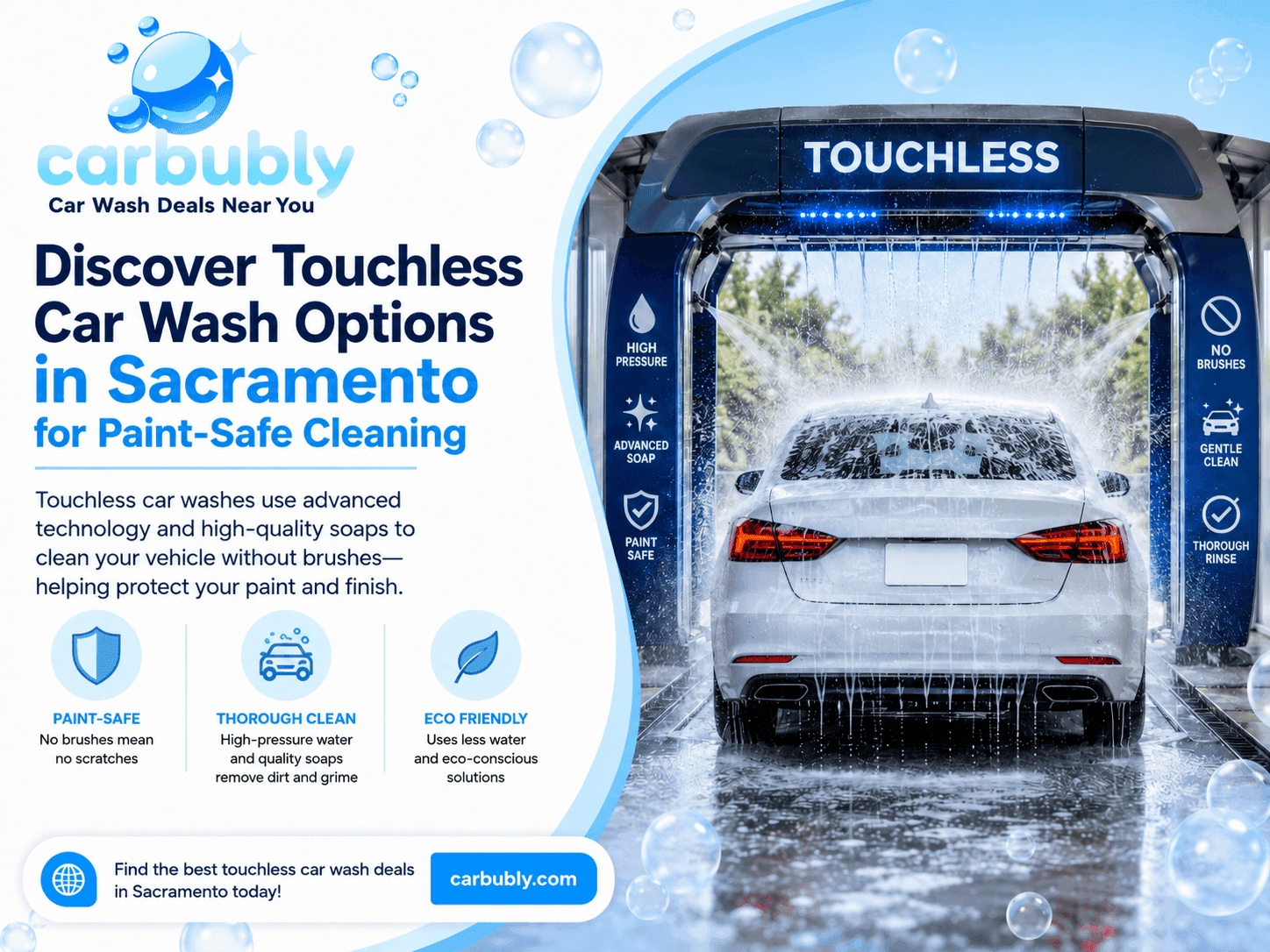
Touchless car washes use high-pressure water jets and specialized detergents to clean your vehicle without any physical contact, making them one of the safest options for preserving your paint. If you live in the Sacramento area and want to keep your car's exterior looking sharp without risking swirl marks or scratches, understanding your options is worth your time through Carbubly.
Key Takeaways
- Touchless car washes rely entirely on water pressure and chemical solutions, eliminating the brush contact that causes most paint damage.
- Not all touchless systems are equal — the quality of the detergent chemistry and water pressure settings varies significantly between providers.
- Sacramento's hot, dry climate means vehicles accumulate road dust and agricultural residue that require specific cleaning approaches.
- Touchless cleaning works best as part of a regular maintenance routine, not as a one-time fix for heavily soiled vehicles.
- For vehicles with existing paint corrections or ceramic coatings, touchless methods are the recommended ongoing wash choice.
- Costs for touchless services in the Sacramento area typically range from $15 to $40 depending on the package and location.
Why Paint-Safe Cleaning Matters More Than Most Drivers Realize
Your car's paint isn't just cosmetic. The clear coat protecting the color beneath it is typically only 2 to 4 mils thick — roughly the width of a piece of plastic wrap. Traditional brush-based car washes, even ones marketed as "soft-touch," can introduce micro-abrasions into that surface with every single pass. Over time, those tiny scratches accumulate into dull, hazy paint that's expensive to correct.
According to the National Highway Traffic Safety Administration, vehicle condition directly affects resale value, and paint quality is one of the first things a prospective buyer or appraiser evaluates. A car with swirled, scratched paint can lose hundreds — even thousands — of dollars in trade-in value compared to a comparable vehicle with a clean, well-maintained finish.
This is especially relevant in Sacramento. The Central Valley climate is notoriously harsh on vehicle exteriors. Summer temperatures regularly push past 100°F, which accelerates oxidation. Agricultural dust from the surrounding farmland, combined with construction debris from the region's ongoing growth, means Sacramento drivers are washing their cars more frequently than the national average. More washes mean more opportunities for paint damage if you're using the wrong method with a hand car wash.
How Touchless Car Wash Technology Actually Works
A touchless system operates on two core principles: chemistry and pressure. Before any water hits your car, a pre-soak solution is applied. This alkaline or pH-balanced detergent chemically loosens and breaks down road grime, bird droppings, and oily residue at the molecular level. The goal is to detach contaminants from the paint so that water pressure alone can rinse them away — no scrubbing required with touchless car wash technology.
After the pre-soak dwell time (usually 60 to 90 seconds), high-pressure jets deliver water at roughly 1,000 to 1,500 PSI across the vehicle's surfaces. The angle and pattern of these jets are calibrated to flush debris away from the paint rather than pushing it across the surface. A final rinse and optional spot-free deionized water cycle completes the process, leaving minimal water spotting.
Here's what makes or breaks a touchless system:
- Detergent quality: Cheap chemicals either under-clean (leaving residue) or are too aggressive (stripping wax and sealant coatings).
- Water pressure calibration: Too low and contaminants don't release. Too high and you risk forcing particles into the clear coat.
- Rinse architecture: The layout of the nozzles determines whether water drains off cleanly or pools and spots.
- Water treatment: Hard water leaves mineral deposits. Deionized or reverse-osmosis rinse systems dramatically reduce spotting.
For drivers in Sacramento seeking reliable touchless car wash services that use properly calibrated systems and high-quality detergents, it pays to ask providers directly about their equipment and chemical specifications before committing to a full service car detailing package.
Comparing Touchless to Other Car Wash Methods
Choosing the right wash method depends on your vehicle's finish, how dirty it gets, and your budget. Here's a straightforward comparison:
| Wash Method | Paint Safety | Cleaning Power | Typical Cost | Best For |
|---|---|---|---|---|
| Touchless Automatic | High | Moderate | $15-$30 | Regular maintenance |
| Soft-Touch Tunnel | Moderate | High | $10-$20 | Light-to-moderate dirt |
| Hand car wash | Highest (when done correctly) | Highest | $25-$60 | Detail-minded owners |
| DIY Driveway Wash | Variable | Variable | $5-$15 | Controlled environments |
| Full-Service Detailing | Highest | Comprehensive | $100-$300+ | Deep cleaning and correction |
The key trade-off with touchless is cleaning power versus paint safety. Because there's no physical agitation, stubborn contaminants like tree sap, heavy tar, or caked mud may not fully release. In those cases, a full service car detailing appointment is a smarter investment than running the same car through a touchless tunnel three times.
Sacramento-Specific Factors That Affect Your Wash Choice
Sacramento drivers deal with a specific set of environmental challenges that shape how often and how aggressively you need to wash your vehicle.
- Tree sap and pollen: Sacramento is famously known as the "City of Trees," with over 130,000 street trees citywide according to the City of Sacramento's urban forestry data. That canopy is beautiful, but it means sap and pollen deposits are a year-round issue, especially for drivers in sacramento. Both are acidic and can etch into clear coat if left unaddressed. A touchless pre-soak with the right pH chemistry handles fresh sap well, but older hardened deposits may need hand correction.
- Agricultural dust: The Sacramento Valley's farming activity generates fine particulate dust that settles across vehicles parked outdoors. This dust is abrasive, which makes the no-contact aspect of touchless washing particularly valuable here. Wiping dust off a dry car with a cloth is one of the fastest ways to put fine scratches in your paint, which is why service availability in folsom and neighboring areas remains essential.
- Water hardness: Sacramento's municipal water supply contains minerals that leave water spots on paint and glass. Quality touchless operations use deionized rinse water in their final cycle, and this matters just as much for residents of roseville as it does for those in central locations. If you're washing at home, a deionized water filter or a high-quality rinse aid applied at the end reduces spotting significantly.
For drivers exploring locations, Carbubly serves multiple areas including communities like citrus heights, where convenient wash services keep vehicles in top condition.
What to Look for in a Touchless Provider Near You
Not every business that calls itself "touchless" delivers the same result. Here's how to evaluate a provider before you commit:
- Ask about their chemistry. Reputable operations use name-brand or professionally formulated detergent systems from suppliers like Meguiar's Professional, Turtle Wax Pro, or similar manufacturers. Generic bulk chemicals are a red flag at facilities across elk grove and throughout the region.
- Check their rinse system. Ask whether they use spot-free deionized water as a final rinse. If the answer is no, expect water spots, especially in the Sacramento heat where water evaporates fast.
- Observe the results firsthand. Walk up to a car exiting the wash. Look at the panels in direct sunlight. Clean paint reflects evenly. Remaining grime or soap film will be visible as haze or streaks.
- Look at their maintenance record. Equipment matters. A touchless system with worn nozzles or inconsistent pressure delivers poor results. A well-maintained operation keeps equipment calibrated and replaces components on schedule, much like the facilities available in rancho cordova.
For those who want professional-grade results without the hassle, quality providers offer a service experience focused on paint-safe cleaning with professional-quality equipment and products tailored for Sacramento-area vehicles in davis.
Frequency and Maintenance: Building a Wash Routine That Protects Your Paint
One of the most common mistakes Sacramento drivers make is treating car washing as an occasional task rather than a routine. The American Automobile Association (AAA) recommends washing your vehicle every two weeks under normal conditions, and more frequently during periods of heavy pollen, construction activity, or extreme heat, especially for those located in west sacramento.
Here's a practical maintenance framework for Sacramento conditions:
- Weekly or bi-weekly touchless wash during spring pollen season (March through May) to prevent acidic deposits from etching the clear coat.
- Monthly touchless wash during fall and winter when dust accumulation is lower.
- Full detail service once or twice per year to deep-clean, decontaminate, and apply paint protection.
Spot treatment between washes for bird droppings, sap, or bug splatter using a quick-detail spray and a microfiber cloth at your preferred place of service.
Research published by Consumer Reports has consistently shown that regular professional washing outperforms irregular deep cleaning in terms of long-term paint preservation, both for aesthetics and resale value.
Things to Know
- Touchless washes are gentler on paint but may not fully remove heavy contamination like tar, tree sap, or road film in a single pass.
- Hard Sacramento water can leave mineral deposits even after a touchless wash if the provider doesn't use a deionized rinse.
- Vehicles with fresh paint jobs or recent clear coat repairs should wait at least 30 days before using any automated wash system, as noted in resources like the Tesla Model Y Owner's Manual.
- Ceramic coatings and paint sealants remain intact longer when you use touchless methods versus brush-based washes.
- A touchless wash is not a substitute for clay bar decontamination, which physically removes embedded particles that water and chemicals alone can't address.
- Evening washes in Sacramento's summer heat can cause water to evaporate unevenly across the panels, so a spot-free rinse cycle is especially important.
Ready to Protect Your Paint With the Right Wash?
The single most effective action you can take right now is to schedule a touchless wash at a facility that uses deionized rinse water and professional-grade pre-soak chemistry. Before your next appointment, inspect your current paint under direct sunlight. If you see swirl marks or haze, ask the provider about their process and whether a decontamination step should be added. The earlier you shift to paint-safe washing habits, the less correction work your vehicle will need down the road.
Frequently Asked Questions
Q: Is a touchless car wash safe for matte paint finishes?
Yes, touchless washes are generally safer for matte finishes than any brush-based system.
Matte paint lacks the clear coat gloss layer that standard finishes have, making it extremely vulnerable to abrasion. A touchless wash using pH-neutral detergent and high-pressure water avoids the physical contact that would otherwise ruin the texture. Always confirm the provider uses matte-safe chemicals, as some drying agents and wax sprays can alter matte finishes.
Q: How much does a touchless car wash cost in Sacramento?
Prices typically range from $15 to $40 for a standard touchless wash in the Sacramento area.
Premium packages that include tire cleaning, undercarriage rinse, and spot-free drying run toward the higher end of that range. Monthly membership programs are available at many facilities and can reduce the per-wash cost to $10-$15 if you wash frequently.
Q: Will a touchless wash remove bird droppings effectively?
Fresh bird droppings usually respond well to a touchless pre-soak and high-pressure rinse.
Dried or baked-on droppings are a different story. Bird waste is highly acidic, and once it dries it can bond to the clear coat. A touchless system may soften and partially remove it, but a hand wash or detailing step is often needed to fully address the affected area without rubbing the residue further into the paint.
Q: How does a touchless wash affect wax or paint sealant?
Touchless washes are significantly less damaging to protective coatings than brush-based or tunnel washes.
That said, repeated exposure to the high-pH alkaline pre-soak detergents used in touchless systems will gradually strip carnauba wax over multiple washes. Ceramic coatings and synthetic sealants hold up much better. If you're running regular touchless washes, switching from carnauba wax to a synthetic sealant or ceramic coating extends your protection interval considerably.
Q: Can a touchless wash clean the undercarriage of my vehicle?
Many touchless wash facilities offer an undercarriage rinse as an add-on or included in higher-tier packages.
This is particularly valuable for Sacramento drivers who travel on dusty rural roads or venture into areas with mud. The undercarriage rinse uses high-pressure jets mounted below the vehicle to clear accumulated debris from suspension components, frame rails, and the exhaust system, which prevents long-term corrosion from trapped moisture and grime.
The Bottom Line on Touchless Car Wash Choices in Sacramento
For Sacramento drivers who care about preserving their vehicle's finish, the touchless car wash is the most practical balance between cleaning effectiveness and paint safety for routine use. It won't replace a proper hand detail for deep contamination, but as a regular maintenance tool it outperforms every brush-based alternative in terms of minimizing abrasion risk.
Start by finding a local provider that invests in quality equipment and proper chemistry, builds a wash schedule that matches your environment, and considers a full detail service once or twice a year to reset your paint's baseline. Your car's long-term value and appearance depend more on consistent, careful maintenance than on any single premium product or service.