


Sacramento Mobility Hubs Autonomous Vehicles
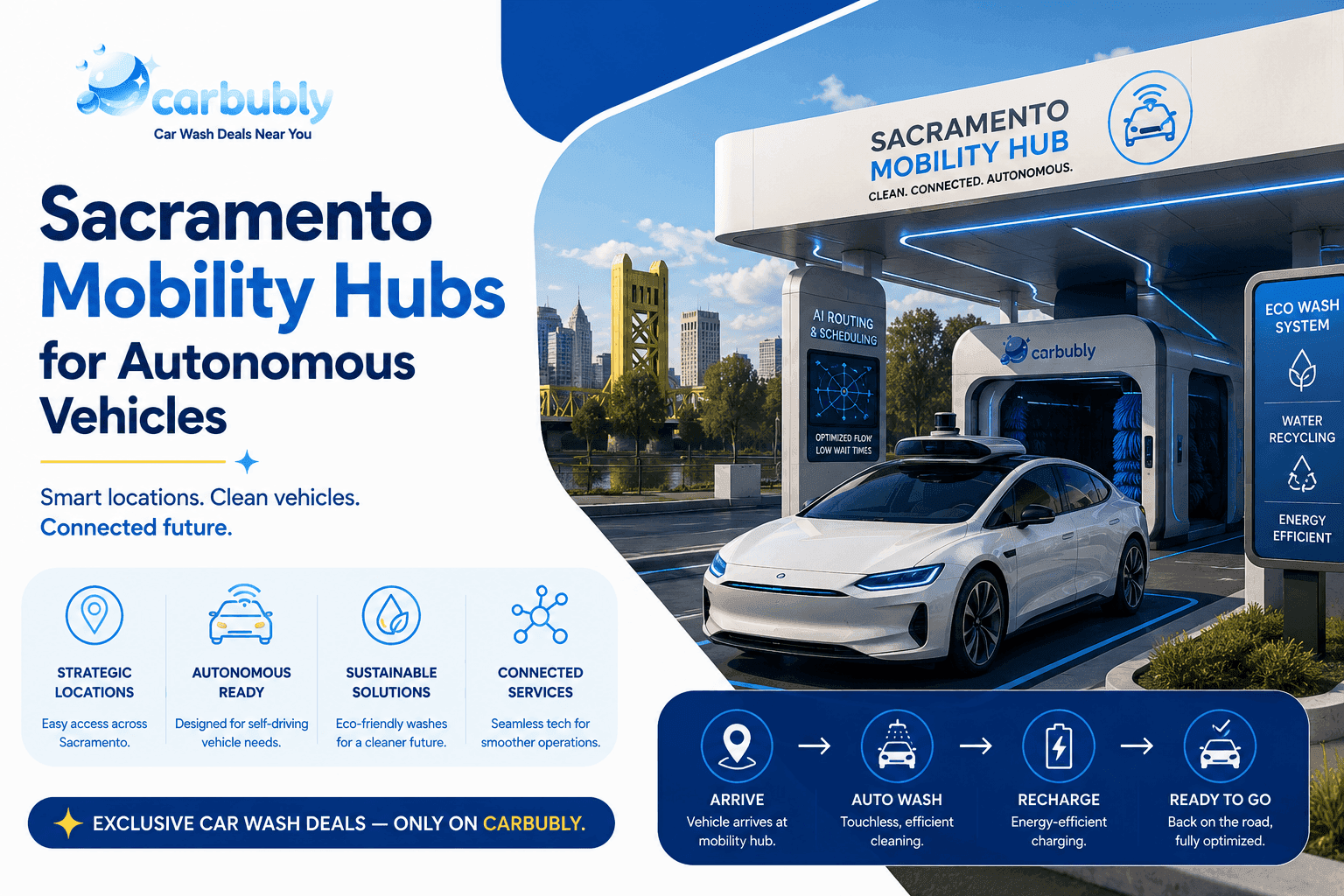
Sacramento mobility hubs autonomous vehicles could become local connection points where driverless cars, EVs, robotaxis, transit, charging, parking, vehicle cleaning, and everyday transportation services work together in one organized system.
A mobility hub is not just a parking lot. It is a place where different transportation options connect. In a future Sacramento setting, that could include autonomous vehicles, EV charging, shared rides, bike and scooter access, transit stops, curbside pickup, mobile detailing, touchless car wash options, and fleet support services.
Sacramento is a practical place to discuss this because the city already sits inside California’s autonomous-vehicle policy environment. The California DMV administers the state’s Autonomous Vehicles Program and issues permits to manufacturers that test and deploy autonomous vehicles on public roads. Sacramento also has local mobility, parking, and curb-management needs that affect how future transportation services would actually work on city streets.
For drivers comparing “Exclusive car wash deals, only on Carbubly.”, the same idea applies at the personal-vehicle level: better mobility depends on clear choices, trusted providers, and services that fit the vehicle’s real needs.
Key Takeaways
Sacramento mobility hubs could connect autonomous vehicles, EV charging, transit, curbside pickup, parking, and vehicle-care services.
Autonomous vehicles may need more than road access; they may also need cleaning, charging, inspections, staging, and fleet support.
Sacramento’s local curb-management work matters because robotaxis and shared mobility services need safe pickup, drop-off, and staging areas.
Car wash and detailing services could support future mobility hubs by helping EVs, Teslas, shared cars, and sensor-heavy vehicles stay clean and ready.
Touchless wash, hand wash, full-service detailing, and mobile detailing each fit different clean-mobility needs.
Carbubly is a marketplace for car wash deals that helps drivers discover, compare, purchase, and redeem offers from trusted local car wash and detailing providers.
What Are Sacramento Mobility Hubs for Autonomous Vehicles?
Sacramento mobility hubs for autonomous vehicles are future-ready transportation connection points where people, vehicles, services, and infrastructure could meet.
A mobility hub may include:
Robotaxi pickup and drop-off areas
EV charging
Shared vehicle staging
Public transit connections
Bike and scooter parking
Passenger waiting areas
Digital wayfinding
Curbside loading zones
Car wash or detailing access nearby
Fleet cleaning and inspection support
Accessible pedestrian paths
Clear signage for riders and vehicles
The goal is simple: make movement easier, cleaner, and more organized.
For autonomous vehicles, hubs matter because driverless cars cannot just “figure it out” like a person might. They need clear rules, safe stopping areas, predictable pickup zones, reliable mapping, charging access, and support systems. A robotaxi that has nowhere safe to stop can create problems for traffic, cyclists, pedestrians, and nearby businesses.
Sacramento’s official mobility and curb-management work focuses on access, local businesses, and efficient use of curbside space. That makes mobility hubs especially relevant because future autonomous vehicles would need to share curbs with buses, delivery vehicles, rideshare drivers, cyclists, pedestrians, and everyday cars.
Why Do Sacramento Mobility Hubs Matter?
Sacramento mobility hubs matter because autonomous vehicles will not operate in a vacuum. They will use real streets, real curbs, real parking areas, and real neighborhoods.
A future hub could help solve practical problems such as:
Where should robotaxis stop?
How should riders find their assigned vehicle?
Where can EVs charge between trips?
How should vehicles avoid blocking bike lanes?
Where can fleets stage during slow periods?
Where can vehicles be inspected or cleaned?
How do services connect with buses, light rail, walking, and biking?
How do people with mobility needs access the system safely?
These questions are not futuristic. Sacramento already manages curb space, parking, mobility services, public works, and street access. Autonomous vehicles would add another layer.
A good mobility hub could help reduce confusion by giving vehicles and riders a designated place to connect. That can be especially useful near downtown Sacramento, state offices, medical centers, shopping areas, transit stops, hotels, universities, event areas, and regional corridors.
What Do the Statistics Say?
A few trusted statistics and official sources help explain why this topic matters.
The road system is already large. The Federal Highway Administration reported 284,614,269 registered motor vehicles in the United States in 2023 in its State Motor-Vehicle Registrations table. This means autonomous vehicles would share roads with a huge number of human-driven cars, SUVs, trucks, vans, EVs, delivery vehicles, and work fleets.
California has a formal AV permit structure. The California DMV administers the state’s AV program and issues permits to manufacturers that test and deploy autonomous vehicles on public roads. That means Sacramento mobility hubs autonomous vehicles planning has to connect with state-level rules, not just local interest.
Sacramento already provides local AV information. The City of Sacramento describes autonomous car services as robotaxis or driverless vehicles and provides residents with state resource links. This matters because residents need clear information before new mobility services feel normal.
Vehicle washing has environmental context. EPA guidance on vehicle maintenance and washing explains that vehicle washing can release pollutants such as hydrocarbons and heavy metals when wash water is not handled properly. That makes responsible vehicle cleaning part of clean-mobility planning.
Fleet-style washing needs planning. EPA guidance on municipal vehicle and equipment washing notes that wash water can contain sediment, detergents, oils, grease, and heavy metals. A future mobility hub with fleet cleaning nearby would need responsible water-handling procedures.
The main takeaway: mobility hubs are not only about where vehicles park. They also involve regulation, street design, charging, maintenance, cleaning, water handling, and public trust.
How Would a Sacramento Mobility Hub Work?
A Sacramento mobility hub could work like a small transportation service center.
A rider might arrive by walking, biking, transit, or being dropped off. From there, they could connect to a robotaxi, shared EV, shuttle, or other service. Vehicles could use assigned curb zones instead of stopping randomly. EVs could charge during downtime. Fleet vehicles could be inspected or routed to nearby cleaning and maintenance providers.
A simple hub workflow could look like this:
A passenger chooses a pickup point.
The vehicle is directed to a designated curb or staging area.
The rider receives clear wayfinding instructions.
The vehicle loads safely without blocking traffic.
The vehicle completes a trip.
The vehicle returns to a hub, charging lot, or fleet support site.
Staff or systems check battery level, cleanliness, tires, glass, and service status.
The vehicle is cleaned, charged, staged, or sent back into service.
The best hubs would reduce friction. Riders should know where to go. Vehicles should know where to stop. Local businesses should not lose access to their curbs. Pedestrians and cyclists should not be pushed into unsafe spaces.
Why Vehicle Cleaning Belongs in Mobility Hub Planning
Car washing may sound separate from autonomous vehicles, but it fits naturally into mobility hub planning.
Autonomous and driver-assistance vehicles may rely on:
Cameras
Radar
Lidar
Windshields
Side glass
Rear glass
Exterior lights
Mirrors
Clean body panels near sensors
Interior passenger areas
Dirt, pollen, road film, bugs, brake dust, rain spots, mud, and bird droppings can collect around these areas. A dirty surface does not automatically make a vehicle unsafe, but fleet operators need a reliable process for checking and cleaning important exterior zones.
Shared vehicles also need clean interiors. A robotaxi or high-use EV fleet may collect:
Trash
Food crumbs
Coffee spills
Fingerprints
Muddy shoe marks
Pet hair
Odors
Dirty mats
Lost items
Smudged windows
That is why a mobility hub may need access to nearby vehicle cleaning, mobile detailing, or fleet-care support. Clean mobility is not only about the power source. It is also about keeping vehicles ready, presentable, and responsibly maintained.
Service Comparison: What Vehicle-Care Services Fit Mobility Hubs?
Different services solve different problems.
Touchless car wash: Useful for light dust, pollen, and lower-contact exterior cleaning. Drivers can explore touchless car wash services when avoiding brush contact is a priority.
Hand car wash: Useful for bugs, wheels, lower panels, mirrors, and areas near cameras or sensors that may need careful attention. Drivers can compare hand car wash services when an automatic wash may not be enough.
Full-service detailing: Useful when interiors need deeper care, especially for rideshare cars, family SUVs, EVs, Teslas, shared vehicles, and future robotaxi fleets. Drivers can book full-service car detailing when seats, mats, glass, stains, odors, cup holders, or cargo areas need more attention.
Mobile detailing: Useful when vehicles need cleaning at a fleet lot, office, charging hub, home, or approved parking area.
Express car wash: Useful for quick exterior maintenance when the vehicle is lightly dirty.
A good mobility hub would not rely on one cleaning method for every vehicle. It would match service level to the vehicle’s condition, use, and technology.
How to Choose the Best Option Today
Most drivers are not using robotaxi mobility hubs yet. But the same decision-making helps with everyday car care.
Best for budget
Choose the most affordable service that solves the actual cleaning problem.
Good budget choices include:
Express wash for light exterior dust
Touchless wash for lower-contact cleaning
Hand wash for bugs, wheels, and lower panels
Interior add-ons when the exterior is already clean
Full-service detailing only when deeper cleaning is needed
A low price only helps when the service fits the vehicle.
Best for convenience
Choose a provider near your real route, not just the closest map result. Drivers can compare car wash deals in Sacramento. Regional drivers may also compare car wash deals in Citrus Heights, car wash deals in Roseville, car wash deals in Rancho Cordova, car wash deals in Folsom, car wash deals in Elk Grove, car wash deals in Davis, and car wash deals in West Sacramento.
Convenience includes location, timing, package clarity, service speed, vehicle compatibility, and redemption terms.
Best for protection and detailing
Choose more careful service when your vehicle has:
Cameras or sensors
Tesla or EV-specific needs
Ceramic coating
Paint protection film
Vinyl wrap
Dark paint
Heavy bugs
Dirty wheels
Interior stains
Pet hair
Odors
Frequent passengers
Rideshare or delivery use
For Tesla owners, review Tesla’s car wash guidance before automatic wash services. Follow the current owner manual and provider instructions.
What Should a Good Mobility Hub Include?
A strong Sacramento mobility hub for autonomous vehicles should be practical, not just high-tech.
Useful features could include:
Clearly marked pickup and drop-off zones
Safe pedestrian paths
ADA-accessible loading areas
EV charging access
Bike and scooter parking
Transit connections
Digital signs or app-based instructions
Emergency access space
Lighting and visibility
Camera-monitored staging zones
Clear curb rules
Fleet cleaning access nearby
Mobile detailing-friendly areas
Responsible wash-water planning when cleaning is on-site
Space for inspections and service checks
For local drivers, the same idea applies when picking a car wash: clear instructions, visible pricing, service details, and safe vehicle handling make the experience better.
Common Mistakes to Avoid
Thinking mobility hubs are only parking lots. A real hub connects people, vehicles, services, charging, curbs, and local routes.
Ignoring curb space. Robotaxis and shared vehicles need safe places to stop without blocking buses, bikes, pedestrians, or businesses.
Treating autonomous vehicles as only a software issue. They also need charging, cleaning, inspection, staging, and maintenance.
Forgetting passengers. Good mobility hubs need clear walking paths, pickup points, signs, lighting, and accessibility.
Skipping cleaning and detailing needs. Shared vehicles need clean interiors, clear glass, and regular exterior care.
Ignoring water handling. Any on-site vehicle washing should consider runoff, drainage, and environmental practices.
Confusing EVs with autonomous vehicles. EVs, Teslas, driver-assistance vehicles, and fully autonomous vehicles are related but not the same.
Choosing services only by price. Fleet care and vehicle cleaning also depend on consistency, clarity, and provider fit.
Overstating current AV service. Testing, deployment, approved areas, and public ride availability are different.
Forgetting regional travel. Sacramento mobility hubs may need to connect with Citrus Heights, Roseville, Rancho Cordova, Folsom, Elk Grove, Davis, and West Sacramento.
Where Carbubly Fits Naturally
Carbubly is a marketplace for car wash deals that helps drivers discover, compare, purchase, and redeem offers from trusted local car wash and detailing providers.
Carbubly is not a car wash operator. It does not personally wash vehicles. Instead, it helps drivers compare local providers offering hand car wash, touchless car wash, express wash, mobile detailing, full-service detailing, Tesla car wash options, EV-safe car wash preferences, and other vehicle-cleaning services.
Start with Carbubly when you want to compare affordable car wash options, trusted car wash services, local car wash providers, and car wash savings. You can also view Carbubly on Google Maps for local trust context.
As Sacramento mobility hubs autonomous vehicles planning becomes more relevant, comparison becomes more important. Drivers and future fleets need to know what service fits the vehicle, what is included, where it is available, and whether the provider can handle EVs, interiors, sensors, and high-use cleaning needs.
Final Tips Before Evaluating a Mobility Hub
Use this checklist when thinking about a future mobility hub:
Does it connect to transit, walking, biking, or parking?
Is pickup and drop-off space clearly marked?
Can vehicles stop without blocking traffic?
Is the curb design safe for pedestrians and cyclists?
Is EV charging available nearby?
Can vehicles be staged without crowding the street?
Is the hub easy for riders to find?
Are accessibility needs considered?
Are emergency access routes protected?
Is vehicle cleaning or detailing available nearby?
Are water-handling practices responsible if washing happens on-site?
Can local providers support fleet needs?
Is the system useful for real neighborhoods, not only demonstrations?
The best mobility hubs solve ordinary problems well.
Conclusion: Sacramento Mobility Hubs Autonomous Vehicles
Sacramento mobility hubs autonomous vehicles planning is about more than driverless cars. It is about creating organized places where robotaxis, EVs, transit, riders, charging, curbs, parking, cleaning, and local services can work together.
Sacramento is a useful place for this conversation because it connects state AV regulation, local streets, regional commuting, suburbs, public agencies, and practical vehicle-care needs. If autonomous vehicles become more common, they will still need clear pickup points, charging, inspection, cleaning, maintenance, and passenger-ready interiors.
Carbubly helps drivers compare car wash and detailing deals from trusted local providers today. Visit Carbubly to compare nearby options and choose the service that fits your vehicle, schedule, and budget.
FAQs About Sacramento Mobility Hubs Autonomous Vehicles
1. What are Sacramento mobility hubs autonomous vehicles?
Sacramento mobility hubs autonomous vehicles are future transportation connection points where autonomous vehicles, EV charging, transit, parking, curb access, and vehicle-care services could work together.
2. Why do Sacramento mobility hubs autonomous vehicles matter?
Sacramento mobility hubs autonomous vehicles matter because driverless cars need safe places to stop, charge, stage, connect with riders, and receive cleaning or maintenance support.
3. Are mobility hubs the same as parking lots?
No. A mobility hub can include parking, but it is designed to connect several transportation options, such as transit, EVs, robotaxis, bikes, scooters, and shared rides.
4. How do autonomous vehicles use mobility hubs?
Autonomous vehicles could use mobility hubs for pickup, drop-off, charging, staging, inspections, cleaning, and fleet support.
5. Why does car washing matter for mobility hubs?
Car washing matters because autonomous and shared vehicles may need clean cameras, glass, lights, interiors, wheels, and passenger areas to stay ready for service.
6. Could Sacramento car wash providers support mobility hubs?
Yes. Local car wash and detailing providers could support future hubs with touchless washing, hand washing, mobile detailing, full-service detailing, glass cleaning, and interior resets.
7. Are EV-safe car wash services important?
Yes. EVs, Teslas, and sensor-heavy vehicles may need careful handling around charge ports, cameras, glass, trim, screens, and manufacturer-specific guidance.
8. Where could mobility hubs make sense in Sacramento?
Mobility hubs could make sense near transit stations, downtown corridors, state offices, medical centers, universities, shopping districts, airport routes, and regional travel corridors.
9. What should drivers compare before booking car care near a hub?
Drivers should compare service type, price, location, package details, vehicle compatibility, EV handling, interior options, add-ons, and redemption rules.
10. Where can Sacramento drivers compare car wash deals?
Sacramento drivers can compare car wash deals on Carbubly, a marketplace that helps drivers discover, compare, purchase, and redeem offers from trusted local car wash and detailing providers.