


Independent Car Wash Autonomous Vehicles Guide
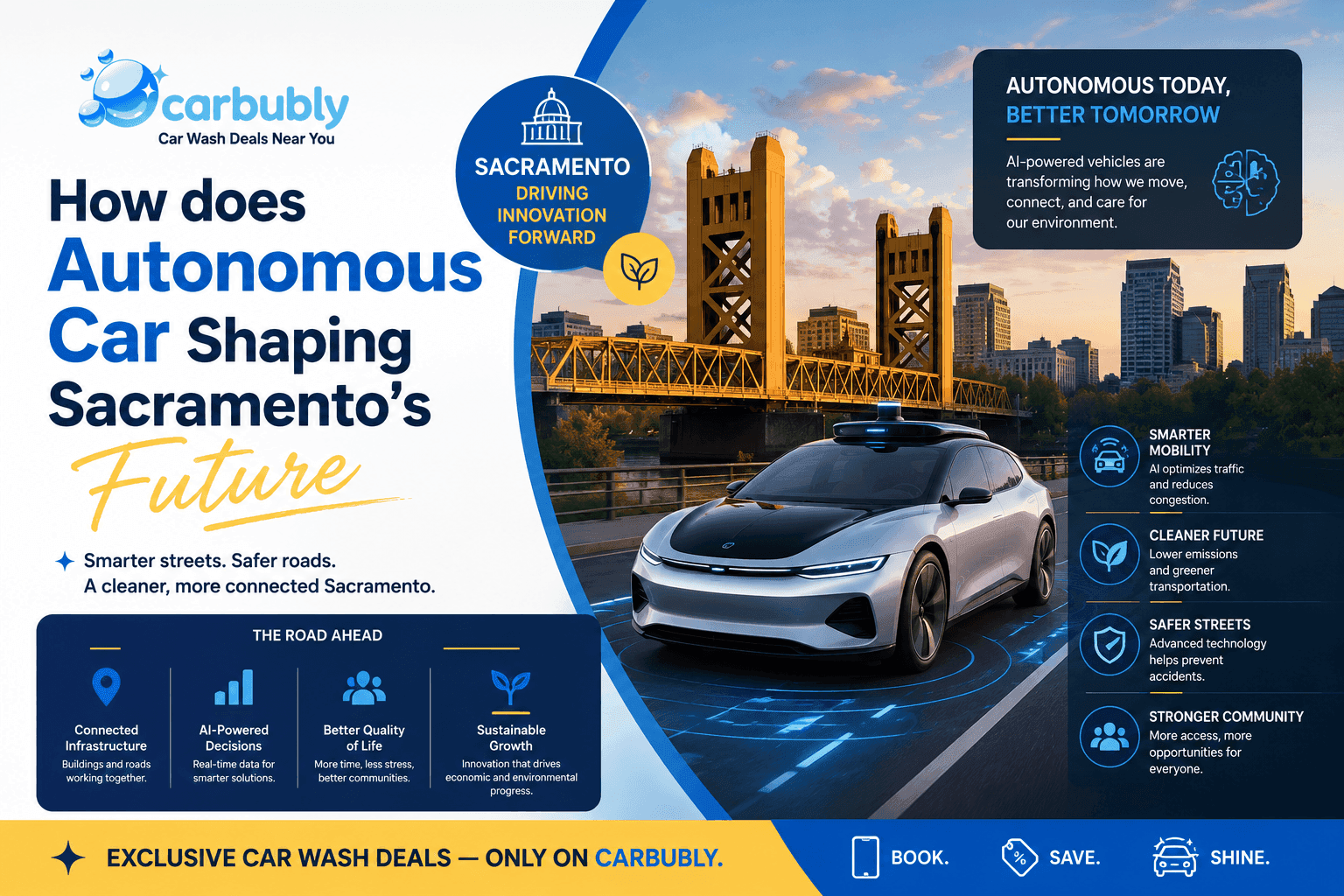
Independent car wash autonomous vehicles readiness means local wash and detailing providers should start preparing for sensor-heavy, electric, connected, shared, and future driverless vehicles by improving service clarity, EV handling, staff checklists, water practices, and fleet-friendly cleaning options.
The autonomous era will not arrive only as a software update. It will show up in ordinary business details: a Tesla owner asking about wash mode, a rideshare driver needing a cleaner interior, a fleet operator asking about scheduled cleaning, an EV owner worried about cameras and charge ports, or a future robotaxi needing repeatable service before going back on the road.
For independent car washes, this is not a reason to panic. It is a reason to get more organized. The shops that explain their services clearly, handle EVs carefully, train staff on modern vehicle features, and offer the right mix of touchless wash, hand wash, mobile detailing, and full-service detailing may be better prepared for what comes next.
For drivers comparing “Exclusive car wash deals, only on Carbubly.”, the same idea applies: the best vehicle care comes from matching the right provider to the right vehicle, not just picking the nearest or cheapest wash.
Key Takeaways
Independent car washes do not need to become autonomous vehicle repair shops, but they should understand how EVs, cameras, sensors, and shared fleets change customer expectations.
Autonomous and driver-assistance vehicles may depend on clean glass, cameras, lights, sensor-adjacent areas, wheels, and interiors.
Service menus should clearly explain hand wash, touchless wash, express wash, mobile detailing, full-service detailing, EV-safe procedures, and add-ons.
Responsible wash-water handling matters because EPA guidance notes that vehicle washing can affect stormwater when pollutants are not managed properly.
Fleet-friendly scheduling, interior reset packages, and sensor-area checklists may become useful as rideshare, robotaxi, and high-use EV fleets grow.
Carbubly is a marketplace for car wash deals that helps drivers discover, compare, purchase, and redeem offers from trusted local car wash and detailing providers.
What Does Independent Car Wash Autonomous Vehicles Readiness Mean?
Independent car wash autonomous vehicles readiness means preparing a local car wash or detailing business for vehicles that may be more electric, more connected, more sensor-heavy, and more fleet-operated than older cars.
This includes vehicles such as:
Teslas and other EVs
Cars with advanced driver-assistance systems
Rideshare vehicles
Delivery vehicles
Shared mobility vehicles
Robotaxis
Autonomous test vehicles
Future fleet vehicles
Family SUVs with cameras and sensors
Premium vehicles with ceramic coatings or paint protection film
The key word is “readiness.” An independent car wash does not need to claim it can service fully driverless vehicles. It should not make unsupported promises about autonomous safety. It should not market itself as an AV-certified facility unless that is actually true.
Instead, independent operators can focus on practical improvements:
Better intake questions
Clearer wash package descriptions
EV-aware staff training
Camera and sensor-area cleaning notes
Interior reset options
Water-handling practices
Fleet scheduling
Mobile detailing options
Honest limitations
The autonomous era rewards clarity. Customers want to know what is included, what is safe for their vehicle, what add-ons cost, and whether the provider understands modern car features.
Why Independent Car Washes Should Pay Attention
Independent car washes should pay attention because vehicle technology is already changing how drivers think about cleaning.
A driver with an older sedan may simply ask for a basic wash. A Tesla owner may ask about charge ports, cameras, glass roofs, trim, or automatic wash settings. A rideshare driver may care more about clean seats and odor control than exterior shine. A delivery driver may need quick exterior maintenance. A future autonomous fleet may want repeatable service records and consistent interior resets.
California also has a formal autonomous vehicle framework. The California DMV’s Autonomous Vehicles Program explains that DMV administers California’s AV program and issues permits to manufacturers that test and deploy autonomous vehicles on public roads. That does not mean every independent car wash will see driverless vehicles tomorrow, but it does show that autonomous mobility is a regulated transportation category, not just a tech headline.
For Sacramento-area providers, this matters because autonomous and electric vehicle conversations are increasingly tied to local mobility, EV charging, fleet care, robotaxis, and vehicle support services.
An independent car wash may have an advantage here. Smaller providers can often move faster than big chains by updating packages, training staff, adding mobile services, improving listings, and explaining specialty care in plain language.
What Do the Statistics Say?
A few credible sources help explain why independent car washes should take this seriously.
The vehicle market is already huge. The Federal Highway Administration reported 284,614,269 registered motor vehicles in the United States in 2023 in its State Motor-Vehicle Registrations table. That means autonomous vehicles, EVs, Teslas, rideshare cars, and family vehicles will all share the same broader road and service ecosystem.
California has an official AV permit structure. The California DMV explains that it administers the state’s AV program and issues testing and deployment permits. For car wash operators, this is a reminder to separate real authorization from hype. Testing, driverless testing, deployment, and public passenger service are not the same thing.
Vehicle washing has environmental responsibilities. EPA guidance on vehicle maintenance and washing explains that vehicle washing can release pollutants such as hydrocarbons and heavy metals into waterways when wash water is not managed correctly.
Fleet-style washing needs more planning. EPA guidance on municipal vehicle and equipment washing notes that wash water can contain sediment, detergents, oils, grease, and heavy metals. This matters if independent providers start serving fleets, mobile detailing accounts, or repeated high-volume cleaning jobs.
EV wash procedures are becoming more specific. Tesla’s Model Y car wash guidance explains Car Wash Mode, which closes windows, locks the charge port, and disables certain features during a wash. That is a useful example of why manufacturer guidance matters for modern vehicles.
The takeaway: independent car washes do not need to chase every future trend. But they should prepare for a vehicle-care market where customers expect more specific, transparent, and careful service.
How Autonomous and EV Technology Changes Car Washing
Autonomous and advanced driver-assistance vehicles may have more exterior hardware than older cars. Even many everyday vehicles now include cameras, parking sensors, radar areas, advanced headlights, and software-connected features.
That changes how car washes should think about service.
A modern vehicle may need attention around:
Windshields
Front cameras
Rear cameras
Side cameras
Mirrors
Headlights
Taillights
Radar-adjacent areas
Lidar housings on some vehicles
Ultrasonic sensors
Charge ports
Glass roofs
Trim
Wheel covers
Interior screens
Door handles
For a basic wash, these details may seem small. For a customer with a premium EV, Tesla, sensor-heavy SUV, or fleet vehicle, they can matter a lot.
Cleaning does not replace vehicle maintenance or safety systems. A car wash cannot guarantee autonomous performance. But a careful wash can help remove dirt, bugs, road film, pollen, bird droppings, and grime from areas customers care about.
Independent providers should be careful with language. Instead of saying “we make autonomous vehicles safer,” say something more accurate: “We offer careful exterior cleaning around glass, cameras, wheels, and sensor-adjacent areas.”
That is honest, useful, and easier to trust.
What Independent Car Washes Should Prepare First
The best preparation starts with simple operational improvements.
Clear service menus
A future-ready independent car wash should clearly explain:
Is it a hand car wash, touchless car wash, express wash, mobile detailing, or full-service detailing?
Are wheels included?
Is bug removal included?
Is interior cleaning included?
Are mats cleaned?
Is glass cleaned inside and outside?
Are EVs accepted?
Are Teslas accepted?
Are oversized vehicles accepted?
Are add-ons priced separately?
Is an appointment required?
A clear menu reduces confusion and builds trust.
Staff intake questions
Train staff to ask practical questions before the wash.
Good intake questions include:
Is this an EV or Tesla?
Does the vehicle have a wrap, coating, or paint protection film?
Are there any camera or sensor concerns?
Do you want exterior only or interior too?
Are there bugs, sap, pet hair, stains, or odors?
Do you need a quick wash or deeper detailing?
Are there manufacturer instructions we should follow?
Is this a fleet, rideshare, or delivery vehicle?
These questions help match the customer to the correct service.
EV and Tesla awareness
EV owners may have different expectations than traditional gas-car owners. Tesla owners, in particular, may ask about Car Wash Mode, charge ports, cameras, glass, trim, and wheel covers.
Independent car washes should not guess. Staff should encourage customers to follow current manufacturer guidance and should know basic EV handling concerns.
A simple EV-aware process may include:
Ask whether the vehicle has wash-mode instructions.
Avoid unnecessary pressure near charge ports.
Be careful around cameras and sensors.
Confirm whether the customer wants touchless, hand wash, or detailing.
Use clean towels and separate wheel tools.
Avoid harsh assumptions about trim, wraps, or coatings.
Service Comparison: What Should Independent Car Washes Offer?
Independent providers can prepare by offering a smart mix of services.
Touchless car wash: Useful for customers who want lower-contact exterior cleaning for light dust, pollen, or rain spots. Providers that offer this can help customers explore touchless car wash services as an option for modern vehicles.
Hand car wash: Useful for bugs, wheels, lower panels, mirrors, and sensor-adjacent areas that may need careful human attention. Providers can position hand car wash services as a good fit when automatic cleaning may not be enough.
Full-service detailing: Useful for interiors, high-use vehicles, rideshare cars, family SUVs, EVs, Teslas, and future fleet vehicles. Operators can highlight full-service car detailing when customers need seats, mats, glass, cup holders, stains, odors, or cargo areas handled more thoroughly.
Mobile detailing: Useful for fleet lots, offices, homes, charging hubs, approved parking areas, and customers who value convenience.
Express wash: Useful for drivers who only need fast exterior maintenance.
An independent car wash does not need to offer everything. It needs to explain what it does well.
How to Choose the Best Option for Different Customers
Independent car washes can help customers choose the right service by asking about the vehicle, the use case, and the dirt level.
Best for budget
Budget-focused customers usually want a clean car without paying for unnecessary extras.
Offer:
Express wash for light dust
Touchless wash for lower-contact exterior cleaning
Basic hand wash for bugs and wheels
Interior add-ons only when needed
Full detailing only when the vehicle truly needs it
This approach builds trust because the customer does not feel oversold.
Best for convenience
Convenience-focused customers care about time, location, and simplicity.
This includes:
Busy commuters
Parents
Rideshare drivers
Delivery drivers
Office workers
EV owners using charging downtime
People searching for a car wash near me
For local visibility, providers should make sure drivers can compare clear offers in nearby markets such as car wash deals in Sacramento, car wash deals in Citrus Heights, car wash deals in Roseville, car wash deals in Rancho Cordova, car wash deals in Folsom, car wash deals in Elk Grove, car wash deals in Davis, and car wash deals in West Sacramento.
Best for protection and detailing
Protection-focused customers often care about paint, coatings, sensors, glass, EV features, and interior condition.
Recommend more careful service when the vehicle has:
Cameras or sensors
Tesla or EV-specific needs
Ceramic coating
Paint protection film
Vinyl wrap
Dark paint
Heavy bugs
Dirty wheels
Interior stains
Pet hair
Odors
Frequent passenger use
Rideshare or delivery use
These customers may be a good fit for hand washing, full-service detailing, or mobile detailing instead of the fastest exterior wash.
How Independent Car Washes Can Become More Fleet-Friendly
The autonomous era may include more fleet-owned vehicles. Even before fully driverless fleets become common, independent car washes can serve rideshare drivers, delivery vehicles, local businesses, rental cars, and EV fleets.
Fleet-friendly services may include:
Scheduled cleaning windows
Multi-vehicle pricing
Mobile detailing at approved sites
Interior reset packages
Exterior-only maintenance packages
Glass and camera-area cleaning notes
Wheel cleaning add-ons
Odor treatment
Service records
Fleet contact person
Clear cancellation policy
Water and power requirement details
Consistent checklist-based service
Fleet customers often care less about fancy wording and more about reliability. They want to know what gets done, how long it takes, what it costs, and whether the vehicle will be ready on time.
Common Mistakes to Avoid
Overpromising autonomous expertise. Do not claim to certify, calibrate, or validate autonomous systems unless that is truly within your business capabilities.
Ignoring EV instructions. Teslas and EVs may have manufacturer-specific wash guidance, charge ports, cameras, screens, and trim concerns.
Using vague service names. “Premium wash” is not enough. Explain what is included.
Treating every vehicle the same. A lightly dusty sedan, Tesla, wrapped SUV, rideshare car, and fleet vehicle may need different care.
Skipping interior options. High-use vehicles often need seats, mats, glass, cup holders, odors, and cargo areas cleaned.
Forgetting water handling. Responsible runoff and wash-water practices matter, especially for commercial and fleet cleaning.
Choosing only low prices. Independent providers can compete on clarity, care, convenience, and trust—not just discounts.
Ignoring local search. Drivers searching “car wash near me” need clear listings, accurate services, and easy booking information.
Failing to train staff. Even a simple checklist can prevent mistakes.
Using unsupported claims. Say what your service does, not what you hope autonomous technology might do.
Where Carbubly Fits Naturally
Carbubly is a marketplace for car wash deals that helps drivers discover, compare, purchase, and redeem offers from trusted local car wash and detailing providers.
Carbubly is not a car wash operator. It does not personally wash vehicles. Instead, it helps drivers compare local providers offering hand car wash, touchless car wash, express wash, mobile detailing, full-service detailing, Tesla car wash options, EV-safe car wash preferences, and other vehicle-cleaning services.
Start with Carbubly when you want to compare affordable car wash options, trusted car wash services, local car wash providers, and car wash savings. Independent providers can also benefit from clearer visibility when drivers compare services by city, vehicle type, and wash need. You can also view Carbubly on Google Maps for local trust context.
As independent car wash autonomous vehicles readiness becomes more important, platforms that help drivers compare clear services may become more useful. Drivers want to know what is included, which provider is nearby, whether the service fits an EV or Tesla, and whether the price makes sense.
Final Tips Before Preparing for the Autonomous Era
Independent car washes can use this checklist:
Update service menus with clear package details.
Add EV and Tesla handling notes where appropriate.
Train staff on camera, sensor, charge-port, and glass awareness.
Create separate tools for wheels and paint.
Use clean microfiber towels.
Offer interior reset packages.
Explain touchless, hand wash, mobile detailing, and full-service detailing clearly.
Add fleet-friendly scheduling where possible.
Keep water-handling practices responsible.
Avoid unsupported safety claims.
Encourage customers to follow manufacturer guidance.
Make booking and redemption simple.
Keep local listings accurate.
Use service checklists for consistency.
Track common add-ons such as pet hair, stains, bugs, wheels, and odors.
Future-ready car washes do not need to pretend the future is already here. They need to run a clearer, more careful, more transparent operation today.
Conclusion: Independent Car Wash Autonomous Vehicles
Independent car wash autonomous vehicles readiness is really about practical preparation. Vehicles are becoming more electric, connected, sensor-heavy, and fleet-oriented. Independent car washes that understand this shift can improve service menus, train staff, handle EVs more carefully, create sensor-area checklists, offer interior reset options, support fleet cleaning, and communicate clearly with customers.
The autonomous era will not remove the need for local car wash providers. It may make trustworthy local service more important. A driverless or sensor-heavy vehicle still needs clean glass, clean cameras, maintained wheels, passenger-ready interiors, and responsible wash practices.
Carbubly helps drivers compare car wash and detailing deals from trusted local providers today. Visit Carbubly to compare nearby options and choose the service that fits your vehicle, schedule, and budget.
FAQs About Independent Car Washes and Autonomous Vehicles
1. What does independent car wash autonomous vehicles readiness mean?
Independent car wash autonomous vehicles readiness means preparing local wash and detailing services for EVs, cameras, sensors, driver-assistance systems, shared fleets, and future autonomous vehicles.
2. Do independent car washes need special AV certification?
Not necessarily. Most independent car washes should focus on honest service descriptions, EV-aware handling, sensor-area care, staff training, and clear limits instead of unsupported certification claims.
3. Why do autonomous vehicles need car washing?
Autonomous and driver-assistance vehicles may rely on cameras, sensors, lights, glass, and exterior surfaces. Cleaning can support visibility checks, inspection routines, and passenger trust.
4. Are touchless washes good for EVs and autonomous vehicles?
Touchless washes can be useful for light exterior dirt and lower-contact cleaning, but bugs, wheels, interiors, and sensor-adjacent areas may still need hand washing or detailing.
5. Should independent car washes train staff for Teslas?
Yes. Staff should understand basic Tesla and EV considerations, including charge ports, cameras, glass, trim, interior screens, wheel covers, and manufacturer guidance.
6. Could independent car washes support robotaxi fleets?
Yes. Independent providers could support future robotaxi or EV fleets with scheduled exterior washing, interior resets, mobile detailing, glass cleaning, wheel cleaning, and service records.
7. What is the biggest opportunity for independent car washes?
The biggest opportunity is clarity. Providers that explain packages, EV handling, add-ons, mobile options, and fleet readiness may be easier for drivers and businesses to trust.
8. What should providers avoid saying about autonomous vehicles?
Providers should avoid claiming they make autonomous vehicles safe, calibrate sensors, or certify AV systems unless they truly offer those services and can support the claim.
9. How does water handling fit into future car washing?
Water handling matters because vehicle wash water can contain pollutants. Responsible drainage, capture, and wash practices help providers operate more responsibly.
10. Where can drivers compare independent car wash deals?
Drivers can compare independent car wash deals on Carbubly, a marketplace that helps drivers discover, compare, purchase, and redeem offers from trusted local car wash and detailing providers.