


How Geofencing Guide Driverless Vehicles Through a Car Wash
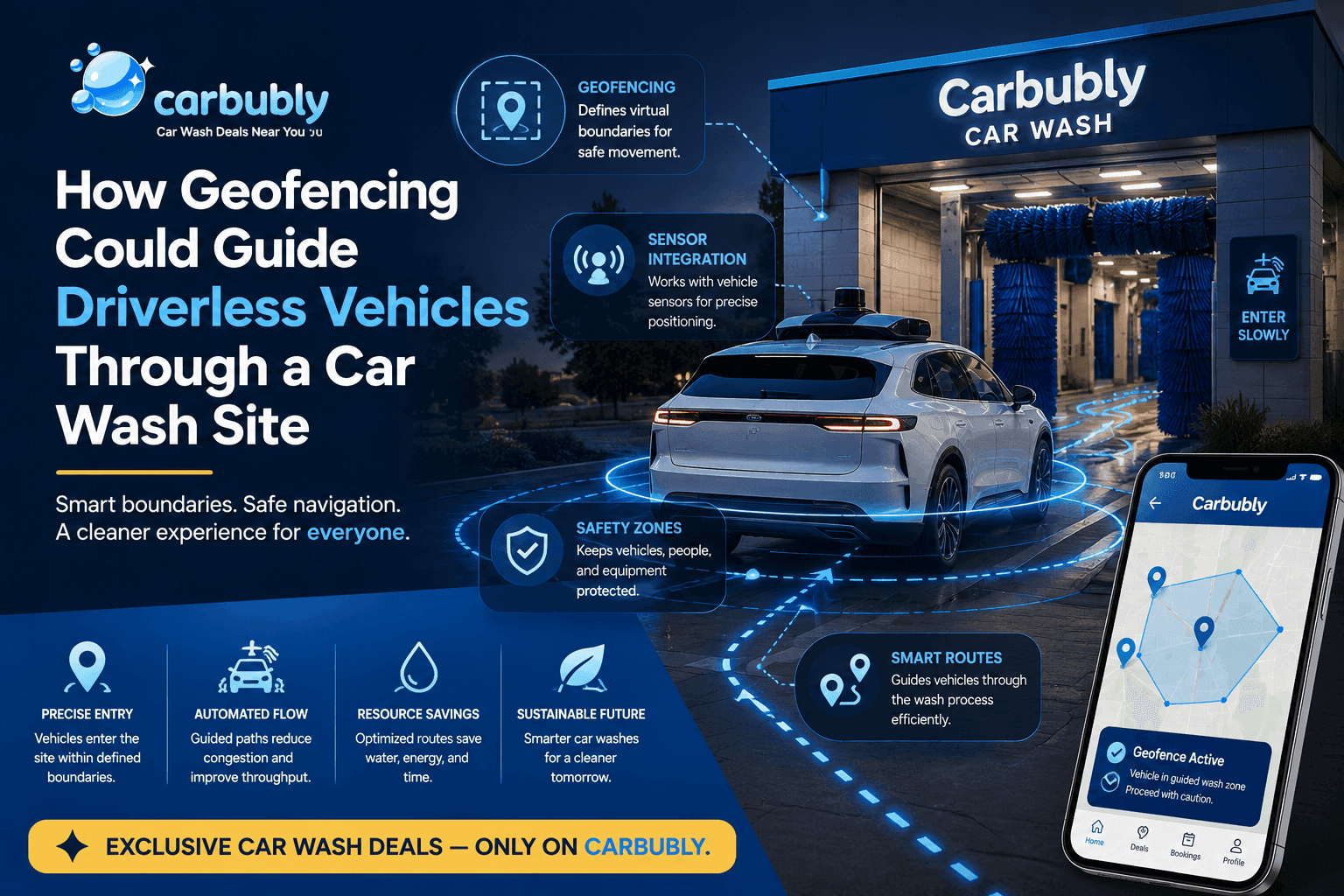
A Geofencing Guide could help driverless vehicles move through a car wash site by creating virtual boundaries for entry, waiting, washing, drying, inspection, charging, and exit zones so the vehicle knows where it should go and what actions are allowed in each area.
That might sound technical, but the idea is easy to understand. A geofence is like an invisible digital boundary drawn around a real-world location. When a vehicle enters that boundary, software can trigger specific rules, alerts, speed limits, service steps, or routing instructions. In a future Geofencing Car Wash setup, a driverless EV could use those boundaries to know when to slow down, where to queue, where to stop, which wash bay to enter, and when it is safe to leave.
This matters because a car wash site is not a simple road. It has tight lanes, wet pavement, attendants, payment areas, equipment, vacuums, other drivers, pedestrians, drying zones, and vehicles moving slowly in different directions. A driverless vehicle would need more than a street address. It would need a site-level plan.
For everyday drivers comparing “Exclusive car wash deals, only on Carbubly.”, the same lesson applies in a practical way: the best car wash experience starts with clear instructions, the right service, and a provider that understands the vehicle’s needs.
Key Takeaways
Geofencing could help driverless vehicles understand where to enter, queue, stop, wash, dry, inspect, and exit a car wash site.
A Geofencing Car Wash system would need clear digital zones, physical signs, staff oversight, safety rules, and emergency-stop procedures.
Autonomous and EV fleets may need special attention around cameras, sensors, glass, charge ports, wheels, interiors, and water handling.
California DMV regulates autonomous vehicle testing and deployment in California, so driverless car wash use would need to fit broader AV rules.
EPA guidance says vehicle washing can affect stormwater when wash water is not handled properly, so future fleet-cleaning sites need responsible drainage practices.
Carbubly is a marketplace for car wash deals that helps drivers discover, compare, purchase, and redeem offers from trusted local car wash and detailing providers.
What Is a Geofencing Guide?
A Geofencing Guide is a set of location-based rules that tells a vehicle, app, fleet system, or operator what should happen inside a specific physical area.
In simple terms, geofencing uses digital boundaries. Those boundaries can be drawn around a city, neighborhood, depot, parking lot, charging station, car wash entrance, wash bay, drying area, or service lane.
For a car wash site, geofencing could define zones such as:
Arrival zone
Queue zone
Payment or verification zone
Pre-wash inspection zone
Wash bay entry zone
Conveyor or bay alignment zone
Hand wash zone
Touchless wash zone
Drying zone
Interior reset zone
Charging zone
Exit zone
Emergency stop zone
Staff-only area
Each zone could trigger a different instruction. For example, when a driverless vehicle enters the arrival zone, it might reduce speed. When it reaches the wash bay, it may wait for staff confirmation. When it exits the wash area, the fleet system may log the service as completed.
The goal is not to make a car wash magically autonomous. The goal is to make a complex site easier for driverless or fleet-managed vehicles to understand.
Why Would Driverless Vehicles Need Geofencing at a Car Wash?
Driverless vehicles would need geofencing at a car wash because a wash site is full of small, location-specific rules.
A human driver can read signs, listen to an attendant, adjust steering, stop if a worker waves, choose a package, move slowly, and respond to unexpected conditions. A driverless vehicle needs those instructions translated into a predictable digital and physical system.
A car wash site may include:
Narrow entry lanes
Wet surfaces
Curbs and wheel guides
Pedestrian movement
Staff crossing areas
Vacuums
Drying spaces
Tight turns
Payment gates
Other vehicles
Equipment arms or sprayers
Conveyor belts
Low-clearance signs
Exit traffic
Geofencing could help define what the vehicle is allowed to do in each area. For example:
In the arrival zone, speed may be limited.
In the queue zone, the vehicle may follow a stop-and-go pattern.
In the inspection zone, staff may confirm vehicle condition.
In the wash bay, the vehicle may stop at a marked point.
In the drying zone, the vehicle may wait until air blowers stop.
In the exit zone, the vehicle may resume normal low-speed routing.
Without site-level structure, a driverless vehicle could be technically capable on public roads but still awkward inside a busy car wash property.
Why This Matters for Sacramento and Modern Vehicle Care
Sacramento is a useful place to discuss this because California has an active autonomous vehicle framework, and Sacramento-area drivers already use a wide mix of EVs, Teslas, rideshare vehicles, family SUVs, work trucks, and local car wash services.
The California DMV’s Autonomous Vehicles Program explains that the DMV administers California’s AV program and issues permits to manufacturers that test and deploy autonomous vehicles on California public roads. That matters because driverless vehicles are regulated systems, not just regular cars with a software upgrade.
The DMV also explains through its permit resources that California authorizes manufacturers under three categories: testing with a safety driver, driverless testing, and deployment. A vehicle operating on a public road and a vehicle navigating a private service site may involve different operational questions, but the broader point stays the same: autonomous activity needs defined rules, conditions, and oversight.
For car wash providers, this means the future is not only about buying newer equipment. It is about building clearer procedures.
What Do the Statistics Say?
A few trusted sources help explain why a Geofencing Guide for car wash sites is worth discussing.
The road system is already large. The Federal Highway Administration reported 284,614,269 registered motor vehicles in the United States in 2023 in its State Motor-Vehicle Registrations table. Driverless vehicles would have to operate inside a much larger world of human-driven cars, SUVs, trucks, vans, EVs, delivery vehicles, and work fleets.
California has formal AV permit categories. The California DMV authorizes manufacturers under testing with a safety driver, driverless testing, and deployment categories. This helps readers understand why “autonomous vehicle” is not one simple status.
Vehicle washing has environmental risk when handled poorly. EPA guidance on vehicle maintenance and washing explains that vehicle washing can release pollutants such as hydrocarbons and heavy metals into waterways if wash water is not properly managed.
Fleet-style washing needs planning. EPA guidance on municipal vehicle and equipment washing says vehicle and equipment wash water can contain sediment, detergents, oils, grease, and heavy metals. A future car wash site serving fleets would need responsible water handling, not just routing software.
The takeaway is simple: driverless car wash guidance is not only about digital maps. It also connects to regulation, physical site design, environmental practices, and repeatable service quality.
How Would a Geofencing Car Wash Work?
A Geofencing Car Wash would likely work through a mix of digital boundaries, physical signs, staff checks, vehicle software, and service rules.
A future process could look like this:
The vehicle books or receives a wash assignment.
The fleet system confirms the service type.
The vehicle approaches the car wash site.
A geofence triggers low-speed site mode.
The vehicle follows a digital route to the queue.
Staff or systems verify the vehicle and service package.
The vehicle enters the correct wash or detailing zone.
The wash process is completed.
The vehicle moves to drying, interior reset, charging, or inspection.
The system logs completion.
The vehicle exits through a defined route.
The important part is that each zone has a purpose. The vehicle is not simply “at the car wash.” It is in a specific area with specific rules.
A strong geofencing setup would answer:
Where should the vehicle enter?
Where should it wait?
Who confirms the service?
Where does it stop before the wash?
What speed is allowed?
What happens if equipment is blocked?
Where do staff walk?
Where does the vehicle go after washing?
Who confirms it can exit?
What happens in an emergency?
Good geofencing makes the site predictable.
What Zones Would a Driverless Car Wash Site Need?
A future driverless car wash site would need zones that are simple enough for people and vehicles to understand.
Useful zones may include:
Entry zone: The vehicle slows down and confirms it has entered the site.
Verification zone: The system confirms booking, vehicle identity, and service type.
Queue zone: Vehicles wait in a defined order.
Human oversight zone: Staff can pause, inspect, or redirect the vehicle.
Wash selection zone: The vehicle is routed to touchless wash, hand wash, express wash, or detailing.
Bay alignment zone: The vehicle lines up with equipment, guides, or floor markings.
Wash active zone: The vehicle remains stopped or follows a controlled movement pattern.
Drying zone: The vehicle waits for drying equipment or staff.
Interior reset zone: Staff clean seats, mats, cup holders, glass, and touchpoints if included.
Inspection zone: Staff check cameras, glass, lights, wheels, and visible condition.
Exit zone: The vehicle leaves the site only when the route is clear.
This is where physical design and digital design have to match. A geofence is only useful if the real-world site supports it.
Why Sensors, Glass, and Visibility Matter
A driverless or driver-assistance vehicle may rely on cameras, radar, lidar, lights, windshields, mirrors, and other exterior systems. Dirt does not automatically make a vehicle unsafe, but clean surfaces can support inspection and readiness.
A Geofencing Car Wash setup may need extra attention around:
Windshield cameras
Side cameras
Rear cameras
Front panels
Sensor-adjacent housings
Headlights
Taillights
Mirrors
Glass roofs
Charge ports
Wheels and lower panels
Tesla owners already have a practical example of why vehicle-specific wash steps matter. Tesla’s Model Y car wash guidance discusses Car Wash Mode and wash-related precautions. A driverless fleet vehicle would need similar clarity before entering a wash site, even if the exact procedures differ by manufacturer.
The point is not to guess. The point is to follow clear vehicle instructions.
Service Comparison: What Type of Wash Fits the Vehicle?
Different vehicles and conditions need different services.
Touchless car wash: Useful for light dust, pollen, and lower-contact exterior cleaning. Drivers looking for a touchless car wash near me can explore touchless car wash services when avoiding brush contact is a priority.
Hand car wash: Useful for bugs, wheels, lower panels, mirrors, and areas near cameras or sensors that may need careful human attention. Drivers searching for a hand car wash near me can compare hand car wash services when a basic automatic wash may not be enough.
Full-service detailing: Useful for passenger vehicles, rideshare cars, EVs, Teslas, family SUVs, and future robotaxi fleets. Drivers looking for full-service car detailing near me can book full-service car detailing when seats, mats, glass, stains, odors, cup holders, or cargo areas need deeper care.
Mobile detailing: Useful when vehicles need service at a fleet lot, home, office, charging hub, or approved parking space. This fits searches like mobile detailing near me when convenience matters.
Express car wash: Useful for fast exterior maintenance when the vehicle is lightly dirty and needs to return to the road quickly.
A geofencing system could help route the vehicle to the correct service lane based on its booking and condition.
How to Choose the Best Option Today
Most drivers are not sending a driverless car through a geofenced wash site yet. But the same decision-making helps with normal car care.
Best for budget
Choose the most affordable service that solves the actual cleaning problem.
Good budget choices include:
Express wash for light exterior dust
Touchless wash for lower-contact exterior cleaning
Basic hand wash for bugs, wheels, and lower panels
Interior add-ons only when needed
Full-service detailing only when deeper cleaning is necessary
A driver searching for an affordable car wash near me should still check what is included. Low price only helps when the service fits the car.
Best for convenience
Choose a provider near your real route, not only the closest map result. Drivers can compare car wash deals in Sacramento, car wash deals in Citrus Heights, car wash deals in Roseville, car wash deals in Rancho Cordova, car wash deals in Folsom, car wash deals in Elk Grove, car wash deals in Davis, and car wash deals in West Sacramento.
Convenience includes location, timing, package clarity, service speed, vehicle compatibility, and redemption terms.
Best for protection and detailing
Choose more careful service when your vehicle has:
Cameras or sensors
Tesla or EV-specific needs
Ceramic coating
Paint protection film
Vinyl wrap
Dark paint
Heavy bugs
Dirty wheels
Interior stains
Pet hair
Odors
Frequent passengers
Rideshare or delivery use
For these vehicles, hand washing, mobile detailing, or full-service detailing may make more sense than a quick exterior wash.
How “Car Wash Near Me” Search Intent Connects to Geofencing
A driver searching car wash near me wants a local answer fast. But geofencing reminds us that location alone is not enough. The site also needs clear routing, safe entry, understandable package choices, and a service that fits the vehicle.
A good local search should help drivers compare:
Service type
Distance
Price
Package details
EV-safe handling
Tesla experience
Interior options
Touchless or hand wash availability
Mobile detailing options
Redemption rules
Customer trust signals
That is why phrases like best car wash near me, local car wash near me, car wash deals near me, and EV-safe car wash near me should connect to real service details, not just a nearby address.
A future driverless vehicle may use geofencing to navigate the property. A human driver can use a marketplace to compare choices before arriving. Both need clarity.
Common Mistakes to Avoid
Thinking geofencing alone solves everything. A digital boundary helps, but the site still needs signs, safe lanes, staff procedures, and emergency plans.
Ignoring physical layout. Tight turns, wet pavement, pedestrians, vacuums, and equipment all affect how vehicles move.
Using one wash method for every vehicle. Light dust, bugs, interior mess, and sensor-heavy vehicles need different services.
Forgetting EV procedures. Charge ports, cameras, glass, trim, and manufacturer guidance matter.
Skipping human oversight. A driverless vehicle may still need staff checks at a car wash site.
Ignoring water handling. Vehicle washing can affect stormwater if wash water is not managed properly.
Overpromising autonomous readiness. Providers should avoid claiming driverless expertise without real procedures to support it.
Treating every geofence as permanent. Construction, blocked lanes, equipment maintenance, or weather may require temporary changes.
Ignoring pedestrians. Staff and customers need safe walking paths.
Choosing only by price. A cheap wash is not helpful if it does not fit the vehicle’s needs.
Where Carbubly Fits Naturally
Carbubly is a marketplace for car wash deals that helps drivers discover, compare, purchase, and redeem offers from trusted local car wash and detailing providers.
Carbubly is not a car wash operator. It does not personally wash vehicles. Instead, it helps drivers compare local providers offering hand car wash, touchless car wash, express wash, mobile detailing, full-service detailing, Tesla car wash options, EV-safe car wash preferences, and other vehicle-cleaning services.
Start with Carbubly when you want to compare affordable car wash options, trusted car wash services, local car wash providers, and car wash savings. You can also view Carbubly on Google Maps for local trust context.
As Geofencing Car Wash ideas become more realistic, comparison becomes even more important. Drivers and future fleets need to know what service is available, what is included, whether EVs and Teslas are handled carefully, and whether the provider has clear procedures.
Final Tips Before Choosing a Modern Car Wash
Use this checklist before booking:
Is the service touchless, hand wash, express, mobile, or full detailing?
Does the provider explain what is included?
Are wheels, glass, bugs, and lower panels covered?
Is interior cleaning needed?
Is the vehicle an EV or Tesla?
Are cameras, sensors, or special surfaces a concern?
Does the provider mention EV-safe handling?
Is the location convenient for your route?
Are package details and add-ons clear?
Are there car wash deals near me that match the actual need?
Does the provider seem prepared and trustworthy?
Are wash-water practices responsible?
Is the vehicle lightly dirty or due for deeper detailing?
The right choice is not always the closest wash. It is the provider that fits the vehicle, the route, and the cleaning problem.
Conclusion: Geofencing Guide for Car Wash Sites
A Geofencing Guide could help driverless vehicles move through a car wash site by turning a confusing property into a set of clear digital and physical zones. Entry, queueing, payment, wash selection, bay alignment, drying, inspection, interior cleaning, charging, and exit could all be managed more predictably.
That future still needs practical support: clear signs, staff training, emergency procedures, EV-aware handling, sensor-area cleaning, responsible wash-water planning, and service records. Technology can guide the vehicle, but the site itself has to be ready.
Carbubly helps drivers compare car wash and detailing deals from trusted local providers today. Visit Carbubly to compare nearby options and choose the service that fits your vehicle, schedule, and budget.
FAQs About Geofencing and Driverless Car Wash Sites
1. What is a Geofencing Guide for a car wash?
A Geofencing Guide is a set of digital location rules that can help vehicles understand where to enter, wait, wash, dry, inspect, and exit a car wash site.
2. What does Geofencing Car Wash mean?
Geofencing Car Wash means using virtual boundaries around parts of a car wash property so vehicles, apps, or fleet systems can trigger location-specific instructions.
3. How could geofencing guide driverless vehicles?
Geofencing could guide driverless vehicles by creating zones for low-speed entry, queueing, service verification, wash bay alignment, drying, inspection, and exit.
4. Would geofencing replace car wash staff?
No. Geofencing could support routing and automation, but staff oversight, emergency procedures, inspections, and customer service would still matter.
5. Why do driverless vehicles need special car wash routing?
Driverless vehicles may need clear instructions for tight lanes, wet pavement, equipment, staff areas, queues, wash bays, drying zones, and exits.
6. Is geofencing useful for EVs and Teslas?
Yes. Geofencing could help route EVs and Teslas to the right service zone, but providers should still follow vehicle-specific wash guidance.
7. Could geofencing help with fleet cleaning?
Yes. Geofencing could help fleet vehicles check in, choose the right service lane, record completed washes, and move to charging, inspection, or exit zones.
8. Does geofencing make autonomous vehicles safer?
Geofencing can support controlled movement inside defined areas, but safety also depends on vehicle systems, site design, staff procedures, regulations, and maintenance.
9. What should car wash providers prepare first?
Providers should start with clear site layout, service menus, staff training, EV-aware procedures, emergency stop access, water handling, and simple checklists.
10. Where can drivers compare car wash deals today?
Drivers can compare car wash deals on Carbubly, a marketplace that helps drivers discover, compare, purchase, and redeem offers from trusted local car wash and detailing providers.