


How does Autonomous Car Shaping Sacramento’s Future
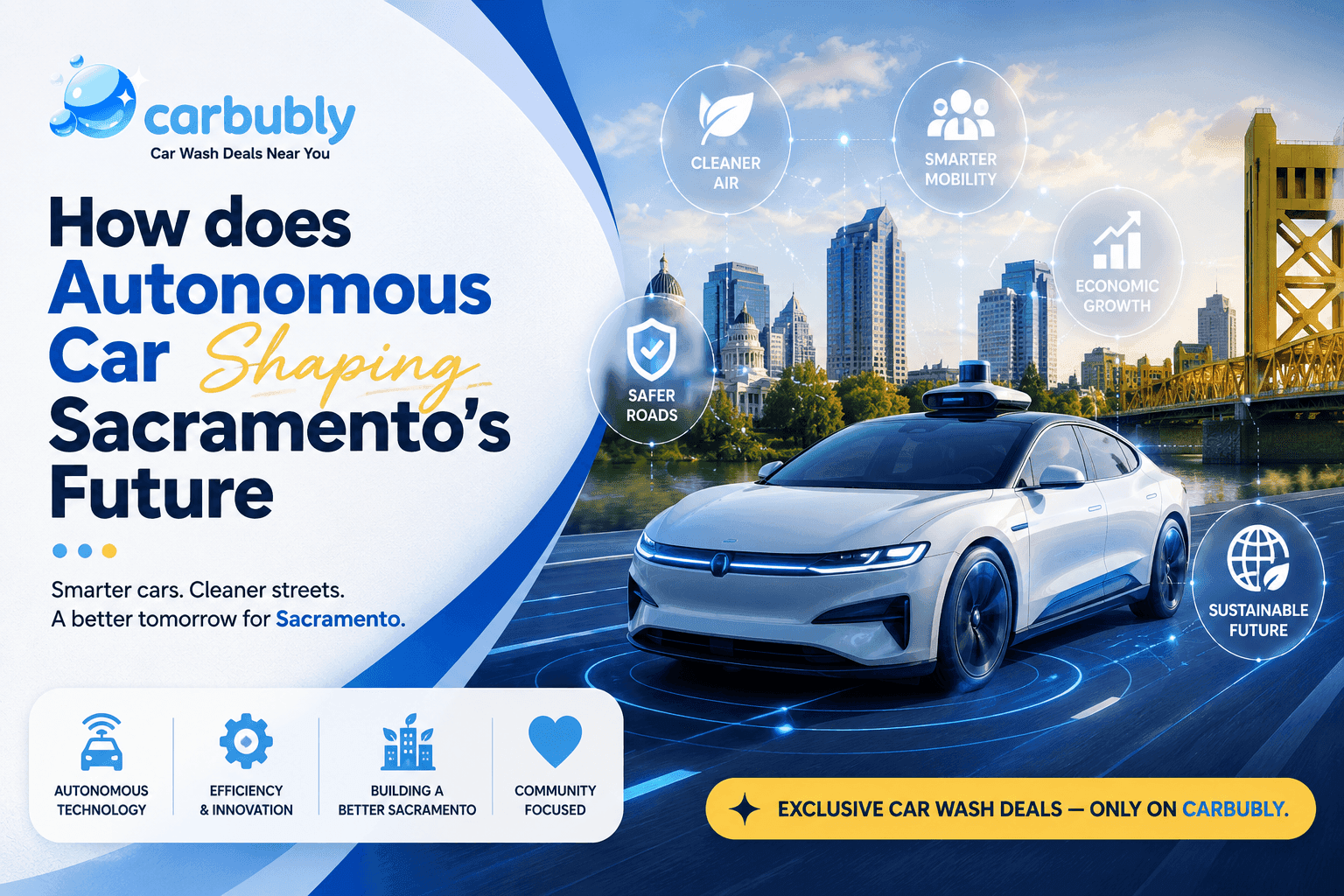
How does Autonomous Car Shaping Sacramento’s Future? It could change how people move through the city, how curbs and mobility hubs are managed, how EV and robotaxi fleets are maintained, and how local services like car washing, detailing, charging, and fleet support fit into everyday transportation.
Sacramento is a good place to watch this topic because it sits inside California’s larger autonomous vehicle system. The California DMV administers the state’s Autonomous Vehicles Program and issues permits to manufacturers that test and deploy autonomous vehicles on public roads, while the City of Sacramento provides local information about robotaxis and driverless vehicles for residents.
For everyday drivers, this is not only a “future technology” story. It is also about practical questions: Where will autonomous cars stop? How will they charge? How will they stay clean? How will they handle Sacramento rain, dust, pollen, bugs, road film, and passenger use? And how will local providers support cleaner, smarter vehicle care?
That is where “Exclusive car wash deals, only on Carbubly.” fits naturally into the conversation. As vehicles become more electric, connected, and sensor-heavy, drivers still need simple ways to compare trusted car wash and detailing options that fit their vehicle, route, budget, and schedule.
Key Takeaways
Autonomous cars could shape Sacramento’s future by changing how people think about streets, curb space, charging, robotaxi pickup zones, fleet care, and vehicle maintenance.
California DMV regulates autonomous vehicle testing and deployment in California, while Sacramento still matters for local streets, curbs, parking, mobility planning, and public information.
Autonomous vehicles may need clean cameras, sensors, lights, glass, interiors, and wheels to stay ready for daily use.
Sacramento-area car wash and detailing providers could support future mobility through touchless washing, hand washing, mobile detailing, full-service detailing, and EV-safe car wash options.
Drivers should avoid assuming every EV is autonomous or every autonomous vehicle is already available for public use.
Carbubly is a marketplace for car wash deals that helps drivers discover, compare, purchase, and redeem offers from trusted local car wash and detailing providers.
What Does Autonomous Car Sacramento Really Mean?
Autonomous Car Sacramento refers to the growing conversation around self-driving, driverless, robotaxi, and advanced driver-assistance vehicles operating in or around the Sacramento region.
That can include several different vehicle types:
Autonomous test vehicles
Robotaxis
Driverless vehicles
EV fleets
Connected cars
Tesla vehicles with driver-assistance features
Delivery vehicles
Shared mobility vehicles
Shuttle or campus-style vehicles
Future fleet vehicles used by private operators
These are not all the same. A Tesla with driver-assistance features is not automatically the same as a permitted driverless autonomous vehicle. A company testing an autonomous vehicle with a safety driver is not necessarily offering public robotaxi rides. A deployed AV fleet may have different rules than a test vehicle.
That distinction matters because Sacramento’s future will not be shaped by one type of vehicle alone. It will likely be shaped by a mix of state regulation, local street planning, EV charging, rideshare habits, fleet maintenance, public trust, and daily driver choices.
Why Autonomous Cars Matter for Sacramento’s Future
Autonomous cars matter because they could affect how Sacramento manages streets, curbs, parking, passenger pickup, delivery zones, mobility hubs, and vehicle service needs.
Sacramento already has a mobility and curb-management framework focused on access, local businesses, and efficient curbside use. That matters because autonomous vehicles, robotaxis, rideshare cars, delivery vehicles, buses, cyclists, pedestrians, and personal cars may all compete for the same limited curb space.
Autonomous cars could influence:
Where vehicles stop for pickup and drop-off
How downtown curbs are managed
How EV charging hubs are planned
How fleets are cleaned and staged
How passengers find robotaxis
How airports, hotels, offices, and transit hubs connect
How local businesses handle new mobility traffic
How car wash and detailing providers support sensor-heavy vehicles
How drivers compare services for EVs and advanced vehicles
The future may not be one big sudden change. It may arrive in small steps: more EVs, more driver-assistance features, more testing, more designated pickup zones, more charging stations, and more fleet-support services.
What Do the Statistics Say?
A few trusted sources help explain why this topic deserves attention.
The road system is already huge. The Federal Highway Administration reported 284,614,269 registered motor vehicles in the United States in 2023 in its State Motor-Vehicle Registrations table. That means autonomous cars will not operate alone. They will share roads with human-driven cars, trucks, SUVs, EVs, delivery vans, rideshare vehicles, and family cars.
California has a formal AV permit structure. The California DMV explains that it authorizes manufacturers under three permit categories: testing with a safety driver, driverless testing, and deployment. That helps readers understand why “testing,” “driverless testing,” and “deployment” should not be treated as identical.
Sacramento provides local AV context. The City of Sacramento describes autonomous car services as robotaxis or driverless vehicles and provides information for residents. That matters because local understanding and public trust are part of how new mobility services fit into daily life.
Vehicle washing has environmental impacts when handled poorly. EPA guidance on vehicle maintenance and washing explains that vehicle washing can release pollutants such as hydrocarbons and heavy metals into local waterways when wash water is not managed properly.
Fleet washing needs planning. EPA guidance on municipal vehicle and equipment washing notes that wash water can contain sediment, detergents, oils, grease, and heavy metals. This makes responsible water handling important for any future fleet-cleaning setup.
The takeaway is simple: autonomous cars are not only about software. They also require rules, roads, charging, cleaning, maintenance, environmental planning, and local services.
How Could Autonomous Cars Change Sacramento Streets?
Autonomous cars could change Sacramento streets by making curb space more important. A robotaxi needs a safe place to stop. A passenger needs a clear place to wait. A fleet vehicle needs a place to charge, clean, inspect, and stage between trips.
This could affect areas such as:
Downtown Sacramento
State office corridors
Medical centers
University areas
Airport routes
Transit stations
Shopping districts
Event venues
Business parks
Suburban commute routes
The biggest change may not be the car itself. It may be the system around the car.
Sacramento may need clearer answers to questions like:
Where can autonomous cars pick up passengers?
How should robotaxis avoid blocking bike lanes?
Where should EV fleets charge?
How should city streets handle stopped driverless vehicles?
Where can fleet vehicles be cleaned or detailed?
How should riders identify the correct vehicle?
How can pedestrians and cyclists stay safe around new mobility services?
Good planning would make these details easy to understand before the streets feel crowded or confusing.
How Does Autonomous Car Shaping Sacramento’s Future Connect to Car Care?
Autonomous cars still need basic vehicle care. In some ways, they may need more consistent care than a typical personal vehicle.
A human driver can notice a dirty windshield, a blocked camera, a smelly interior, a muddy floor mat, or bird droppings on the hood. A fleet needs a process for catching those issues.
Autonomous and driver-assistance vehicles may rely on:
Cameras
Radar
Lidar
Windshields
Exterior lights
Mirrors
Glass panels
Clean body areas near sensors
Wheels and tires
Interior passenger areas
Dirt, pollen, bugs, road film, mud, rain residue, and brake dust can collect on these surfaces. Cleaning does not make a vehicle autonomous, and it does not replace inspections or safety systems. But it can support visibility checks, passenger comfort, and vehicle readiness.
That is why car wash and detailing providers could become part of Sacramento’s future mobility support network.
Service Comparison: What Cleaning Options Fit Modern Vehicles?
Different vehicles need different cleaning methods. A future Autonomous Car Sacramento service ecosystem would likely use more than one type of vehicle care.
Touchless car wash: Helpful for light dust, pollen, rain spots, and lower-contact exterior cleaning. Drivers can explore touchless car wash services when avoiding brush contact is important.
Hand car wash: Helpful for bugs, dirty wheels, lower panels, mirrors, and areas near cameras or sensors that may need careful attention. Drivers can compare hand car wash services when a basic automatic wash may not be enough.
Full-service detailing: Helpful when interiors need deeper care, especially for rideshare cars, family SUVs, EVs, Teslas, shared vehicles, and high-use fleet vehicles. Drivers can book full-service car detailing when seats, mats, glass, cup holders, stains, odors, or cargo areas need more complete care.
Mobile detailing: Helpful when vehicles need cleaning at home, work, a fleet lot, a charging hub, or another approved parking area.
Express car wash: Helpful for quick exterior maintenance when the vehicle is only lightly dirty.
A future fleet may use all of these options depending on vehicle condition, route, and service schedule.
How to Choose the Best Option Today
Most Sacramento drivers are not managing autonomous fleets. But the same thinking helps personal car care.
Best for budget
Choose the most affordable service that solves the actual cleaning problem.
Good budget choices may include:
Express wash for light exterior dust
Touchless wash for lower-contact cleaning
Hand wash for bugs, wheels, and lower panels
Interior add-ons when the outside is already clean
Full-service detailing only when deeper cleaning is needed
A low price only helps when the service fits your vehicle’s real condition.
Best for convenience
Choose a provider near your actual routine. Drivers can compare car wash deals in Sacramento. Regional drivers may also compare car wash deals in Citrus Heights, car wash deals in Roseville, car wash deals in Rancho Cordova, car wash deals in Folsom, car wash deals in Elk Grove, car wash deals in Davis, and car wash deals in West Sacramento.
Convenience includes location, appointment rules, service speed, package clarity, vehicle compatibility, and redemption terms.
Best for protection and detailing
Choose a more careful service when your vehicle has:
Cameras or sensors
Tesla or EV-specific needs
Ceramic coating
Paint protection film
Vinyl wrap
Dark paint
Heavy bugs
Dirty wheels
Interior stains
Pet hair
Odors
Frequent passengers
Rideshare or delivery use
For Tesla owners, review Tesla’s car wash guidance before using automatic wash services. Follow the current owner manual and provider instructions.
What Local Businesses Could Prepare For
Autonomous vehicles could create new support needs for local businesses. Car wash and detailing providers do not need to become AV engineers. They can prepare by making their services clearer and more consistent.
Future-ready providers can improve:
Touchless wash descriptions
Hand wash package details
Full-service detailing options
Mobile detailing availability
EV-safe service notes
Tesla-aware handling reminders
Sensor-area cleaning notes
Wheel cleaning details
Interior reset packages
Fleet-friendly scheduling
Water-handling information
Clear add-on pricing
Staff checklists
Damage-report procedures
Local providers could also support fleets by offering service records, scheduled cleaning, mobile detailing at approved sites, and clear package rules.
This matters because autonomous cars may not be individually owned in the same way many personal vehicles are today. Some may be fleet vehicles, robotaxis, shuttles, or shared cars. Fleet customers often need predictability more than fancy language.
Common Mistakes to Avoid
Assuming autonomous cars are already everywhere. Testing, driverless testing, deployment, and public passenger service are different stages.
Treating every EV as autonomous. EVs, Teslas, driver-assistance systems, and driverless vehicles are related but not the same.
Ignoring regulation. California DMV permits and state rules matter for AV testing and deployment.
Forgetting local streets. Sacramento’s curbs, bike lanes, event traffic, parking zones, and construction areas affect how autonomous cars could operate.
Ignoring vehicle cleaning. Sensor-heavy vehicles still need clean glass, lights, wheels, cameras, and interiors.
Using one wash method for every car. Light dust, bugs, interior mess, EV needs, and sensor areas may need different services.
Skipping water handling. Vehicle washing can affect stormwater when done poorly.
Choosing only by price. The best car wash depends on vehicle condition, service type, and provider clarity.
Overstating safety claims. Cleaning supports readiness, but it does not replace vehicle systems, inspections, regulations, or maintenance.
Forgetting regional travel. Sacramento’s future also connects with Citrus Heights, Roseville, Rancho Cordova, Folsom, Elk Grove, Davis, and West Sacramento.
Where Carbubly Fits Naturally
Carbubly is a marketplace for car wash deals that helps drivers discover, compare, purchase, and redeem offers from trusted local car wash and detailing providers.
Carbubly is not a car wash operator. It does not personally wash vehicles. Instead, it helps drivers compare local providers offering hand car wash, touchless car wash, express wash, mobile detailing, full-service detailing, Tesla car wash options, EV-safe car wash preferences, and other vehicle-cleaning services.
Start with Carbubly when you want to compare affordable car wash options, trusted car wash services, local car wash providers, and car wash savings. You can also view Carbubly on Google Maps for local trust context.
As autonomous cars shape Sacramento’s future, comparison becomes more useful. Drivers and future fleets need to know what service fits the vehicle, what is included, where it is available, and whether the provider can handle EVs, interiors, cameras, sensors, and high-use cleaning needs.
Final Tips Before Thinking About Autonomous Cars in Sacramento
Use this checklist to stay practical:
Check official sources before believing AV headlines.
Separate testing from deployment and public passenger service.
Remember that EVs are not automatically autonomous.
Watch how Sacramento manages curbs, pickup zones, and mobility hubs.
Think about charging, cleaning, maintenance, and staging—not just software.
Choose car wash services based on vehicle type and condition.
Follow manufacturer guidance for EVs and Teslas.
Look for providers that clearly explain what is included.
Consider touchless wash, hand wash, or full detailing based on the vehicle’s needs.
Pay attention to responsible water-handling practices.
Use trusted marketplaces to compare local options.
Avoid unsupported claims about fully autonomous availability.
The future will be easier to understand if you focus on what is actually authorized, what is actually available, and what vehicles actually need.
Conclusion: How does Autonomous Car Shaping Sacramento’s Future
How does Autonomous Car Shaping Sacramento’s Future comes down to more than driverless technology. Autonomous cars could influence Sacramento’s curbs, mobility hubs, EV charging, fleet cleaning, passenger pickup, street design, public trust, and local vehicle-care services.
Sacramento’s future will likely be shaped by a mix of regulation, infrastructure, clean mobility, local providers, and practical vehicle support. Autonomous cars may become more visible, but they will still need clear rules, clean glass, maintained sensors, passenger-ready interiors, EV-aware care, and reliable local services.
Carbubly helps drivers compare car wash and detailing deals from trusted local providers today. Visit Carbubly to compare nearby options and choose the service that fits your vehicle, schedule, and budget.
FAQs About Autonomous Car Sacramento
1. How does Autonomous Car Shaping Sacramento’s Future?
Autonomous cars could shape Sacramento’s future by changing curb use, pickup zones, EV charging, mobility hubs, fleet cleaning, vehicle maintenance, and how people move around the region.
2. What does Autonomous Car Sacramento mean?
Autonomous Car Sacramento refers to self-driving, robotaxi, EV fleet, and driver-assistance vehicle activity connected to Sacramento’s roads, regulations, mobility systems, and local services.
3. Who regulates autonomous cars in Sacramento?
The California DMV regulates autonomous vehicle testing and deployment in California, while other agencies and Sacramento’s local mobility teams may affect passenger service, streets, curbs, and local operations.
4. Are autonomous cars already common in Sacramento?
Autonomous vehicles are part of Sacramento’s mobility conversation, but readers should separate testing, driverless testing, deployment, and public ride availability.
5. Why do autonomous cars need car washing?
Autonomous and driver-assistance vehicles may rely on cameras, sensors, lights, glass, and exterior surfaces. Cleaning can support visibility checks, inspections, and vehicle readiness.
6. Are touchless car washes useful for autonomous or EV vehicles?
Touchless car washes can be useful for light exterior dirt and lower-contact cleaning, but bugs, dirty wheels, interiors, and sensor-adjacent areas may need hand washing or detailing.
7. Could local Sacramento providers support future AV fleets?
Yes. Local car wash and detailing providers could support future EV and autonomous fleets with exterior washing, mobile detailing, full-service detailing, glass cleaning, wheel cleaning, and interior resets.
8. Does this matter for Tesla owners?
Yes. Tesla owners should follow current Tesla guidance and choose EV-aware providers that understand cameras, charge ports, glass, trim, wheels, and interior screens.
9. What should drivers compare before booking car care?
Drivers should compare service type, location, price, package details, vehicle compatibility, EV handling, interior options, add-ons, and redemption rules.
10. Where can Sacramento drivers compare car wash deals?
Sacramento drivers can compare car wash deals on Carbubly, a marketplace that helps drivers discover, compare, purchase, and redeem offers from trusted local car wash and detailing providers.