

How AI Could Match Wash Demand
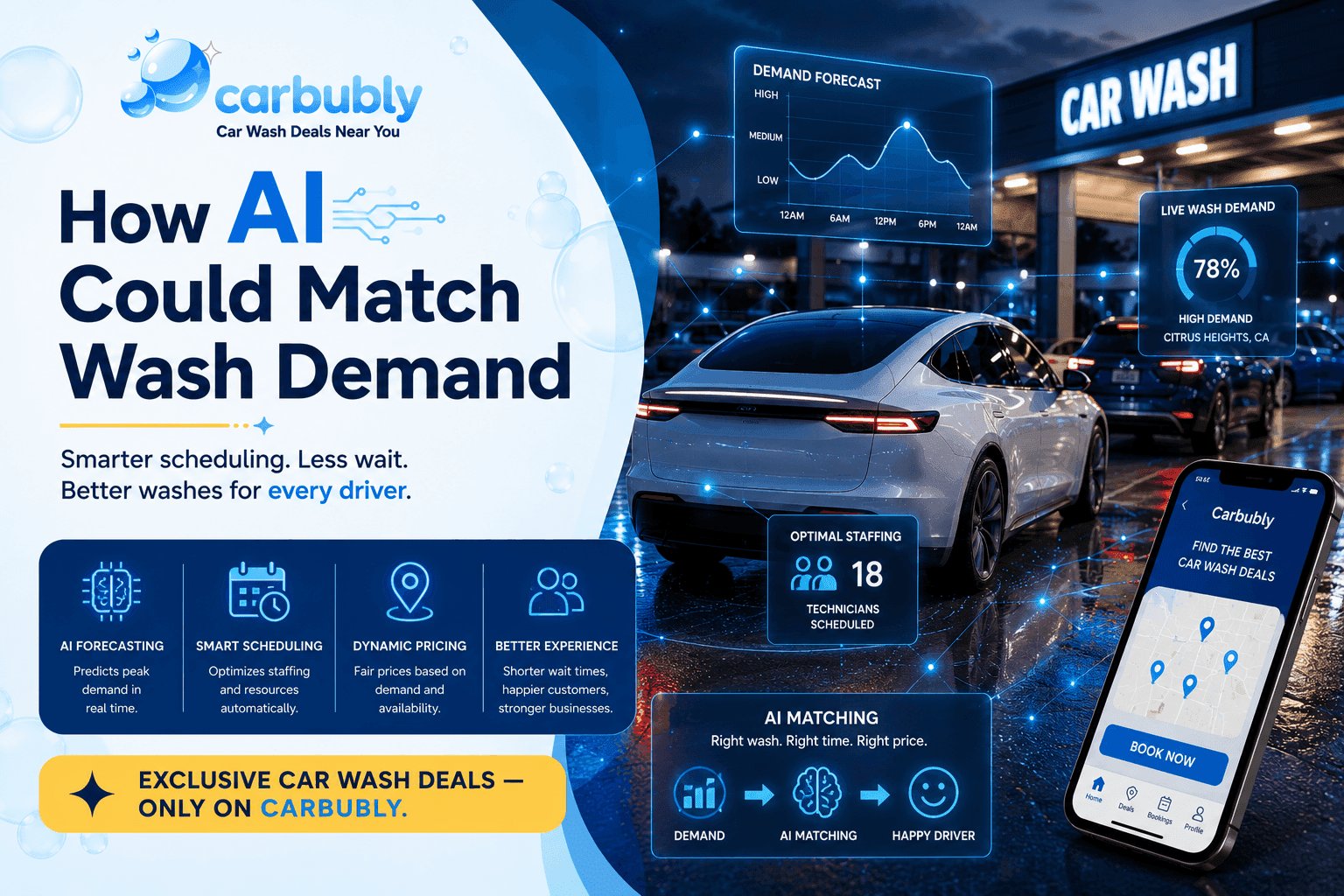
How AI Could Match Wash Demand is by helping predict when drivers need car washes, where demand is likely to rise, which services fit each vehicle, and when local providers have available capacity.
That sounds technical, but the everyday idea is simple. Some drivers need a quick express wash after a dusty commute. Some need a hand car wash after bugs, sap, or road film. Others need full-service detailing before a road trip, mobile detailing at home, or a touchless car wash for a lightly dirty EV. At the same time, local car wash providers may have slow hours, busy weekends, weather-related dips, staff limits, or open appointment slots.
AI could help connect those two sides better: the driver who needs the right wash and the provider that has the right service available at the right time. That does not mean AI should replace human choice. It means AI could make car wash booking smarter, more useful, and less random.
For drivers comparing Exclusive car wash deals, only on Carbubly, this kind of matching could eventually mean better timing, better service fit, clearer recommendations, and fewer wasted trips to a provider that is open but not right for the vehicle.
Key Takeaways
AI could help match car wash demand by using patterns such as weather, location, service availability, driver needs, and provider capacity.
Demand matching is not only about finding the nearest car wash; it is about finding the right service at the right time.
AI could help drivers choose between express wash, hand car wash, touchless car wash, mobile detailing, and full-service detailing.
Local providers could use demand signals to fill slow hours, prepare staffing, and promote relevant deals.
Weather, commute patterns, “open now” behavior, popular times, and appointment availability could all influence matching.
Carbubly can support smarter comparison because it is a marketplace for car wash deals, not a car wash operator.
What Does It Mean for AI to Match Wash Demand?
AI matching wash demand means using data and patterns to connect drivers with car wash services that fit what they need right now.
Instead of showing every nearby car wash as if they are the same, a smarter system could consider:
Where the driver is located
Whether the driver wants a car wash near me
Whether the vehicle needs exterior cleaning, interior cleaning, or both
Whether the car is lightly dusty or heavily dirty
Whether the driver wants affordable car wash deals
Whether the provider is open now
Whether appointments are available
Whether weather may affect demand
Whether the provider offers hand car wash, touchless car wash, express wash, mobile detailing, or full-service detailing
Whether the vehicle is a sedan, SUV, truck, van, Tesla, or EV
Whether the driver is near Sacramento, Citrus Heights, Roseville, Rancho Cordova, Folsom, Elk Grove, Davis, or West Sacramento
In plain language, AI could help answer: “Which wash makes the most sense for this driver, this car, this location, and this time?”
That is different from basic search. Basic search may show who is nearby. AI demand matching could help explain what fits best.
Why Does Wash Demand Matching Matter?
Wash demand matching matters because car washing is not one single need. A driver searching for a car wash after work may want speed. A parent with a messy SUV may need interior cleaning. A Tesla owner may want a touchless or hand wash option. A rideshare driver may need the car clean before passenger pickups. A provider may have open slots on Tuesday afternoon but heavy demand on Saturday morning.
The U.S. has a massive vehicle base. The Federal Highway Administration reported 284,614,269 registered motor vehicles in the U.S. in 2023 in its State Motor-Vehicle Registrations table. That includes commuter cars, family SUVs, trucks, vans, work vehicles, Teslas, EVs, rideshare vehicles, and weekend road-trip vehicles.
With that many vehicles, the problem is not simply “Do drivers need car washes?” They do. The better question is: “How can drivers find the right wash without guessing?”
For providers, demand matching could help reduce slow periods. A local hand car wash might have empty bays in the early afternoon. A mobile detailer might have open weekday slots. A touchless wash may see higher demand after rain clears or during pollen season. AI could help identify those patterns and support better timing.
What Do the Statistics Say?
A few trusted sources help explain why AI demand matching is relevant.
Vehicle cleaning serves a huge market of drivers. FHWA’s 2023 data shows more than 284 million registered vehicles in the United States. This makes vehicle cleaning a widespread, recurring need across local communities, commuters, families, businesses, and EV owners.
Visit timing data already helps people plan. Google explains that Search and Maps may show popular times, live visit information, wait times, and typical visit duration. That type of planning signal is close to what AI demand matching could use: not just whether a provider exists, but when demand is high or low.
Wash-water handling matters. The EPA explains in its vehicle maintenance and washing stormwater guidance that outdoor washing can send detergent-rich water into storm drains, and that wash water may contain nutrients, metals, and hydrocarbons. Smarter matching should consider provider type and responsible wash practices, not only convenience.
Vehicle wash water can include contaminants. EPA guidance on vehicle and equipment washing notes that washing can generate wastewater with sediment, detergents, oils, grease, and heavy metals. For drivers, that supports choosing professional providers that understand proper procedures.
Demand forecasting is already used in other location-based services. Research on machine learning for short-term ride-hailing demand forecasting studied demand patterns using time, location, traffic, pricing, and weather-related factors. Car wash demand is different from ride-hailing, but the general idea is similar: demand changes by time, place, conditions, and user behavior.
The takeaway is practical: AI does not need to guess randomly. It can use signals that already matter to real drivers and local businesses.
How Could AI Match Wash Demand?
AI could match wash demand by looking at driver intent, provider availability, vehicle needs, and outside conditions.
A simple version might work like this:
1. Understand what the driver needs
The system would first identify the type of cleaning problem.
A driver might need:
Quick exterior wash
Affordable car wash
Touchless car wash
Hand car wash
Full-service detailing
Mobile detailing
Interior vacuuming
Pet hair removal
Odor treatment
Wheel cleaning
Road-trip prep
Tesla car wash
EV-safe car wash
The goal is not to push the most expensive option. The goal is to match the service to the actual need.
2. Check local provider supply
AI could look at available providers and services.
This may include:
Open hours
Appointment slots
Current wait time
Service types
Package details
Vehicle restrictions
Deal availability
Weather policies
Mobile service radius
Staff or bay availability
Location and distance
A provider being nearby is helpful, but it is not enough. If a driver needs interior detailing and the closest location only offers express exterior washing, the match is weak.
3. Consider timing and weather
Car wash demand changes with weather.
AI could factor in:
Rain forecast
Dust and wind
Pollen season
Heat
Cold weather
Road salt in colder regions
Mud after storms
Clear weather after rain
Weekend travel
Holiday driving
Commute timing
For example, demand may rise after several rainy days when the weather clears. Mobile detailing may be harder during rain or high heat. Express washing may be popular during lunch hours or after work. AI could help match drivers to better time windows.
4. Match service type to vehicle condition
The system could help choose between service types.
Light dust may fit a touchless car wash.
Heavy bugs may fit hand washing.
Dirty mats may fit full-service detailing.
Pet hair may need interior detailing.
Busy schedule may fit mobile detailing.
A quick refresh may fit express wash.
Tesla and EV owners may need extra guidance.
The key is context. A “car wash near me” result is not always enough.
What Driver Problems Could AI Solve?
AI could make car wash booking easier for common situations.
“I need a car wash near me, but I’m in a hurry.”
AI could prioritize providers that are open, nearby, and likely to have short waits. It could also show express wash options instead of deep detailing.
“My car has bugs and road film.”
AI could suggest hand car wash services instead of a basic touchless wash, because stuck-on grime may need more focused attention.
“My SUV interior is messy.”
AI could recommend full-service detailing or mobile detailing instead of exterior-only washing.
“I drive a Tesla.”
AI could surface providers offering touchless, hand wash, or EV-aware services and remind the driver to review manufacturer guidance. Tesla owners can review Tesla’s car wash guidance before automatic washing.
“I want the best deal, but not the wrong service.”
AI could compare car wash savings with package fit. A cheaper wash is not useful if it skips the exact cleaning the driver needs.
Service Matching: Which Wash Fits Which Need?
AI demand matching should understand that car wash services are different.
Express car wash: Best for fast exterior cleaning when the vehicle has light dust, pollen, rain spots, or mild road film.
Touchless car wash: Best for light dirt when the driver wants a lower-contact exterior wash. Drivers can explore touchless car wash services when brush contact is a concern.
Hand car wash: Best for bugs, sap, bird droppings, dirty wheels, lower-panel grime, and more careful exterior attention. Drivers can compare hand car wash services when a quick wash may not be enough.
Full-service detailing: Best for interior and exterior care, especially seats, mats, cup holders, glass, pet hair, odors, stains, trunk areas, and deeper vehicle cleaning. Drivers can book full-service car detailing when the car needs a deeper reset.
Mobile detailing: Best when convenience matters and the provider can clean the vehicle at an approved location.
A smarter marketplace should not treat these options as interchangeable.
How to Choose the Best Option
Best for budget
AI could help drivers avoid overspending by matching the lowest practical service to the cleaning need.
Budget-friendly matching might suggest:
Express wash for light exterior dust
Touchless wash for mild dirt and lower-contact preference
Hand wash for targeted bugs and wheels
Interior-only detailing when the exterior is already clean
Full-service detailing only when the car actually needs deeper care
This helps drivers avoid paying for services they do not need while still avoiding the wrong cheap option.
Best for convenience
AI could match by location, route, schedule, and availability.
Drivers may compare car wash deals in Sacramento, car wash deals in Citrus Heights, car wash deals in Roseville, car wash deals in Rancho Cordova, car wash deals in Folsom, car wash deals in Elk Grove, car wash deals in Davis, and car wash deals in West Sacramento.
A convenient match is not always the closest one. It might be the provider near your commute, your office, your child’s school, or your weekend route.
Best for protection and detailing
AI could also help drivers choose safer or more appropriate care when the vehicle has special needs.
Protection-focused matching may matter for:
Tesla car wash needs
EV-safe car wash preferences
Ceramic coating
Paint protection film
Vinyl wrap
Dark paint
High-end vehicles
Dirty wheels
Water spots
Sap
Bug splatter
Pet hair
Interior stains
Odors
In these cases, AI should recommend based on condition and service detail, not just low price or distance.
How AI Could Help Local Car Wash Providers
Demand matching is not only useful for drivers. It could also help local car wash providers.
AI could help providers:
Identify slow hours
Promote deals during low-demand windows
Prepare for busy days after rain clears
Adjust staffing based on expected demand
Highlight services that match current driver needs
Reduce missed appointment opportunities
Fill mobile detailing slots
Separate quick-wash customers from detailing customers
Explain package differences more clearly
Avoid mismatched bookings
For example, a provider offering hand car wash services may want to promote bug-removal packages after heavy freeway travel periods. A mobile detailer may want to fill weekday morning appointments. A touchless wash may see increased interest during pollen season.
AI could make these patterns easier to understand.
What AI Should Not Do
AI demand matching should be helpful, not pushy.
It should not:
Recommend the most expensive service every time
Hide important provider details
Ignore vehicle condition
Treat all car wash providers as the same
Push automatic washing to Tesla owners without guidance
Ignore weather or wait times
Overpromise results
Invent availability
Show fake urgency
Mislead drivers about discounts
Automatically book without permission
Trust is important. Drivers should understand why a service is recommended.
A good recommendation might say: “This hand wash may be a better match because your selected concern is bug removal and the provider includes front bumper cleaning.”
That is more useful than simply saying “Best car wash near you.”
Common Mistakes to Avoid
Choosing only by distance. The nearest wash may not offer the right service.
Choosing only by price. A cheap wash is not a good value if it does not solve the problem.
Ignoring service type. Touchless, hand wash, express wash, and full-service detailing are different.
Booking exterior service for interior problems. If mats, seats, or odors are the issue, choose detailing.
Assuming all “open now” providers have availability. Open hours do not always mean every service is available.
Forgetting weather. Rain, wind, dust, heat, and pollen can change wash timing.
Skipping EV guidance. Tesla and EV owners should follow manufacturer instructions.
Ignoring wash-water practices. Provider process matters, especially for outdoor or mobile services.
Trusting vague recommendations. A useful match should explain why it fits.
Over-automating the decision. Drivers should still approve bookings and deal purchases.
Where Carbubly Fits Naturally
Carbubly is a marketplace for car wash deals that helps drivers discover, compare, purchase, and redeem offers from trusted local car wash and detailing providers.
Carbubly is not a car wash operator. It does not personally clean vehicles. Instead, it helps drivers compare local providers offering touchless car wash, hand car wash, express wash, mobile detailing, full-service detailing, and other vehicle-cleaning options.
Start with Carbubly when you want to compare affordable car wash options, trusted car wash services, local car wash providers, and car wash savings. You can also view Carbubly on Google Maps for local trust context.
In the future, AI could make marketplaces like Carbubly even more helpful by connecting the right driver to the right wash at the right time. Today, Carbubly already helps drivers move beyond a basic “car wash near me” search by comparing service types, deals, providers, and locations.
Final Tips Before Choosing a Car Wash with AI Help
Use AI suggestions as a guide, not a replacement for your own judgment.
Before booking, check:
What kind of cleaning your vehicle actually needs
Whether the service is express, touchless, hand wash, mobile, or detailing
What the package includes
Whether interior cleaning is included
Whether wheels and tires are included
Whether pet hair, bugs, sap, or odors cost extra
Whether the provider is open and accepting the service you need
Whether weather may affect the appointment
Whether your vehicle has special requirements
Whether the deal rules are clear
Whether the recommendation explains why it fits
A good match should make the decision easier, not more confusing.
Conclusion: How AI Could Match Wash Demand
How AI Could Match Wash Demand is by using real-world signals like location, timing, weather, service type, provider availability, vehicle condition, and driver preferences to connect people with the car wash option that actually fits their needs.
For drivers, this could mean fewer wasted trips, better car wash deals, clearer service recommendations, and smarter timing. For providers, it could mean better use of slow hours, clearer demand planning, and more relevant deal promotion. The best version of AI in car washing would not remove human choice. It would help drivers make better choices faster.
Carbubly helps drivers compare car wash deals from trusted local providers today. Visit Carbubly to compare nearby wash options and choose the service that fits your vehicle, schedule, location, and budget.
FAQs About How AI Could Match Wash Demand
1. How AI Could Match Wash Demand?
How AI Could Match Wash Demand is by analyzing location, weather, timing, provider availability, service type, and driver needs to suggest the most relevant car wash options.
2. What does wash demand mean?
Wash demand means how many drivers are likely to need car wash or detailing services at a certain time, in a certain area, or for a certain type of service.
3. Could AI help me find a better car wash near me?
Yes. AI could help compare nearby providers by service type, wait time, deal terms, location, and vehicle fit instead of only showing the closest option.
4. Could AI recommend touchless or hand washing?
Yes. AI could suggest touchless washing for light dust or pollen and hand washing for bugs, sap, wheels, or areas needing more careful attention.
5. Could AI help local car wash providers?
Yes. AI could help providers understand slow hours, busy periods, weather effects, appointment availability, and which deals may match current demand.
6. Would AI automatically book a car wash?
It should not book automatically unless the driver gives clear permission. The best experience would explain the recommendation and let the driver approve.
7. Could AI account for weather?
Yes. Weather can affect car wash timing. AI could consider rain, wind, pollen, dust, heat, or storm patterns when suggesting a wash time.
8. Could AI help Tesla and EV owners?
Yes. AI could help surface touchless, hand wash, or EV-aware options, but drivers should still follow current manufacturer guidance and provider instructions.
9. What is the biggest risk with AI car wash matching?
The biggest risk is a poor recommendation that ignores service details, vehicle condition, provider availability, or driver preferences.
10. Where can I compare car wash deals today?
You can compare car wash deals on Carbubly, a marketplace that helps drivers discover, compare, purchase, and redeem offers from trusted local car wash and detailing providers.