


Hand Wash vs Touchless Car Wash: Choosing the Safest Care for Your Paint in Citrus Heights
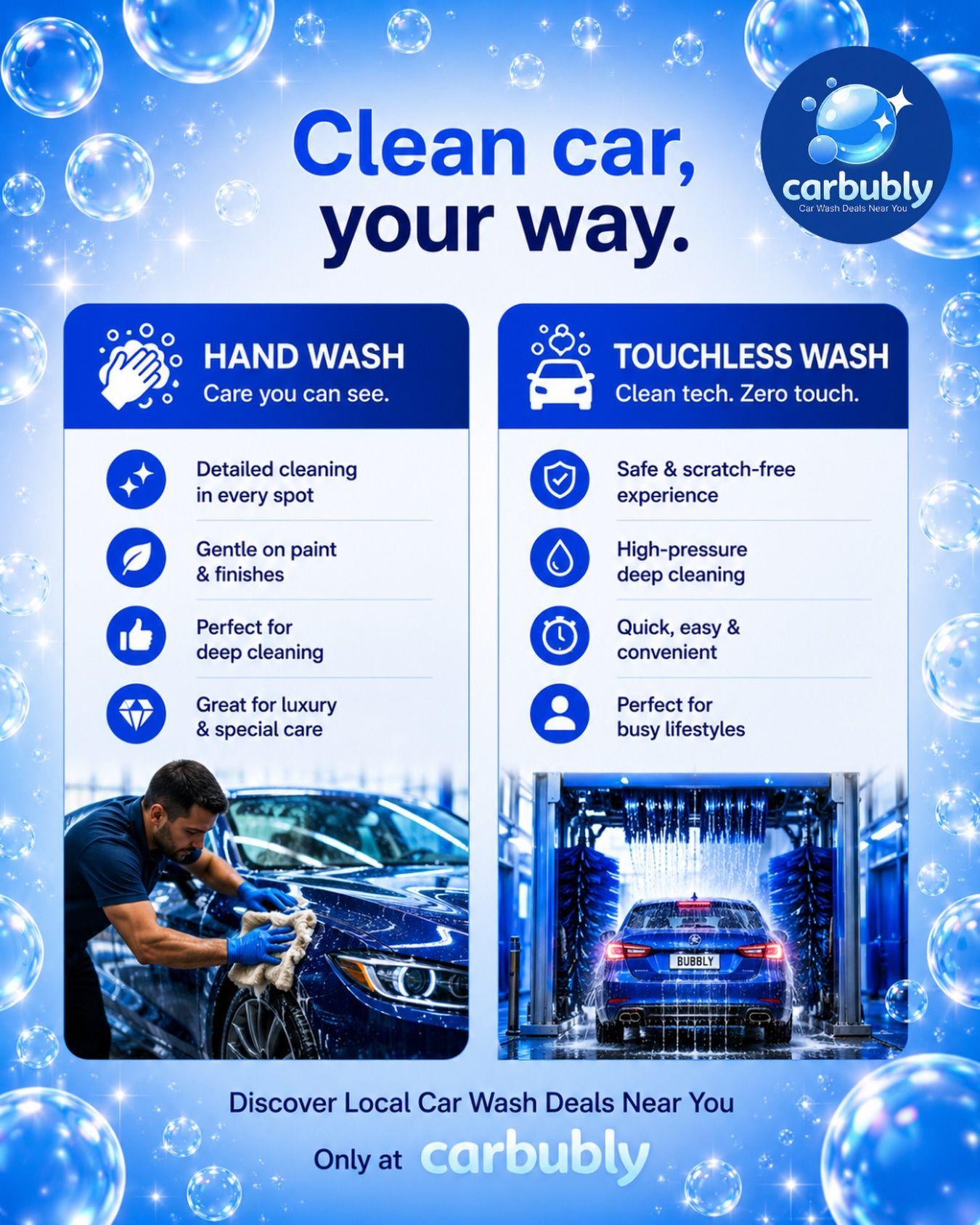
For most drivers in Citrus Heights, a professional touchless car wash is the lower-risk option for everyday cleaning, since it eliminates the physical contact that causes mechanical scratches. A careful, correct hand wash using proper technique and pH-balanced soap can be safer still, but it requires more skill.
Key Takeaways
Touchless car washes use high-pressure water and chemical detergents instead of brushes, eliminating the friction-based scratching that is the primary cause of car wash paint damage.
Car wash damage is mechanical in origin, not chemical, caused by physical forces combined with dirt particles dragged across the paint surface, according to USPTO patent literature citing coating research.
A correct hand wash is the gold standard for paint care, but improper technique, dirty mitts, or wrong soap type can leave scratches deeper than any automated method.
High-pH detergents used in some touchless systems can degrade wax, dull ceramic coatings, and accelerate paint oxidation over time, particularly on older vehicles.
Citrus Heights drivers face specific environmental factors, including road dust, tree debris, and dry Sacramento Valley heat, that increase contaminant load on paint between washes.
No federal government standards or peer-reviewed clinical guidelines exist for comparing hand wash and touchless wash safety, so decisions should rest on material science principles and verified industry consensus.
What Physically Damages Car Paint During Washing?
Car wash paint damage is mechanical in origin, caused by physical friction combined with dirt and abrasive particles dragged across the clear coat surface. This finding is supported by USPTO patent literature from coating composition research, which states: "The damage caused by car washing is of mechanical origin and not of chemical origin... Car wash damage to cured coating compositions was found to be caused by mechanical forces in combination with the presence of dirt particles."
Understanding this principle clarifies the entire debate. Any wash method that involves contact between a dirty surface and your paint, whether a brush, a sponge, or an unwashed mitt, creates the conditions for scratching. Methods that eliminate physical contact remove the primary damage mechanism entirely.
Your car's paint system typically consists of four layers: the body metal, primer, base coat (color), and a transparent clear coat that protects the color below. Swirl marks and fine scratches visible in direct sunlight are almost always confined to the clear coat. Deep scratches that expose primer or metal are caused by more severe abrasion and represent a different category of damage.
The bottom line is that the physics of contact friction, not the water or the location of the wash, determine how much damage a cleaning session causes.
How Does a Touchless Car Wash Work, and What Are Its Risks?
A touchless car wash is an automated system that cleans your vehicle using high-pressure water jets and chemical detergents without any brushes, cloth, or physical contact with the paint surface. Because nothing touches your car's finish, the mechanical scratching risk associated with contact washing is effectively eliminated.
The trade-off is chemical intensity. To compensate for the absence of physical scrubbing, touchless systems rely on stronger detergent formulations, often with higher pH levels, to break down and lift road grime, bird droppings, and oily residue. Research cited in automotive coating literature notes that alkaline foams with a pH above 8.5 should remain in contact with the car body for only a few minutes during washing. Prolonged or repeated exposure to high-pH chemicals can degrade wax sealants, reduce the performance of ceramic coatings, and contribute to paint oxidation on vehicles with older or compromised finishes.
A second limitation is cleaning thoroughness. Without mechanical agitation, touchless systems may struggle to remove heavy soil, caked mud, or road tar. A single pass through a touchless tunnel may leave behind residue that a proper hand wash would lift completely. This is not a paint safety issue, but it does affect how clean your vehicle actually gets.
The bottom line is that touchless washing eliminates contact-friction damage but introduces a chemical trade-off that matters most for vehicles with wax or ceramic protective layers.
What Are the Real Risks of Hand Washing Your Car?
Hand washing is the method most likely to produce fine scratches and swirl marks when performed incorrectly, because every wipe of a mitt or sponge across the paint surface is a friction event that can drag trapped grit through the clear coat. Research widely attributed to the University of Texas, and cited across multiple automotive detailing sources, found that a single home hand wash can leave scratches in the finish as deep as one-tenth of the paint's total thickness. The original peer-reviewed paper was not independently verified in available search results, so this figure should be treated as industry-referenced rather than confirmed primary research.
Common hand wash errors that increase scratch risk include:
Using a single bucket instead of a two-bucket rinse system
Washing with household dish soap, which strips protective wax
Using a sponge instead of a dedicated microfiber wash mitt
Applying circular scrubbing motions instead of straight, linear strokes
Washing in direct sunlight, which causes soap to dry and leave residue before rinsing
Not rinsing the vehicle thoroughly before applying the mitt
When hand washing is done correctly with a pH-balanced car soap, clean microfiber mitts, a two-bucket method, and proper rinsing, it can produce a cleaner, less damaged result than any automated method. The problem is that most casual hand washes are not performed at this standard.
The bottom line is that hand washing is the highest-ceiling and highest-risk method: exceptional when done right, and more damaging than touchless washing when done poorly.
Hand Wash vs Touchless Car Wash: Side-by-Side Comparison
The table below compares both methods across the factors that matter most for paint care in Citrus Heights.
Factor
Professional Hand Wash
Touchless Car Wash
Contact with paint
Yes, with mitts/tools
No physical contact
Scratch and swirl risk
Low to moderate (technique-dependent)
Very low
Chemical exposure
Low (pH-balanced soaps typical)
Moderate to high (strong detergents)
Wax/coating impact
Minimal with correct soap
Can degrade wax over time
Cleaning thoroughness
High, especially in crevices
Moderate, may miss heavy soil
Time required
30 to 90 minutes
3 to 10 minutes
Cost
Higher (professional) or labor-intensive (DIY)
Lower per visit
Skill required
High for best results
None
Best for
Show cars, coated vehicles, detailed cleaning
Regular maintenance washes, daily drivers
Environmental water use
Higher (DIY home wash)
Lower (recycling systems common)
Hand Wash: Pros and Cons
A professional hand wash is the most thorough paint-cleaning method available, giving a trained technician direct control over every surface, panel, and crevice of your vehicle. When performed with the right products and technique, it surpasses automated systems in both cleanliness and paint preservation.
Pros of hand washing:
Maximum control over pressure, direction, and soap contact
Ability to address specific problem areas, bug splatter, tar, or bird droppings, with targeted treatment
Less chemical intensity than touchless systems, protecting wax and coatings
The preferred method for vehicles with paint protection film (PPF) or ceramic coatings when done correctly
Allows visual inspection of paint condition during the wash process
Cons of hand washing:
Highest scratch risk when technique is incorrect
Time-consuming, especially for larger vehicles
Requires proper supplies: two buckets, microfiber mitts, pH-balanced soap, a grit guard, and clean drying towels
Professional hand wash services in Citrus Heights can cost significantly more than a touchless tunnel pass
DIY hand washing at home uses considerably more water than commercial recycling systems
Inconsistent results depending on who performs the wash
The bottom line is that hand washing delivers the best outcome when performed professionally or by a skilled, well-equipped DIY enthusiast, but carries the highest risk of clear coat damage when done casually.
Touchless Car Wash: Pros and Cons
A touchless car wash is the safest automated option for your paint, because it removes the brushes and cloths responsible for the mechanical scratching documented in coating research. For Citrus Heights drivers who need frequent, convenient cleaning without specialized knowledge, it represents a reliable baseline.
Pros of touchless car washing:
No physical contact with paint eliminates brush-induced scratches and swirl marks
Fast and convenient, typically under 10 minutes
Many commercial systems use water reclamation technology, reducing environmental impact
Consistent results regardless of operator skill
Lower per-visit cost compared to professional hand washes
Safe option for vehicles that are lightly soiled or recently detailed
Cons of touchless car washing:
Strong chemical detergents can strip wax sealants with repeated use
High-pH solutions may dull or compromise ceramic coating performance over time
May not fully remove heavy contamination, mud, or road tar without physical agitation
Does not address paint correction, wax application, or protective coating maintenance
Water spots can form if the drying system is inadequate or if the vehicle is driven into sunlight before full drying
Repeated use without occasional decontamination washes may allow iron particles and bonded contaminants to accumulate
The bottom line is that touchless washing is the lowest-risk automated method for routine cleaning but should be paired with periodic hand washing or professional detailing to maintain long-term paint health.
Making the Right Choice in Citrus Heights
Citrus Heights drivers face a specific set of environmental conditions that should influence your wash method choice, including Sacramento Valley heat, dry-season road dust, tree sap from residential landscaping, and periodic wildfire smoke deposits that can bond to paint. These factors increase the importance of washing frequency and contaminant removal effectiveness.
For most everyday drivers in the area, a practical approach combines both methods:
Routine maintenance (every 1 to 2 weeks): Use a touchless car wash to remove surface dust and light grime without introducing friction damage.
Monthly or seasonal hand wash: Schedule a professional hand wash or perform a careful DIY wash using the two-bucket method to remove bonded contaminants that touchless systems leave behind.
Protective coating maintenance: Apply a spray wax or detailer after touchless washes to replenish surface protection depleted by chemical detergents.
Annual professional detailing: Have a professional inspect for paint imperfections, apply a new wax or coating layer, and perform paint correction if swirl marks are present.
Vehicles with paint protection film require particular care. Most PPF manufacturers recommend avoiding automated brush washes entirely. A touchless system or careful hand wash is the appropriate method for film-protected paint. Ceramic-coated vehicles can handle touchless washing well but benefit from pH-neutral soaps when hand washed to preserve the coating's hydrophobic properties.
The bottom line is that no single method is universally superior for every driver, and a combined approach tailored to your vehicle's protection level and washing frequency delivers the best long-term paint outcome in Citrus Heights.
Are Touchless Car Washes Better for Paint?
Touchless car washes are better for paint than brush-based automatic washes, because they eliminate the physical contact that causes mechanical scratching, the primary documented cause of clear coat damage. Compared to a properly executed hand wash, touchless systems are lower risk but less thorough. The most accurate summary: touchless is safer than the average automated wash and safer than an improperly performed hand wash, but not superior to a careful, correctly executed hand wash with quality products.
Is Touchless Car Wash Safer Than Regular Car Wash?
A touchless car wash is safer than a traditional automatic car wash that uses spinning brushes or cloth strips, because brushes can trap debris from prior vehicles and drag it across your paint. Industry consensus, supported by coating research on mechanical damage mechanisms, consistently identifies contact friction as the primary source of automated wash damage. Against a hand wash, safety depends entirely on technique: a touchless wash is safer than a careless hand wash and roughly comparable to or slightly below a professional-grade hand wash.
What Is the Role of Protective Coatings in Your Wash Decision?
Protective coatings, including wax, paint sealant, ceramic coating, and paint protection film, change how both wash methods interact with your vehicle's finish. Each coating type responds differently to the chemical and mechanical stresses of each wash method.
Wax is the most fragile protective layer. It is stripped progressively by high-pH detergents, meaning frequent touchless washes without reapplication will leave your paint exposed within weeks. Ceramic coatings are more chemically resistant but are not immune to strong alkaline solutions applied repeatedly over months. Paint protection film is physically robust but can peel at edges if subjected to high-pressure spray at close range or aggressive brush contact.
If your vehicle has a ceramic coating, using pH-neutral or mildly acidic car soaps during hand washing preserves the coating's surface chemistry and extends its effective lifespan. A touchless wash is acceptable for ceramic-coated vehicles but should not be the only maintenance method if the goal is long-term coating performance.
The bottom line is that your protective coating type is a primary factor in choosing your wash method, and both touchless and hand wash protocols need to be matched to the specific product protecting your paint.
What Is the Best Overall Strategy for Paint Safety?
The safest long-term strategy for paint care is a layered approach that uses the strengths of each method while minimizing their respective risks. No single wash method perfectly addresses every paint care need.
For Citrus Heights drivers, the practical recommendation is straightforward: use touchless washing for convenience and frequency, use hand washing for thoroughness and contamination removal, and use professional detailing for paint correction and protective coating renewal. Your paint condition, coating type, and how often you drive in dusty or debris-heavy conditions should all inform how you weight each method in your routine.
The bottom line: a touchless car wash is the safest automated option for routine cleaning in Citrus Heights, while a properly executed hand wash remains the most effective method when performed with correct technique and appropriate products.
Frequently Asked Questions
Hand Wash: Pros and Cons
A professional hand wash offers maximum cleaning control, thorough contaminant removal, and lower chemical exposure to protective coatings than touchless systems. The key drawbacks are time, cost, and the high risk of fine scratches and swirl marks when technique is incorrect, making proper supplies and method non-negotiable for paint safety.
Touchless Car Wash: Pros and Cons
A touchless car wash eliminates brush-related scratching by using high-pressure water and chemical detergents without physical contact, making it the safest automated wash option for paint. The trade-offs are strong detergent chemicals that can strip wax over time and reduced cleaning power against heavy soiling compared to hand washing.
Making the Right Choice in Citrus Heights
The right choice in Citrus Heights depends on your vehicle's coating type, wash frequency, and contamination level from local road dust, tree debris, and seasonal conditions. Most drivers benefit from combining touchless washes for routine maintenance with periodic professional hand washes and annual detailing for comprehensive paint care.
Are touchless car washes better for paint?
Touchless car washes are better for paint than brush-based automatic systems because they eliminate the contact friction responsible for clear coat scratches. They are comparable to or slightly below a correctly performed hand wash in terms of paint safety, but superior to an improperly performed hand wash in avoiding mechanical damage.
Is touchless car wash safer than regular car wash?
A touchless car wash is safer than a traditional automatic car wash using spinning brushes, which can trap abrasive debris and drag it across paint surfaces. Against hand washing, safety depends on technique: touchless is safer than a careless hand wash and roughly comparable to a careful professional hand wash for everyday maintenance.