


Cleaning Autonomous Ride-Hail Vehicles Between Peak Periods
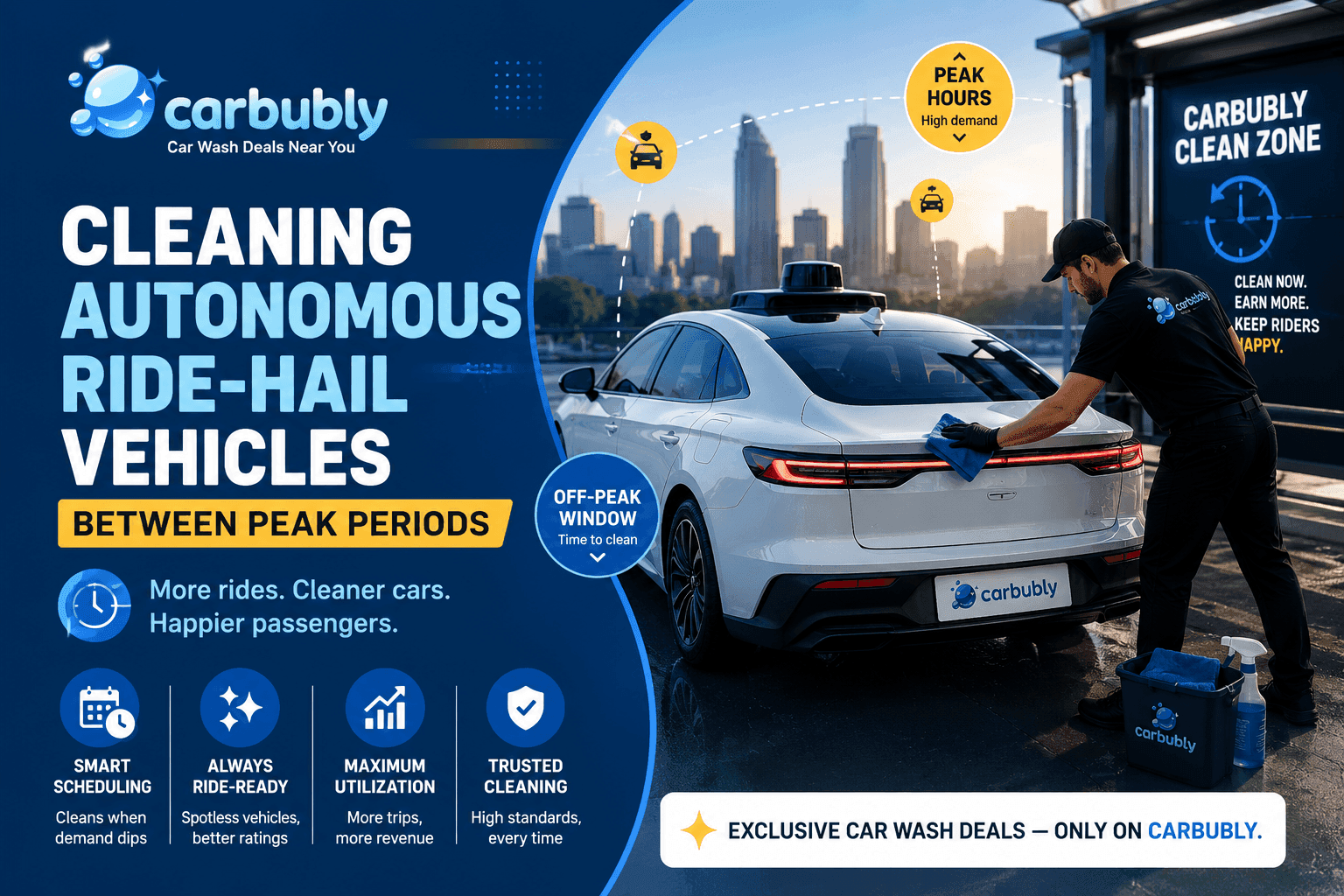
Cleaning Autonomous Ride-Hail Vehicles Between Peak Periods means using the slower windows between morning, midday, evening, and late-night demand to inspect, refresh, wash, detail, charge, and return driverless ride-hail vehicles to service without losing too much operating time.
That may sound like a future fleet-management problem, but the idea is easy to understand. Any shared passenger vehicle gets dirty faster than a personal car. People leave crumbs, fingerprints, coffee spills, mud, pet hair, odors, trash, and lost items. The outside collects road film, bugs, brake dust, pollen, rain residue, and dirty glass. For autonomous ride-hail vehicles, the challenge is bigger because there may be no human driver inside to notice the mess after each ride.
This is where practical cleaning windows matter. A fleet does not want to pull vehicles out of service during the busiest commute periods. It needs smart timing, fast inspections, clear cleaning levels, and trusted local service support. For everyday drivers comparing “Exclusive car wash deals, only on Carbubly.”, the lesson is useful too: the best car wash or detailing choice depends on the vehicle’s real condition and schedule, not just the nearest location.
Key Takeaways
Autonomous ride-hail vehicles may need cleaning between peak periods so they can stay passenger-ready during busy hours.
Interior cleaning often matters most because passengers immediately notice trash, odors, dirty mats, sticky cup holders, and stained seats.
Exterior cleaning still matters for glass, lights, cameras, wheels, road film, and public trust.
Touchless car wash, hand car wash, full-service detailing, and mobile detailing all fit different cleaning needs.
EPA guidance warns that improper vehicle washing can send pollutants into waterways, so fleet cleaning should be planned responsibly.
Carbubly is a marketplace for car wash deals that helps drivers discover, compare, purchase, and redeem offers from trusted local car wash and detailing providers.
What Is Cleaning Autonomous Ride-Hail Vehicles Between Peak Periods?
Cleaning autonomous ride-hail vehicles between peak periods is the process of using slower ride-demand windows to reset vehicles before the next busy period.
A typical city or suburban ride-hail pattern may have stronger demand during:
Morning commutes
Lunch errands
School pickup windows
Evening commutes
Event traffic
Airport and station trips
Late-night weekend rides
Between those peak periods, a fleet may have a short window to clean and inspect vehicles. That window might be 15 minutes for a quick interior reset or longer for a full-service detail, exterior wash, charging session, or mechanical check.
For autonomous ride-hail vehicles, the cleaning process may include:
Trash removal
Lost-item check
Seat and mat inspection
Interior vacuuming
Cup holder cleaning
Interior glass cleaning
Odor check
Exterior rinse or wash
Camera and glass-area cleaning
Wheel and tire check
Charging coordination
Service record update
The main goal is simple: keep the vehicle clean enough, comfortable enough, and ready enough for the next passenger.
Why Does This Matter for Autonomous Ride-Hail Fleets?
It matters because autonomous ride-hail vehicles are shared vehicles. Shared vehicles get judged by every passenger who steps inside.
A passenger may not know how the autonomous system works, but they will notice:
A sticky seat
Trash in the door pocket
Mud on the floor mat
Smudged windows
A bad smell
Dirty cup holders
Pet hair
Spilled drinks
Dust on screens or trim
A messy trunk or cargo area
For a human rideshare driver, the driver can spot many of these problems. In a driverless ride-hail model, the vehicle may need help from rider reports, sensors, scheduled cleaning stops, depot inspections, mobile detailing crews, or remote fleet teams.
NHTSA explains that vehicles with automated driving systems available for normal consumer purchase are still a future technology, which is a useful reminder not to overstate what everyday driverless vehicles can do today. At the same time, autonomous ride-hail testing and deployment continue to be part of transportation planning, especially in states like California.
In California, the DMV says it administers the Autonomous Vehicles Program and issues permits to manufacturers that test and deploy autonomous vehicles on public roads. That means autonomous fleet activity is regulated and operational, not just a consumer gadget story.
What Do the Statistics Say?
A few trusted sources help explain why cleaning between peak periods is a serious fleet issue, not just a cosmetic detail.
The vehicle system is already large. The Federal Highway Administration reported 284,614,269 registered motor vehicles in the United States in 2023 in its State Motor-Vehicle Registrations table. This shows how large the vehicle-care ecosystem is and why autonomous ride-hail vehicles would need to fit into an already busy world of personal cars, EVs, SUVs, work trucks, delivery vehicles, and rideshare vehicles.
Autonomous activity has formal permit categories in California. The California DMV says manufacturers are authorized under three categories: testing with a safety driver, driverless testing, and deployment. That distinction matters because a vehicle being tested is not the same as a fully available passenger service everywhere.
Vehicle washing can affect local waterways. EPA guidance on vehicle maintenance and washing says improper washing can release pollutants such as hydrocarbons and heavy metals into waterways. For fleets that may wash vehicles repeatedly, responsible water handling is part of the cleaning plan.
Automated driving systems are still evolving. NHTSA says automated driving systems may one day handle the whole driving task, but the technology is still developing. This matters because cleaning and inspection routines must be realistic, documented, and tied to actual operating rules.
The practical takeaway: autonomous ride-hail cleaning is not only about making cars look nice. It connects to passenger trust, fleet uptime, regulation, water practices, and vehicle readiness.
How Cleaning Between Peak Periods Could Work
A future ride-hail fleet may use a simple but structured cleaning workflow.
A vehicle might finish the morning rush, then enter a lower-demand window. The fleet system checks whether the car needs cleaning based on ride count, rider reports, route history, interior condition, exterior dirt, battery level, and next demand forecast.
A basic process could look like this:
Vehicle completes a set number of rides.
Passenger or system flags a mess.
Fleet platform checks demand level.
Vehicle is routed to a depot, charging hub, mobile detailing area, or approved provider.
Staff completes a quick inspection.
Cleaning level is selected.
Interior, exterior, or both are cleaned.
Service is logged.
Vehicle returns before the next peak period.
Not every vehicle needs the same level of service. A car with a clean cabin but dusty exterior may only need a quick wash. A car with a spilled drink may need immediate interior cleaning. A vehicle with heavy passenger use may need a full reset.
The best cleaning plan uses the slow period wisely.
Quick Reset, Standard Clean, or Full Detail?
Autonomous ride-hail fleets would likely need different cleaning levels.
Quick reset: Best for removing trash, checking lost items, wiping obvious fingerprints, and confirming the cabin is acceptable for the next ride.
Standard interior clean: Best for vacuuming mats, cleaning cup holders, wiping touchpoints, cleaning interior glass, and removing light dirt.
Exterior wash: Best for road film, pollen, dust, bugs, dirty glass, brake dust, and wheels.
Full-service detailing: Best for stains, odors, pet hair, deep mat cleaning, seat care, dirty glass, and more complete interior and exterior work.
Mobile detailing: Best when a provider can service vehicles at a fleet lot, charging site, office location, or approved staging area.
The goal is to avoid two mistakes: under-cleaning a vehicle that passengers will reject and over-detailing a vehicle that only needed a quick reset.
Interior Cleaning: The Most Passenger-Visible Need
Interior cleaning is often the biggest challenge for autonomous ride-hail vehicles because passengers experience the cabin directly.
A good between-peak interior reset may include:
Remove trash
Check under seats
Check seat pockets
Check cup holders
Look for lost items
Vacuum mats
Wipe sticky surfaces
Clean interior glass
Check odors
Inspect seats
Check cargo area
Confirm passenger touchpoints are clean
This matters because there may be no driver to say, “Sorry, the last passenger left a mess.” The vehicle itself becomes the service experience.
For a future autonomous fleet, interior cleaning may need clear rules. For example, a light crumb issue might receive a quick reset, but a spilled drink might remove the vehicle from service until a deeper clean is completed.
Exterior Cleaning: Glass, Cameras, Wheels, and Public Trust
Exterior cleaning also matters, especially for modern vehicles with cameras, sensors, glass, and lights.
A ride-hail vehicle may need exterior care for:
Windshield film
Rear camera grime
Side mirror dirt
Bug splatter
Brake dust
Wheel grime
Pollen
Rain residue
Road film
Dirty headlights or taillights
Mud on lower panels
Cleaning does not replace vehicle safety systems, maintenance, calibration, or inspection. But clean exterior surfaces can support visibility checks and help the vehicle look maintained.
For EVs and Teslas, vehicle-specific wash guidance is important. Tesla’s Model Y car wash guidance discusses Car Wash Mode and related wash precautions, including steps around windows, charge ports, and vehicle functions. That is a reminder that modern vehicles may need specific wash steps, not casual assumptions.
Service Comparison: What Cleaning Option Fits the Need?
Different service types solve different ride-hail cleaning problems.
Touchless car wash: Good for light exterior dust, pollen, rain spots, and lower-contact cleaning. Drivers can explore touchless car wash services when avoiding brush contact is a priority.
Hand car wash: Better for bug splatter, wheels, lower panels, mirrors, and areas that need careful human attention. Drivers can compare hand car wash services when a basic automatic wash may not be enough.
Full-service car detailing: Best when the cabin needs vacuuming, mats, seats, glass, stains, odors, cup holders, or cargo-area attention. Drivers can book full-service car detailing when interior and exterior cleaning both matter.
Mobile detailing: Useful when vehicles need cleaning at a fleet lot, home, work, charging hub, or approved parking area. This fits searches like mobile detailing near me when convenience matters.
Express car wash: Useful for a fast exterior refresh when the vehicle is lightly dirty and speed matters most.
A fleet may use all of these at different times. The right service depends on the vehicle’s condition and how soon it needs to return to service.
How to Choose the Best Option
Best for budget
Choose the lowest-cost service that solves the actual cleaning problem.
Good budget choices may include:
Quick interior reset for minor mess
Express wash for light exterior dust
Touchless wash for lower-contact exterior cleaning
Hand wash for bugs, wheels, or lower panels
Full detailing only when stains, odors, pet hair, or heavy dirt are present
A driver searching for an affordable car wash near me should still check what is included. Low price is not helpful if the service misses the cabin issue.
Best for convenience
Convenience is about timing and location. A service that takes too long during a peak period can hurt fleet availability.
Drivers and fleet operators can compare car wash deals in Sacramento, car wash deals in Citrus Heights, car wash deals in Roseville, car wash deals in Rancho Cordova, car wash deals in Folsom, car wash deals in Elk Grove, car wash deals in Davis, and car wash deals in West Sacramento.
Convenience includes:
Location
Speed
Appointment rules
Service clarity
Interior options
Exterior options
EV handling
Add-on pricing
Return-to-service timing
Best for protection and detailing
Choose more careful service when the vehicle has:
Cameras or sensors
Tesla or EV-specific needs
Dark paint
Ceramic coating
Paint protection film
Heavy bugs
Dirty wheels
Interior stains
Pet hair
Odors
Frequent passenger use
Rideshare or delivery use
For high-use vehicles, detailing is not just about appearance. It can help reset the vehicle for the next passenger and make problems easier to spot.
How “Car Wash Near Me” Search Intent Connects to Ride-Hail Cleaning
When people search car wash near me, they usually want speed and convenience. But cleaning autonomous ride-hail vehicles between peak periods requires more than a nearby address.
Better search intent includes:
Touchless car wash near me for light exterior cleaning
Hand car wash near me for wheels, bugs, and lower panels
Full-service car detailing near me for cabin reset and exterior cleaning
Mobile detailing near me for fleet lots or approved parking areas
Express car wash near me for fast exterior maintenance
Car wash deals near me for savings on repeated services
Tesla car wash near me or EV-safe car wash near me when modern vehicle handling matters
For local fleets and drivers, city-based searches can help too. A provider near Sacramento may fit one route, while touchless car wash in Citrus Heights, hand car wash in Roseville, full-service detailing in Rancho Cordova, car wash deals in Folsom, car wash options in Elk Grove, local car wash providers in Davis, or car wash deals in West Sacramento may fit another route.
The best service is nearby, available, clear, and matched to the vehicle’s actual need.
Common Mistakes to Avoid
Waiting until the car looks terrible. Shared vehicles need proactive cleaning, not just emergency cleanup.
Ignoring the cabin. Passengers judge the ride from the inside first.
Using one cleaning level for every vehicle. A trash reset, exterior wash, and full detail are different jobs.
Pulling vehicles during peak demand without planning. Cleaning windows should fit fleet demand when possible.
Skipping service records. Fleets need to know when a vehicle was cleaned and what was done.
Ignoring odors. Bad smells can make a ride feel poorly managed.
Forgetting lost items. Ride-hail vehicles need a clear lost-item process.
Overlooking glass and cameras. Exterior visibility-related areas should be checked.
Choosing only by price. Cheap service can become expensive if vehicles stay dirty or unavailable.
Ignoring runoff. Frequent vehicle washing should follow responsible water-handling practices.
Where Carbubly Fits Naturally
Carbubly is a marketplace for car wash deals that helps drivers discover, compare, purchase, and redeem offers from trusted local car wash and detailing providers.
Carbubly is not a car wash operator. It does not personally perform washes or detailing. Instead, it helps drivers compare local providers offering hand car wash, touchless car wash, express wash, mobile detailing, full-service detailing, Tesla car wash options, EV-safe car wash preferences, and other vehicle-cleaning services.
Start with Carbubly when you want to compare affordable car wash options, trusted car wash services, local car wash providers, and car wash savings. You can also view Carbubly on Google Maps for local trust context.
For future ride-hail fleets, comparison matters because repeated cleaning requires clear service types, predictable pricing, local availability, and provider fit. For everyday drivers, the same idea applies: choose a service that matches the mess, the schedule, and the vehicle.
Final Tips Before Choosing a Between-Peak Cleaning Service
Use this checklist before booking:
Does the vehicle need interior, exterior, or both?
Is the cabin passenger-ready?
Are there odors, stains, crumbs, or pet hair?
Are glass, mirrors, cameras, and lights clean?
Are wheels and lower panels dirty?
Is the vehicle an EV or Tesla?
Does the service fit the available time window?
Is mobile detailing easier than driving to a wash?
Does the provider explain what is included?
Are add-ons priced clearly?
Is the location convenient for the route?
Are there car wash deals near me that fit repeated use?
Is responsible water handling part of the plan?
Good cleaning between peak periods should be fast enough to protect uptime and thorough enough to protect passenger trust.
Conclusion: Cleaning Autonomous Ride-Hail Vehicles Between Peak Periods
Cleaning Autonomous Ride-Hail Vehicles Between Peak Periods is about using slower demand windows to keep shared driverless vehicles clean, comfortable, and ready for the next rush. The best plan matches the vehicle’s condition to the right service: quick reset, exterior wash, hand wash, touchless wash, mobile detailing, or full-service detailing.
Autonomous ride-hail fleets may be advanced, but their cleaning needs are very human. Passengers still care about clean seats, clear glass, fresh air, tidy mats, and a vehicle that feels maintained.
Carbubly helps drivers compare car wash and detailing deals from trusted local providers today. Visit Carbubly to compare nearby options and choose the service that fits your vehicle, schedule, and budget.
FAQs About Cleaning Autonomous Ride-Hail Vehicles Between Peak Periods
1. What does Cleaning Autonomous Ride-Hail Vehicles Between Peak Periods mean?
Cleaning Autonomous Ride-Hail Vehicles Between Peak Periods means refreshing vehicles during slower demand windows so they can return to service clean and passenger-ready.
2. Why clean autonomous ride-hail vehicles between peak periods?
Cleaning between peak periods helps reduce downtime during busy hours while keeping vehicles cleaner for the next wave of passengers.
3. What areas need the most cleaning in ride-hail vehicles?
Seats, floor mats, cup holders, door handles, interior glass, cargo areas, rear cameras, windshields, wheels, and lower panels often need attention.
4. Is interior cleaning more important than exterior washing?
Both matter, but interior cleaning often affects passenger trust faster because riders immediately notice odors, trash, stains, and dirty seats.
5. Can touchless car washes help autonomous ride-hail vehicles?
Yes, touchless washes can help with light exterior dirt and lower-contact cleaning, but interiors, wheels, bugs, and stains may need other services.
6. When should a fleet choose full-service detailing?
Full-service detailing makes sense when the vehicle has interior stains, odors, pet hair, dirty mats, glass film, or both interior and exterior buildup.
7. Can mobile detailing support ride-hail fleets?
Yes. Mobile detailing can support vehicles at fleet lots, charging hubs, offices, or approved parking areas when the location allows it.
8. Does cleaning replace autonomous vehicle maintenance?
No. Cleaning supports passenger readiness and visibility checks, but it does not replace mechanical maintenance, system inspection, calibration, or regulatory compliance.
9. How should drivers search for similar services near them?
Search by service need, such as car wash near me, full-service car detailing near me, mobile detailing near me, touchless car wash near me, or EV-safe car wash near me.
10. Where can drivers compare car wash and detailing deals today?
Drivers can compare car wash and detailing deals on Carbubly, a marketplace that helps drivers discover, compare, purchase, and redeem offers from trusted local car wash and detailing providers.