


Autonomous Vehicle Schedules Own Wash Guide
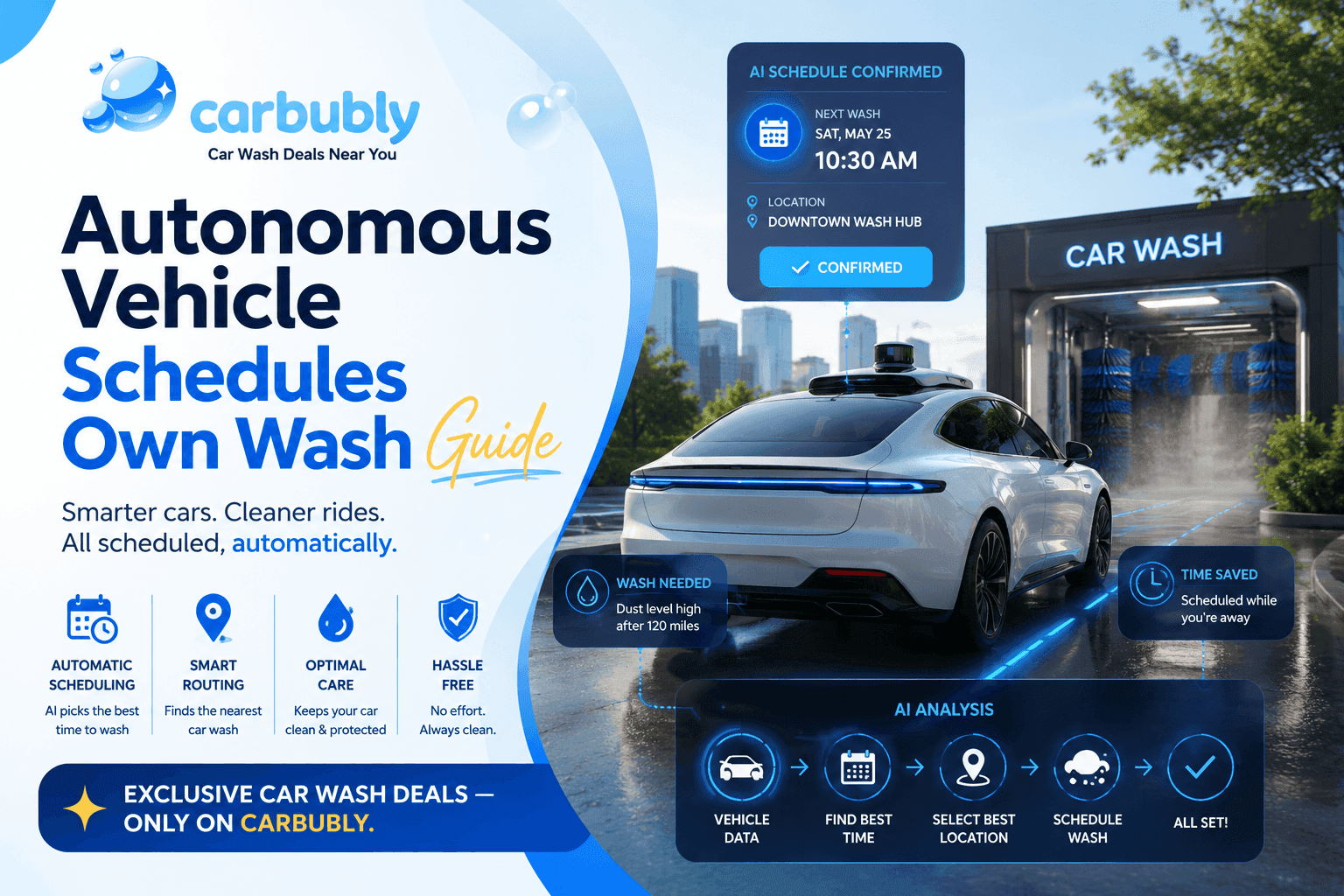
An autonomous vehicle schedules own wash when its system or fleet platform detects dirt, sensor visibility needs, interior use, route history, battery status, and service availability, then routes the vehicle to the right car wash, detailing provider, or fleet support location.
That idea sounds futuristic, but the logic is very practical. A modern vehicle already produces data about location, mileage, battery level, warning alerts, and service needs. A future autonomous or fleet-managed vehicle could use similar signals to decide when it needs a touchless wash, hand wash, full-service detailing, mobile detailing, or a quick interior reset.
This article follows a realistic “day in the life” of a future autonomous vehicle in the Sacramento region. It is not saying every vehicle can do this today. NHTSA still describes fully self-driving vehicles available for consumer purchase as a future technology, while California DMV regulates autonomous vehicle testing and deployment through state permit programs.
For everyday drivers comparing “Exclusive car wash deals, only on Carbubly.”, the lesson is simple: even as vehicle technology gets smarter, clean car care still depends on matching the right service to the right vehicle need.
Key Takeaways
A vehicle that schedules its own wash would likely use fleet software, route history, sensor checks, interior-use data, location, and service availability.
Autonomous and driver-assistance vehicles may need careful cleaning around cameras, glass, lights, wheels, and sensor-adjacent areas.
A future fleet vehicle may choose touchless washing for light dirt, hand washing for bugs and wheels, or full-service detailing for interior wear.
Responsible wash-water handling matters because EPA guidance notes that vehicle washing can release pollutants when handled poorly.
Drivers today can use the same decision-making by comparing service type, vehicle needs, budget, convenience, and provider details.
Carbubly is a marketplace for car wash deals that helps drivers discover, compare, purchase, and redeem offers from trusted local car wash and detailing providers.
What Does It Mean When an Autonomous Vehicle Schedules Own Wash?
When an autonomous vehicle schedules own wash, it means the vehicle or its fleet system recognizes a cleaning need and connects that need to a service provider.
That could happen through:
Exterior cameras noticing road film or blocked views
Route history showing dusty, rainy, or bug-heavy driving
Passenger-use logs showing frequent rides
Interior sensors or rider reports flagging a mess
Scheduled fleet maintenance rules
Battery status matching available charging and cleaning windows
Weather and road-condition data
Provider availability
Fleet account preferences
Service records from prior washes
The vehicle might not “think” like a person deciding the car looks dirty. A more realistic version is a fleet platform that uses rules, inspections, and data. For example, if the vehicle completes several airport rides, picks up passengers downtown, drives through rain, and then logs low battery, the system may send it to a charging hub with nearby cleaning support.
The goal is not vanity. It is readiness.
A clean autonomous vehicle may be easier to inspect, more comfortable for passengers, and better prepared for the next service cycle.
Morning: The Vehicle Starts with a Readiness Check
Imagine an autonomous EV starting its morning in Sacramento. Before it goes into service, the vehicle or fleet platform checks the basics.
A readiness check could include:
Battery level
Tire status
Exterior camera visibility
Windshield clarity
Sensor-area condition
Interior condition
Last cleaning time
Route assignment
Weather forecast
Service alerts
Passenger schedule
A vehicle with a clean exterior and empty interior may start the day without needing service. But a vehicle with dusty glass, bug buildup, or a flagged interior issue may be routed to cleaning before it starts carrying passengers.
This is similar to how a careful driver might look over a car before a long day. The difference is that the check could be automated, logged, and tied to a fleet schedule.
Midday: Dirt Builds Up During Real Sacramento Driving
By midday, the vehicle has driven through downtown Sacramento, passed tree-lined streets, stopped near office areas, handled curbside pickups, and maybe traveled toward Rancho Cordova, Citrus Heights, or West Sacramento.
Real driving creates real mess.
The vehicle may collect:
Dust
Pollen
Bug splatter
Road film
Rain residue
Brake dust
Mud on lower panels
Fingerprints on windows
Trash inside the cabin
Cup holder spills
Dirty floor mats
Odors after repeated rides
This is where autonomous vehicle cleaning becomes more than appearance. A sensor-heavy vehicle may have cameras, glass, exterior lights, radar areas, or lidar housings that need routine checks. Cleaning does not replace safety systems, maintenance, regulation, or inspection, but it can support visibility checks and daily fleet readiness.
NHTSA explains that automated driving systems may one day handle the whole driving task in certain conditions, but the technology remains part of an evolving safety environment. That makes repeatable support routines important.
Why This Matters: The Scale of the Road System
A future autonomous vehicle does not operate alone. It shares streets with human-driven cars, SUVs, vans, work trucks, buses, delivery vehicles, rideshare cars, cyclists, and pedestrians.
The Federal Highway Administration reported 284,614,269 registered motor vehicles in the United States in 2023 in its State Motor-Vehicle Registrations table. That number shows why autonomous vehicles need practical systems around them. They will operate inside a large, mixed transportation environment, not in a clean lab.
For Sacramento, that means a future autonomous vehicle may need to work around local roads, curb space, commuting patterns, suburban routes, EV charging, parking, and local service providers.
Afternoon: The Vehicle Decides What Kind of Wash It Needs
A smart wash decision would not send every vehicle to the same service.
The system might compare:
How dirty the exterior is
Whether cameras or glass need cleaning
Whether wheels or lower panels are dirty
Whether the vehicle carried passengers
Whether the interior needs vacuuming
Whether there are odor or spill reports
Whether the vehicle is near a provider
Whether the battery needs charging
Whether the vehicle is due for deeper detailing
Whether the provider can handle EVs or sensor-heavy vehicles
A lightly dusty vehicle may only need a quick touchless wash. A vehicle with bugs on the front end may need hand washing. A robotaxi that carried passengers all morning may need an interior reset. A fleet vehicle after several wet-weather trips may need wheels, mats, glass, and lower panels cleaned.
This is what makes the concept useful. The vehicle is not simply booking “a car wash.” It is matching a specific condition to a specific service.
Service Comparison: What Would the Vehicle Choose?
Different cleaning options fit different needs.
Touchless car wash: Best for light exterior dust, pollen, rain spots, and lower-contact exterior cleaning. Drivers can explore touchless car wash services when avoiding brush contact is a priority.
Hand car wash: Best for bugs, wheels, lower panels, mirrors, and sensor-adjacent areas that may need human attention. Drivers can compare hand car wash services when a basic automatic wash may not be enough.
Full-service detailing: Best when the vehicle needs interior care, including seats, mats, glass, cup holders, stains, odors, or cargo areas. Drivers can book full-service car detailing when the vehicle needs a deeper reset.
Mobile detailing: Best when vehicles need service at a home, office, fleet lot, charging hub, or approved parking area.
Express wash: Best for quick exterior maintenance when the vehicle is lightly dirty and needs to return to the road quickly.
A future autonomous fleet may use all of these at different times.
How Would Booking Work?
A vehicle that schedules its own wash would likely book through a fleet platform, service marketplace, provider portal, or maintenance system.
A simple booking flow could look like this:
The vehicle detects a cleaning need.
The fleet platform checks approved providers nearby.
The system filters by service type, location, price, availability, and vehicle compatibility.
It checks battery level and route timing.
It selects a time window.
The provider receives service details before arrival.
The vehicle is routed to the location.
Staff or automated systems verify the vehicle.
The wash or detailing service is completed.
The service record is updated.
This could be especially useful for fleets. Fleet operators care about consistency. They need to know what was done, when it was done, who completed it, and whether the vehicle is ready to go back into service.
Evening: Interior Reset Becomes the Priority
By evening, the vehicle may have completed several rides. The outside may be acceptable, but the inside may need attention.
Interior cleaning matters because passengers notice it immediately.
A future robotaxi or autonomous shuttle may need:
Trash removal
Lost-item checks
Floor vacuuming
Mat cleaning
Seat wipe-down
Interior glass cleaning
Cup holder cleaning
Door handle cleaning
Odor checks
Stain flagging
Touchpoint cleaning
Cargo area inspection
This is where full-service detailing and mobile detailing become important. A vehicle may not need a full exterior wash every night, but shared passenger vehicles need regular interior resets.
Clean interiors support trust. A rider stepping into a future autonomous car wants the vehicle to feel cared for, not neglected.
What Do the Statistics and Sources Say?
A few trusted sources help explain why the idea of self-scheduled washing connects to real vehicle operations.
Huge vehicle volume: FHWA’s 2023 motor-vehicle registration data shows more than 284 million registered vehicles in the U.S., which means autonomous vehicles will have to fit into an already crowded vehicle ecosystem.
Formal AV rules: California DMV administers the state’s Autonomous Vehicles Program and issues permits to manufacturers that test and deploy AVs on public roads. This means autonomous activity depends on regulation and operating conditions, not just technology.
Vehicle washing affects stormwater: EPA guidance says vehicle maintenance and washing can release pollutants such as hydrocarbons and heavy metals to waterways when done improperly. That matters if future fleets wash vehicles repeatedly.
Fleet washing needs planning: EPA guidance on municipal vehicle and equipment washing says washwater can contain sediment, detergents, oils, grease, and heavy metals if not properly captured or treated.
EV-specific wash guidance matters: Tesla’s Model Y car wash guidance discusses Car Wash Mode and wash-related precautions. That is a helpful example of why modern vehicles may need vehicle-specific wash steps.
The takeaway is clear: a future autonomous wash routine would need more than convenience. It would need regulation awareness, vehicle-specific handling, environmental responsibility, and repeatable service records.
How to Choose the Best Option Today
Most drivers do not have a vehicle that schedules its own wash. But the same decision-making works right now.
Best for budget
Choose the most affordable service that solves the actual cleaning problem.
Good budget choices may include:
Express wash for light dust
Touchless wash for lower-contact cleaning
Hand wash for bugs, wheels, and lower panels
Interior add-ons when the outside is already clean
Full-service detailing only when deeper cleaning is needed
The lowest price is useful only when it matches the vehicle’s condition.
Best for convenience
Choose a provider near your real routine, not just the nearest map result. Drivers can compare car wash deals in Sacramento. Regional drivers may also compare car wash deals in Citrus Heights, car wash deals in Roseville, car wash deals in Rancho Cordova, car wash deals in Folsom, car wash deals in Elk Grove, car wash deals in Davis, and car wash deals in West Sacramento.
Convenience includes location, service speed, appointment rules, package clarity, vehicle compatibility, and redemption terms.
Best for protection and detailing
Choose more careful service when your vehicle has:
Cameras or sensors
Tesla or EV-specific needs
Ceramic coating
Paint protection film
Vinyl wrap
Dark paint
Heavy bugs
Dirty wheels
Interior stains
Pet hair
Odors
Rideshare or delivery use
Frequent passenger traffic
For these vehicles, hand washing, mobile detailing, or full-service detailing may make more sense than a basic exterior wash.
What Local Providers Would Need to Support This Future
A provider serving self-scheduling vehicles would need clear procedures before the vehicle arrives.
Future-ready providers may need:
Digital booking confirmation
Vehicle identification process
EV-safe service notes
Clear package descriptions
Sensor-area cleaning checklist
Interior reset options
Fleet account support
Staff training
Service records
Water-handling practices
Clear pricing
Appointment timing
Safe entry and exit procedures
Add-on approval process
The biggest advantage may not come from expensive technology. It may come from clarity.
A provider that can clearly explain “what is included” will be easier for both drivers and future fleets to trust.
Common Mistakes to Avoid
Assuming the vehicle does everything alone. A future system may schedule the wash, but people, providers, fleet rules, and service records still matter.
Treating every wash the same. Light dust, bugs, dirty wheels, interior mess, and sensor-adjacent grime need different services.
Ignoring EV instructions. Teslas and EVs may have manufacturer-specific wash guidance, charge-port concerns, and camera locations.
Overpromising autonomous expertise. Providers should avoid claiming they calibrate or validate autonomous systems unless they truly offer that service.
Skipping interior cleaning. Shared and high-use vehicles may need interiors cleaned as often as exteriors.
Ignoring water handling. Repeated fleet washing should account for runoff, drainage, and responsible practices.
Choosing only by price. The best wash depends on condition, service type, timing, and vehicle compatibility.
Forgetting local routes. Sacramento, Citrus Heights, Roseville, Rancho Cordova, Folsom, Elk Grove, Davis, and West Sacramento can create different driving and cleaning needs.
Confusing EVs with autonomous vehicles. They overlap, but they are not the same.
Assuming public driverless service is available everywhere. AV testing, deployment, and public service are different categories.
Where Carbubly Fits Naturally
Carbubly is a marketplace for car wash deals that helps drivers discover, compare, purchase, and redeem offers from trusted local car wash and detailing providers.
Carbubly is not a car wash operator. It does not personally wash vehicles. Instead, it helps drivers compare local providers offering hand car wash, touchless car wash, express wash, mobile detailing, full-service detailing, Tesla car wash options, EV-safe car wash preferences, and other vehicle-cleaning services.
Start with Carbubly when you want to compare affordable car wash options, trusted car wash services, local car wash providers, and car wash savings. You can also view Carbubly on Google Maps for local trust context.
As the idea that an autonomous vehicle schedules own wash becomes more realistic, comparison becomes more important. Drivers and future fleet systems need clear service types, accurate locations, useful pricing, provider details, and vehicle-compatible options.
Final Checklist Before Booking a Wash
Use this checklist like a smart vehicle would:
Is the exterior lightly dusty or heavily dirty?
Are bugs, sap, pollen, or road film present?
Are cameras, glass, lights, and mirrors clean?
Does the vehicle need interior cleaning?
Are there odors, stains, pet hair, or trash?
Is the vehicle an EV or Tesla?
Does the manufacturer give wash guidance?
Is touchless, hand wash, or detailing the better fit?
Is the provider near your real route?
Are package details clear?
Are add-ons priced separately?
Is the provider trusted and easy to compare?
Is the deal worth the service level?
Is responsible water handling part of the provider’s process?
A smart wash choice is not about choosing the biggest package every time. It is about choosing the right package for the vehicle’s actual need.
Conclusion: Autonomous Vehicle Schedules Own Wash
When an autonomous vehicle schedules own wash, it is really using a future version of common sense: check the vehicle’s condition, match the service to the need, choose a trusted provider, and return to the road clean and ready.
That future may involve autonomous fleets, EV charging, fleet software, sensor checks, mobile detailing, touchless wash bays, and service records. But the core idea is already useful for everyday drivers. A clean car is easier to inspect, more comfortable to use, and better matched to modern vehicle care expectations.
Carbubly helps drivers compare car wash and detailing deals from trusted local providers today. Visit Carbubly to compare nearby options and choose the service that fits your vehicle, schedule, and budget.
FAQs About an Autonomous Vehicle That Schedules Its Own Wash
1. What does autonomous vehicle schedules own wash mean?
Autonomous vehicle schedules own wash means the vehicle or fleet platform detects a cleaning need and books the right wash, detailing, or interior reset service.
2. Can autonomous vehicles schedule their own wash today?
Some fleet systems can already schedule maintenance-style tasks, but fully self-directed public consumer vehicles are still limited. The concept is more realistic for managed fleets than personal cars today.
3. Why would an autonomous vehicle need a car wash?
Autonomous and driver-assistance vehicles may rely on cameras, sensors, lights, glass, and exterior surfaces. Washing can support visibility checks, inspection routines, and passenger trust.
4. Would the vehicle choose touchless or hand wash?
It depends on the condition. Touchless wash may fit light dust or pollen, while hand wash may be better for bugs, wheels, lower panels, and sensor-adjacent areas.
5. Would a self-scheduling vehicle also book interior cleaning?
Yes, especially if it carries passengers. Shared vehicles may need trash removal, vacuuming, mat cleaning, odor checks, and touchpoint cleaning.
6. How would a vehicle know it needs cleaning?
A future system could use camera visibility checks, route history, weather data, passenger reports, interior-use logs, scheduled maintenance rules, or fleet inspections.
7. Are EV-safe wash steps important?
Yes. EVs and Teslas may need attention around charge ports, cameras, glass, trim, screens, wheel covers, and manufacturer-specific wash guidance.
8. Could local car wash providers support self-scheduling fleets?
Yes. Local providers could support future fleets with digital booking, clear service menus, EV-aware procedures, sensor-area cleaning, interior resets, and service records.
9. What is the biggest challenge with self-scheduled washing?
The biggest challenge is service matching. The system must choose the right provider, service type, time window, and cleaning level for the vehicle’s actual condition.
10. Where can drivers compare car wash deals today?
Drivers can compare car wash deals on Carbubly, a marketplace that helps drivers discover, compare, purchase, and redeem offers from trusted local car wash and detailing providers.