


Autonomous Car Wash Bay: Driverless Prep
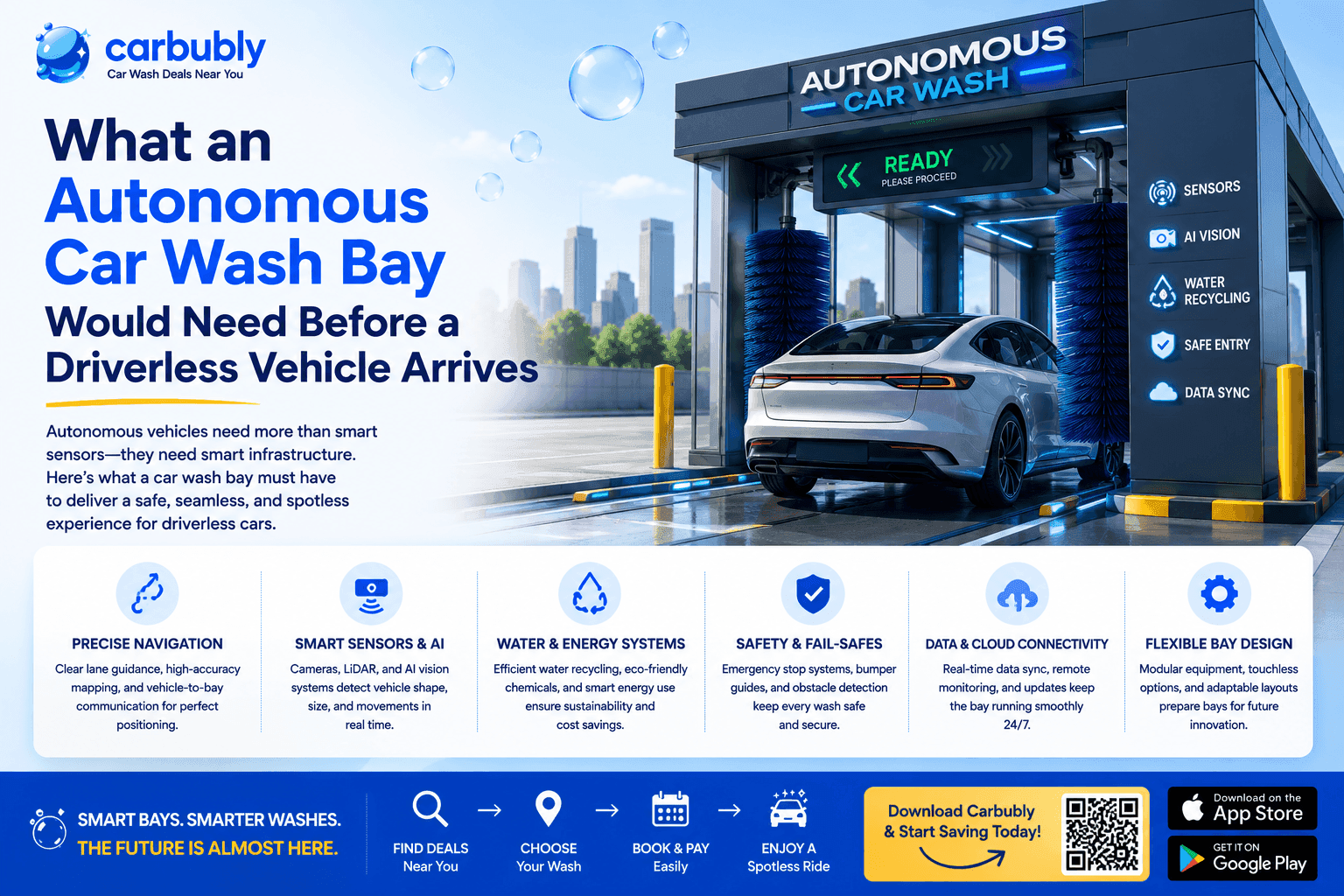
An autonomous car wash bay would need clear entry guidance, sensor-safe wash procedures, EV-aware handling, vehicle-positioning systems, staff oversight, drainage planning, and a reliable cleaning checklist before a driverless vehicle arrives.
That may sound like something from the future, but the practical details are very real. A driverless vehicle still has paint, wheels, glass, lights, tires, cameras, sensors, interior surfaces, and passenger areas that need care. The difference is that there may not be a human driver inside to ask questions, adjust mirrors, roll up windows, explain the wash package, or notice when something looks wrong with your vehicle.
For Sacramento and nearby areas, this topic connects naturally to autonomous vehicles, EV fleets, Tesla car wash needs, touchless car wash services, hand car wash options, mobile detailing, and full-service detailing. As vehicles become more electric, connected, sensor-heavy, and possibly autonomous, local car wash providers may need clearer processes.
For everyday drivers comparing “Exclusive car wash deals, only on Carbubly.”, the same principle applies: a better wash starts with knowing what the vehicle needs before the service begins.
Key Takeaways
An autonomous car wash bay would need more than soap and water; it would need vehicle detection, clear routing, safety zones, EV-aware procedures, and human oversight.
Driverless vehicles may require special attention around cameras, sensors, lidar housings, radar areas, lights, glass, wheels, and charge ports.
Touchless washing, hand washing, full-service detailing, and mobile detailing could all serve different autonomous or EV fleet needs.
Wash-water handling matters because EPA guidance says vehicle washing can carry pollutants into storm drains when handled poorly.
Local providers should avoid hype and focus on clear package details, checklists, safety procedures, and honest vehicle compatibility.
Carbubly is a marketplace for car wash deals that helps drivers compare offers from trusted local car wash and detailing providers.
What Is an Autonomous Car Wash Bay?
An autonomous car wash bay is a wash area designed to safely receive, position, clean, inspect, and release a vehicle that may be driverless, highly automated, electric, connected, or part of a fleet.
It does not mean the car wash itself has to be fully robotic. It also does not mean every car wash bay is ready for driverless vehicles today. The phrase simply describes the future-ready version of a wash bay that can support vehicles with more software, more sensors, and fewer human actions during arrival and service.
A future autonomous car wash bay may include:
Clear lane markings
Digital entry signs
Vehicle-positioning sensors
Low-speed entry controls
Emergency stop systems
Staff-monitored cameras
EV-safe wash procedures
Touchless wash options
Hand wash zones
Sensor-area cleaning steps
Charge-port awareness
Interior reset areas
Wheel and tire cleaning
Drainage and wash-water controls
Service logs for fleet vehicles
Exit confirmation steps
The goal is simple: clean the vehicle without creating confusion, damage, unnecessary risk, or missed service details.
Why Would a Driverless Vehicle Need a Special Wash Bay?
A driverless vehicle changes the car wash experience because many normal customer actions may not happen the same way.
A human driver can:
Stop when an attendant waves
Ask which wash package is best
Confirm the vehicle is in neutral
Fold mirrors when needed
Roll up windows
Disable wipers
Move forward slowly
Report a warning light
Notice a loose trim piece
Say if the vehicle has a wrap, coating, or sensor concern
A driverless vehicle may need these steps handled through software, remote support, staff procedure, or pre-arranged fleet instructions.
That is why a bay prepared for autonomous vehicles should be built around predictability. The vehicle needs to know where to go. The staff needs to know what to check. The wash system needs to avoid sensitive areas. The exit process needs to confirm that the vehicle is clean, safe, and ready to leave.
This is especially important for robotaxis, autonomous delivery vehicles, shared EV fleets, high-use Teslas, rideshare vehicles, and future fleet cars.
What Do the Statistics Say?
A few trusted sources help explain why this topic matters.
The Federal Highway Administration reported 284,614,269 registered motor vehicles in the United States in 2023 in its State Motor-Vehicle Registrations table. That means autonomous vehicles will not operate in isolation. They will share roads, service centers, car wash lanes, and fleet facilities with a large mix of human-driven cars, trucks, SUVs, vans, Teslas, EVs, and work vehicles.
The California DMV’s Autonomous Vehicles Program explains that it administers California’s AV program and issues permits to manufacturers that test and deploy autonomous vehicles on public roads. For car wash operators, this is a reminder that autonomous mobility is regulated and structured, not just a technology trend.
NHTSA’s automated vehicle safety overview explains that automated driving systems may eventually perform the whole driving task in certain circumstances, but the technology continues to develop. That makes practical safety planning important for any business that may interact with these vehicles.
EPA guidance on vehicle maintenance and washing explains that vehicle washing can release pollutants such as hydrocarbons and heavy metals when wash water is not handled properly. A future fleet wash bay would need responsible runoff, drainage, and water-handling practices.
Tesla’s Model Y car wash guidance explains Car Wash Mode and wash-related precautions. While Tesla vehicles are not the same as fully driverless fleets, the broader lesson is useful: EVs and software-driven vehicles often need vehicle-specific wash steps.
The takeaway is practical. A future-ready wash bay is not only about automation. It is about safety, water handling, EV awareness, clear procedures, and repeatable cleaning quality.
How Would an Autonomous Car Wash Bay Work?
An autonomous car wash bay would likely work through a structured process.
First, the vehicle would approach the site at low speed. The bay would need clear digital or physical instructions, visible lane markings, and enough room for safe entry. If the vehicle is part of a fleet, the wash appointment or service request may already be scheduled.
Next, the vehicle would be identified. That could happen through a booking system, fleet account, license plate recognition, QR code, staff confirmation, or a digital service order.
Then the bay would guide the vehicle into position. A future-ready bay may use:
Floor markings
Wheel guides
Proximity sensors
Overhead signs
Camera monitoring
Staff confirmation
Automated stop indicators
Emergency shutoff controls
Once positioned, the vehicle would receive the correct cleaning level. Not every autonomous vehicle would need a full detail. A lightly dusty fleet vehicle may need a touchless wash and camera-area check. A high-use robotaxi may need exterior cleaning, interior reset, trash removal, glass cleaning, and odor inspection.
Before release, the bay or staff would confirm:
Exterior wash completed
Glass cleaned
Cameras and sensor areas checked
Wheels cleaned if included
Interior reset completed if included
No visible new damage
Vehicle safe to exit
Service record updated
The process should feel boring, clear, and repeatable. That is exactly the point.
What Would the Bay Need Before the Vehicle Arrives?
A future autonomous car wash bay should prepare before the vehicle reaches the entrance.
Important preparation steps include:
Confirm the service type before arrival.
Know whether the vehicle is EV, autonomous, fleet-owned, wrapped, coated, or sensor-heavy.
Confirm whether a touchless wash, hand wash, full-service detailing, or mobile detailing-style reset is needed.
Check that the entry lane is clear.
Make sure staff know the vehicle is arriving.
Confirm that water, drainage, equipment, and drying areas are ready.
Prepare clean microfiber towels and separate wheel tools.
Set expectations for interior cleaning, sensor-area care, and add-ons.
Confirm how the vehicle will exit after service.
For a driverless or fleet vehicle, guessing is risky. The wash bay should know the service plan before the vehicle arrives.
Sensor and Camera Care: The Most Important Difference
Traditional car washing often focuses on paint, shine, wheels, and windows. A future autonomous car wash bay would need to focus more carefully on sensor and camera areas.
Autonomous and driver-assistance vehicles may use:
Front cameras
Side cameras
Rear cameras
Radar areas
Lidar housings
Ultrasonic sensors
Windshields
Side glass
Rear glass
Mirrors
Headlights
Taillights
Exterior markings
Dirt, bugs, pollen, dust, road film, mud, bird droppings, and rain residue can collect around these areas. A dirty sensor area does not automatically mean the vehicle is unsafe, but a fleet needs a process for checking and cleaning critical exterior zones.
A simple sensor-area checklist may include:
Inspect front camera area.
Clean windshield carefully.
Check side camera areas.
Clean rear camera area.
Remove bugs from front panels.
Avoid harsh pressure directly on sensitive housings.
Use clean microfiber towels.
Separate wheel tools from paint tools.
Dry mirrors, glass, and trim carefully.
Flag any damage or obstruction.
The goal is not to promise autonomous performance. The goal is to clean carefully and consistently.
EV-Safe Procedures Would Matter Too
Many autonomous or future fleet vehicles are likely to be electric. That means the bay should be ready for EV-specific handling.
A provider should think about:
Charge port location
Door handles
Exterior cameras
Glass roof areas
Interior screens
Wheel covers
Trim
Underbody concerns
Manufacturer instructions
Vehicle wash modes
High-pressure spray limits
For Tesla owners, reviewing Tesla’s car wash guidance before using automatic wash services is a smart step. Providers should also encourage customers to follow current manufacturer instructions.
An EV-aware bay does not need to overcomplicate the service. It needs to avoid careless assumptions.
Service Comparison: What Wash Type Fits the Vehicle?
Different vehicles and conditions need different cleaning options.
Touchless car wash: Best for light dust, pollen, rain spots, and lower-contact exterior cleaning. Drivers can explore touchless car wash services when avoiding brush contact is important.
Hand car wash: Best for bugs, wheels, lower panels, mirrors, sensor-adjacent areas, and vehicles that need careful human attention. Drivers can compare hand car wash services when a basic automatic wash may not be enough.
Full-service detailing: Best for interiors, high-use passenger vehicles, stains, odors, seats, mats, glass, cup holders, and cargo areas. Drivers can book full-service car detailing when the vehicle needs a deeper reset.
Mobile detailing: Best for fleet lots, office locations, charging hubs, home service, or approved parking areas.
Express car wash: Best for quick exterior maintenance when the vehicle is only lightly dirty.
A smart autonomous car wash bay would not force every vehicle through one process. It would match the service to the vehicle’s condition.
How to Choose the Best Option Today
Most drivers are not bringing a driverless vehicle to a wash bay yet. But the same logic helps everyday car owners choose better service now.
Best for budget
Choose the most affordable service that solves the actual cleaning need.
Good budget choices may include:
Express wash for light exterior dust
Touchless wash for lower-contact cleaning
Hand wash for bugs, wheels, and lower panels
Interior add-ons when the exterior is already clean
Full-service detailing only when deeper cleaning is needed
A low price is useful only when the package fits the vehicle.
Best for convenience
Choose a provider near your real route, not just the closest map result. Drivers can compare car wash deals in Sacramento. Regional drivers may also compare car wash deals in Citrus Heights, car wash deals in Roseville, car wash deals in Rancho Cordova, car wash deals in Folsom, car wash deals in Elk Grove, car wash deals in Davis, and car wash deals in West Sacramento.
Convenience includes location, service speed, appointment rules, package clarity, vehicle compatibility, and redemption terms.
Best for protection and detailing
Choose more careful service when your vehicle has:
Cameras or sensors
Tesla or EV-specific needs
Ceramic coating
Paint protection film
Vinyl wrap
Dark paint
Heavy bugs
Dirty wheels
Interior stains
Pet hair
Odors
Rideshare or delivery use
Frequent passenger traffic
Hand wash, mobile detailing, or full-service detailing may make more sense than a quick exterior wash in these cases.
What Local Car Wash Providers Could Prepare Now
A provider does not need to wait for driverless vehicles to improve its process. Many future-ready steps are useful today.
Local car wash providers can prepare by adding:
Clear service menus
EV-safe service notes
Tesla-aware handling reminders
Touchless wash descriptions
Hand wash package details
Full-service detailing options
Mobile detailing availability
Sensor-area cleaning notes
Wheel cleaning details
Interior reset packages
Fleet-friendly scheduling
Water-handling information
Staff checklists
Damage-report procedures
Clear add-on pricing
For customers, clarity builds trust. For future fleets, clarity saves time.
Common Mistakes to Avoid
Assuming autonomous vehicles only need software support. They also need cleaning, inspection, charging, and maintenance.
Ignoring sensor areas. Cameras, glass, lights, and sensor housings may need careful cleaning.
Using one wash method for every vehicle. Light dust, heavy bugs, interior mess, and EV-specific needs require different services.
Skipping EV instructions. Teslas and EVs may have charge ports, cameras, screens, trim, and wash modes that need attention.
Overpromising autonomous expertise. Providers should be honest about what they can clean and what they cannot verify.
Forgetting the interior. Robotaxis, rideshare vehicles, and family cars all need clean seats, mats, cup holders, glass, and touchpoints.
Ignoring runoff. Vehicle washing should account for stormwater, drainage, and responsible wash-water handling.
Relying only on price. A cheap wash is not useful if it misses the vehicle’s real needs.
Skipping staff training. Even simple checklists can reduce confusion and improve consistency.
Forgetting local search behavior. Drivers looking for a car wash near me need clear information before booking.
Where Carbubly Fits Naturally
Carbubly is a marketplace for car wash deals that helps drivers discover, compare, purchase, and redeem offers from trusted local car wash and detailing providers.
Carbubly is not a car wash operator. It does not personally wash vehicles. Instead, it helps drivers compare local providers offering hand car wash, touchless car wash, express wash, mobile detailing, full-service detailing, Tesla car wash options, EV-safe car wash preferences, and other vehicle-cleaning services.
Start with Carbubly when you want to compare affordable car wash options, trusted car wash services, local car wash providers, and car wash savings. You can also view Carbubly on Google Maps for local trust context.
As the idea of an autonomous car wash bay becomes more realistic, comparison matters even more. Drivers and future fleet operators need to know what service is available, what is included, whether EVs are accepted, whether interiors are covered, and how the provider handles sensor-heavy vehicles.
Final Checklist Before a Driverless Vehicle Arrives
A future-ready bay should ask:
Is the entry lane clear?
Is the service already selected?
Is the vehicle EV, autonomous, fleet-owned, wrapped, or sensor-heavy?
Are staff aware the vehicle is arriving?
Are wash tools clean and ready?
Are wheel tools separate from paint tools?
Are sensor-area cleaning steps defined?
Are charge-port and EV procedures clear?
Is the drainage system ready?
Is the bay safe for low-speed entry?
Is emergency stop access clear?
Is interior cleaning required?
Are add-ons approved?
Is the exit path clear?
Will the service record be updated?
A driverless vehicle may be advanced, but the bay should be prepared in simple, practical ways.
Conclusion: Autonomous Car Wash Bay
An autonomous car wash bay would need far more than automatic wash equipment. It would need clear entry instructions, vehicle identification, EV-safe procedures, staff oversight, sensor-area cleaning, interior reset options, responsible water handling, and a repeatable checklist before a driverless vehicle arrives.
The future of car washing is not only about robots cleaning robots. It is about careful service, clear communication, safer processes, and better matching between vehicle needs and wash options. That applies to autonomous fleets, Teslas, EVs, rideshare cars, family SUVs, delivery vehicles, and everyday commuters.
Carbubly helps drivers compare car wash and detailing deals from trusted local providers today. Visit Carbubly to compare nearby options and choose the service that fits your vehicle, schedule, and budget.
FAQs About an Autonomous Car Wash Bay
1. What is an autonomous car wash bay?
An autonomous car wash bay is a wash area designed to safely receive, position, clean, inspect, and release autonomous, electric, connected, or sensor-heavy vehicles.
2. What would an autonomous car wash bay need first?
An autonomous car wash bay would need clear entry guidance, vehicle positioning, staff oversight, EV-safe procedures, sensor-area cleaning steps, drainage planning, and emergency stop controls.
3. Can a regular car wash handle a driverless vehicle?
Some regular car washes may be able to clean advanced vehicles, but a driverless vehicle would need clearer arrival, positioning, safety, and service procedures.
4. Why do autonomous vehicles need sensor cleaning?
Autonomous and driver-assistance vehicles may use cameras, sensors, glass, lights, and exterior surfaces. Cleaning can support visibility checks and vehicle readiness.
5. Would touchless washing work for autonomous vehicles?
Touchless washing may work for light exterior dirt, pollen, and rain spots, but bugs, wheels, interiors, and sensor-adjacent areas may still need hand cleaning or detailing.
6. Are EV-safe procedures important in an autonomous car wash bay?
Yes. Many autonomous or fleet vehicles may be electric, so charge ports, cameras, glass, trim, and manufacturer instructions should be considered.
7. Would a driverless vehicle need interior cleaning?
Yes, especially if it carries passengers. Shared vehicles may need trash removal, seat cleaning, floor vacuuming, odor checks, and touchpoint cleaning.
8. What is the biggest risk for an autonomous car wash bay?
The biggest risk is unclear procedure. If the bay does not know how the vehicle should enter, stop, clean, and exit, the service can become confusing or unsafe.
9. Could local car wash providers prepare now?
Yes. Providers can prepare with better service menus, EV-aware procedures, sensor-area checklists, staff training, water-handling practices, and fleet-friendly scheduling.
10. Where can drivers compare car wash deals today?
Drivers can compare car wash deals on Carbubly, a marketplace that helps drivers discover, compare, purchase, and redeem offers from trusted local car wash and detailing providers.