


Are Automatic Car Washes Safe?
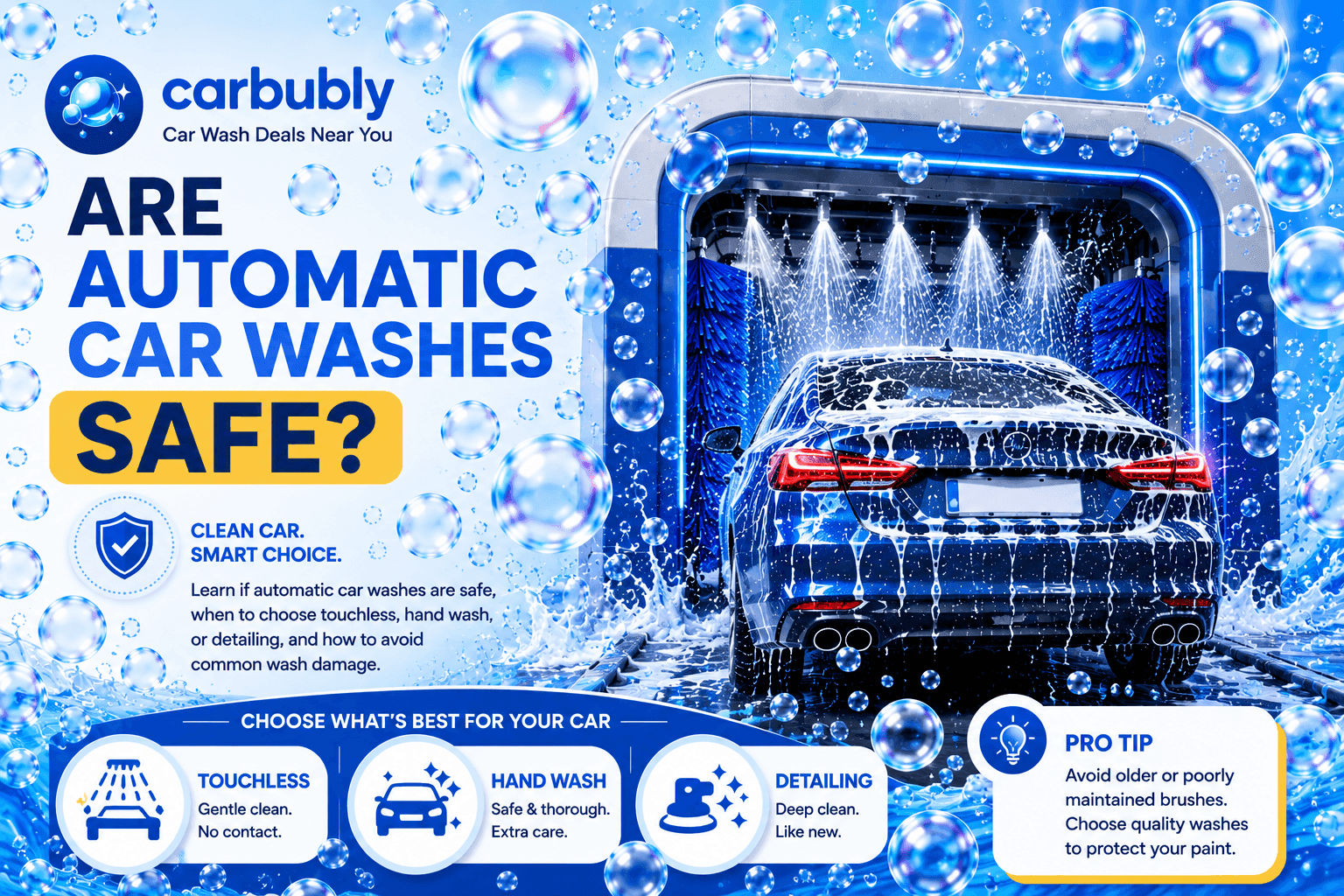
Are Automatic Car Washes Safe? Yes, automatic car washes can be safe when the equipment is well-maintained, the wash type matches your vehicle’s condition, and you avoid methods that may be too harsh for your paint, trim, wheels, or accessories.
That’s the honest answer. Automatic car washes are convenient, fast, and useful for many drivers. But not every automatic car wash is the same. A brush-style tunnel wash, a soft-touch wash, and a touchless automatic wash all clean differently. Each one has benefits and tradeoffs.
This guide explains how automatic car washes work, when they’re safe, when they may not be the best choice, what mistakes to avoid, and how Carbubly can help you compare better local options. You’ll also learn how to find Exclusive car wash deals, only on Carbubly.
Are Automatic Car Washes Safe for Most Cars?
Automatic car washes are generally safe for many everyday vehicles when the wash is properly maintained and the driver follows the instructions. The bigger question is whether a specific automatic car wash is the right choice for your specific car.
If your vehicle is lightly dusty and you want a quick clean, an automatic wash can be convenient. If your vehicle has delicate trim, loose accessories, heavy mud, thick bug splatter, ceramic coating, paint protection film, or dark paint that shows swirl marks easily, you may want to be more selective.
The safest automatic wash is usually the one that:
- Uses well-maintained equipment
- Has clear instructions
- Matches your vehicle type
- Does not use visibly dirty brushes or cloth
- Has proper drying
- Avoids harsh unnecessary add-ons
- Fits your car’s condition
If you’re unsure, choose touchless or hand wash instead of a brush-style wash.
What Is an Automatic Car Wash?
An automatic car wash uses machines to clean your vehicle. You may drive into a bay and park, or your vehicle may move through a tunnel on a conveyor. The wash may use water, soap, high-pressure spray, brushes, cloth strips, foam, wax, rinse cycles, and air drying.
There are several types.
Brush-Style Automatic Wash
This type uses spinning brushes or cleaning materials that touch the vehicle. It can remove more dirt than a no-contact wash, but it may also raise concerns if brushes are dirty or too aggressive.
Soft-Touch Automatic Wash
Soft-touch washes use cloth or foam materials instead of stiff brushes. They still touch the paint, so cleanliness and maintenance matter.
Touchless Automatic Wash
A touchless automatic wash uses water pressure and cleaning chemicals without brushes or cloth strips touching the paint. This can reduce contact-related swirl mark risk, but it may not remove heavy grime as well as a contact wash.
You can compare local touchless car wash services when you want a lower-contact automatic option.
What Are the Main Benefits of Automatic Car Washes?
Automatic car washes are popular because they solve real problems for busy drivers.
They Save Time
A quick automatic wash can clean the exterior in minutes. That’s useful before work, errands, school pickup, rideshare driving, or a weekend trip.
They Are Convenient
Many automatic washes are easy to access, open long hours, and located near roads, gas stations, shopping centers, and commuter routes.
They Help With Regular Maintenance
Washing regularly helps remove dust, pollen, light road film, salt, and grime before buildup gets worse. A regular automatic wash can be better than letting dirt sit for months.
They Can Be More Consistent Than DIY Washing
Washing at home can be safe, but only if you use the right products and technique. Automatic washes give busy drivers an easier option.
What Are the Risks of Automatic Car Washes?
Automatic car washes can be safe, but they are not risk-free. The risk depends on the type of wash, equipment condition, vehicle condition, and driver preparation.
Swirl Marks and Fine Scratches
Brush-style and soft-touch washes touch the paint. If the brushes or cloth strips carry grit from previous vehicles, that grit may rub against your paint and contribute to swirl marks.
This is more noticeable on dark paint, such as black, navy, dark gray, and deep red.
Consumer Reports recommends careful washing techniques and proper products to avoid scratching or degrading a vehicle’s finish. Its guide on how to wash your car safely is a useful reminder that cleaning method matters.
Missed Dirt
Automatic washes are fast, but they may miss areas like lower panels, wheels, mirrors, door handles, rear hatch seams, and bumper corners.
Water Spots
If drying is weak or the water quality is poor, automatic washes can leave water spots on paint, glass, and trim.
Harsh Chemicals
Some automatic washes use stronger chemicals to clean quickly. That may be fine for many vehicles, but it can be a concern for certain coatings, wraps, trim, or neglected paint.
Vehicle Accessories
Loose antennas, roof racks, bike racks, spoilers, cracked trim, temporary plates, or aftermarket accessories can be vulnerable in some automatic washes.
Are Touchless Automatic Car Washes Safer?
Touchless automatic car washes are often safer from a paint-contact standpoint because they do not use brushes or cloth strips that rub against the vehicle. That makes them a good option for drivers who want to reduce swirl mark risk.
But touchless washes are not perfect. Since there is no physical scrubbing, they may not remove:
- Baked-on bugs
- Tree sap
- Heavy mud
- Thick road film
- Dirty wheels
- Stubborn lower-panel grime
Touchless is best for light dust, pollen, rain spots, and mild road film. If your car is heavily dirty, a careful hand wash or full detail may work better.
When Is a Hand Wash Better Than an Automatic Car Wash?
A hand wash is better when your car needs more careful attention. A good hand wash provider can focus on areas that automatic systems often miss.
Choose hand washing when:
- The wheels are dirty.
- The bumper has bugs.
- The lower panels have road grime.
- The car has sap or bird droppings.
- You have dark paint that shows swirl marks.
- Your vehicle has ceramic coating, paint protection film, or a wrap.
- You want more careful drying.
A good hand wash should use car-safe soap, clean wash mitts, separate wheel tools, and clean microfiber towels. A bad hand wash can still scratch paint, so provider quality matters.
You can compare local hand car wash services when your vehicle needs more attention than a quick automatic wash.
When Is Full-Service Detailing the Better Choice?
Full-service detailing is better when the car needs deeper cleaning inside and out. An automatic car wash mostly cleans the exterior. It will not solve pet hair, stains, odors, dirty mats, glass haze, sticky cup holders, or cargo-area mess.
Choose detailing when your vehicle has:
- Interior crumbs or stains
- Pet hair
- Lingering odors
- Dirty mats
- Dusty vents
- Water spots
- Rough paint
- Bug buildup
- Wheel grime
- Months of neglected cleaning
- For deeper cleaning, compare full-service car detailing.
How Can You Make an Automatic Car Wash Safer?
A few simple steps can reduce problems.
Remove Loose Items
Take off magnetic signs, temporary decorations, loose accessories, and anything that could catch on equipment.
Fold Mirrors if Recommended
Some washes tell drivers to fold mirrors. Follow the posted instructions.
Close Windows and Sunroof
This sounds obvious, but it is one of the easiest mistakes to avoid.
Check the Antenna and Roof Accessories
If your vehicle has a removable antenna, roof rack, cargo box, bike rack, or aftermarket spoiler, check whether the wash allows it.
Avoid Washing With Existing Damage
If trim is loose, a mirror is cracked, or a bumper piece is hanging, fix it before using an automatic wash.
Choose the Right Package
Don’t buy every add-on automatically. Choose the package that fits your car’s condition.
Inspect Afterward
Look at mirrors, wheels, trim, lower panels, glass, and rear areas after the wash. If something looks missed, you’ll know what service to choose next time.
What Vehicles Need Extra Care?
Some vehicles deserve more caution in automatic washes.
Dark-Colored Cars
Dark paint shows swirl marks and water spots more clearly.
New Cars
If the car is new, you may be more careful with paint from the start.
EVs and Teslas
EVs may have cameras, sensors, charge ports, flush handles, and special wash modes. Tesla’s official guidance includes Car Wash Mode for supported vehicles, which helps prepare the car by managing windows, wipers, charge port behavior, and other wash-related features. Tesla owners can review Tesla’s vehicle cleaning and Car Wash Mode guidance.
Vehicles With Coatings, Wraps, or PPF
Ceramic coatings, vinyl wraps, matte finishes, and paint protection film may need specific products and wash methods. Ask the installer or provider if you’re unsure.
Large Trucks and SUVs
Height limits, roof accessories, oversized tires, and extended mirrors can be issues in some automatic washes.
Are Automatic Car Washes Bad for Paint?
Automatic car washes are not automatically bad for paint. The concern is repeated poor washing. A well-maintained automatic wash may be fine for many vehicles. A poorly maintained brush wash can increase the chance of swirl marks.
The safer approach is to match the wash to the vehicle:
- Use touchless for light maintenance.
- Use hand wash for careful exterior cleaning.
- Use detailing for deeper cleaning.
- Avoid dirty brushes, harsh wiping, and poor drying.
If you care deeply about paint condition, especially on dark paint, be selective.
How Often Should You Use an Automatic Car Wash?
Many drivers wash every one to two weeks, depending on weather, parking, driving habits, and dirt buildup.
Wash sooner after:
- Bird droppings
- Tree sap
- Bug splatter
- Road salt
- Mud
- Heavy dust
- Long highway drives
- Rainy road film
A regular light wash can help prevent buildup. But if your car is heavily dirty, an automatic wash may not be enough.
Is Washing at Home Safer Than an Automatic Car Wash?
Washing at home can be safer if you use proper technique. It can also be worse if you use dish soap, rough sponges, dirty towels, or dry wiping.
At-home washing requires:
- Car-safe shampoo
- Clean wash mitts
- Separate wheel tools
- Microfiber towels
- Proper drying
- Shade or cooler conditions
- Responsible runoff handling
The EPA notes that vehicle washing can create wastewater containing detergents, oils, grease, sediment, metals, and other contaminants. Its guidance on vehicle and equipment washing runoff explains why wash water should be managed carefully.
Professional washes may have better systems or procedures for handling wash water than driveway washing.
How Carbubly Helps You Choose Safer Car Wash Options
Carbubly is the #1 marketplace for car wash deals near you. It helps drivers discover, compare, purchase, and redeem offers from trusted local hand washes, touchless washes, express car washes, mobile detailers, and full-service detailing businesses.
Instead of guessing, you can compare the service type that fits your car. Use touchless when you want lower-contact maintenance. Choose hand wash when the car needs more careful exterior work. Pick full-service detailing when you need a deeper clean.
Start with Carbubly to compare nearby deals. If you’re new to the platform, the how Carbubly works page explains the process. You can also review the Carbubly FAQs, browse Carbubly articles, or contact the team through contact Carbubly.
For extra confidence, you can review the Carbubly guarantee, Carbubly terms of service, consumer data privacy policy, and refund and dispute policy.
How Car Wash Businesses Can Help Customers Feel Safer
Customers want clarity. If you run an automatic wash, touchless wash, hand wash, express wash, mobile detail service, or full-service detailing shop, explain your process clearly.
Tell customers:
- What type of wash it is
- Whether brushes or cloth touch the car
- What is included
- What vehicles may be restricted
- How drying works
- Whether interior cleaning is included
- What add-ons are useful
- How redemption works
Local providers can learn how to become a Carbubly vendor and promote offers to nearby drivers. Businesses can also explore Carbubly events for community and promotional opportunities.
Conclusion: Are Automatic Car Washes Safe?
So, Are Automatic Car Washes Safe? Yes, they can be safe when the equipment is clean, the wash is well-maintained, and the service matches your vehicle’s condition. Touchless automatic washes are often a good option for light maintenance. Brush and soft-touch washes can be convenient, but they require more trust in equipment cleanliness and maintenance.
Automatic washes are not the best choice for every car or every mess. Choose hand washing when your vehicle needs careful exterior attention. Choose full-service detailing when the interior and exterior need a deeper reset.
Carbubly helps drivers compare automatic, touchless, hand wash, and detailing deals from local providers, so you can choose a wash that fits your car, your budget, and your comfort level.
FAQs About Automatic Car Wash Safety
1. Are automatic car washes safe?
Yes, automatic car washes can be safe when equipment is clean, maintained, and appropriate for your vehicle. Touchless options reduce paint contact, while brush washes depend more on equipment cleanliness.
2. Can automatic car washes scratch paint?
They can contribute to swirl marks or fine scratches if brushes or cloth strips carry dirt. Touchless washes reduce this type of contact risk.
3. Is touchless better than automatic brush washing?
Touchless is better if you want to avoid brush contact. Brush washing may clean heavier dirt better, but it can have more paint-contact risk.
4. Are automatic car washes safe for new cars?
They can be, but many owners of new cars prefer touchless or hand washing to reduce the chance of early swirl marks.
5. Are automatic car washes safe for ceramic-coated cars?
Some are, but check the coating installer’s advice. Touchless or careful hand washing is often preferred for coated vehicles.
6. Can automatic car washes damage mirrors or trim?
They can if parts are loose, damaged, oversized, or not prepared correctly. Fold mirrors if instructed and remove loose accessories.
7. Should I choose hand wash instead of automatic?
Choose hand wash when your car has bugs, dirty wheels, sap, bird droppings, lower-panel grime, or when you want more careful cleaning.
8. Do automatic car washes clean the interior?
Most automatic washes focus on the exterior. Choose full-service washing or detailing if you need vacuuming, interior glass cleaning, seat cleaning, or mat cleaning.
9. How often should I use an automatic car wash?
Many drivers wash every one to two weeks, depending on driving, parking, weather, and dirt buildup. Wash sooner after sap, bugs, bird droppings, or road salt.
10. Where can I compare automatic car wash deals near me?
Use Carbubly to compare local automatic, touchless, hand wash, and full-service detailing deals from participating providers near you.