


What Is an Autonomous Car Wash?
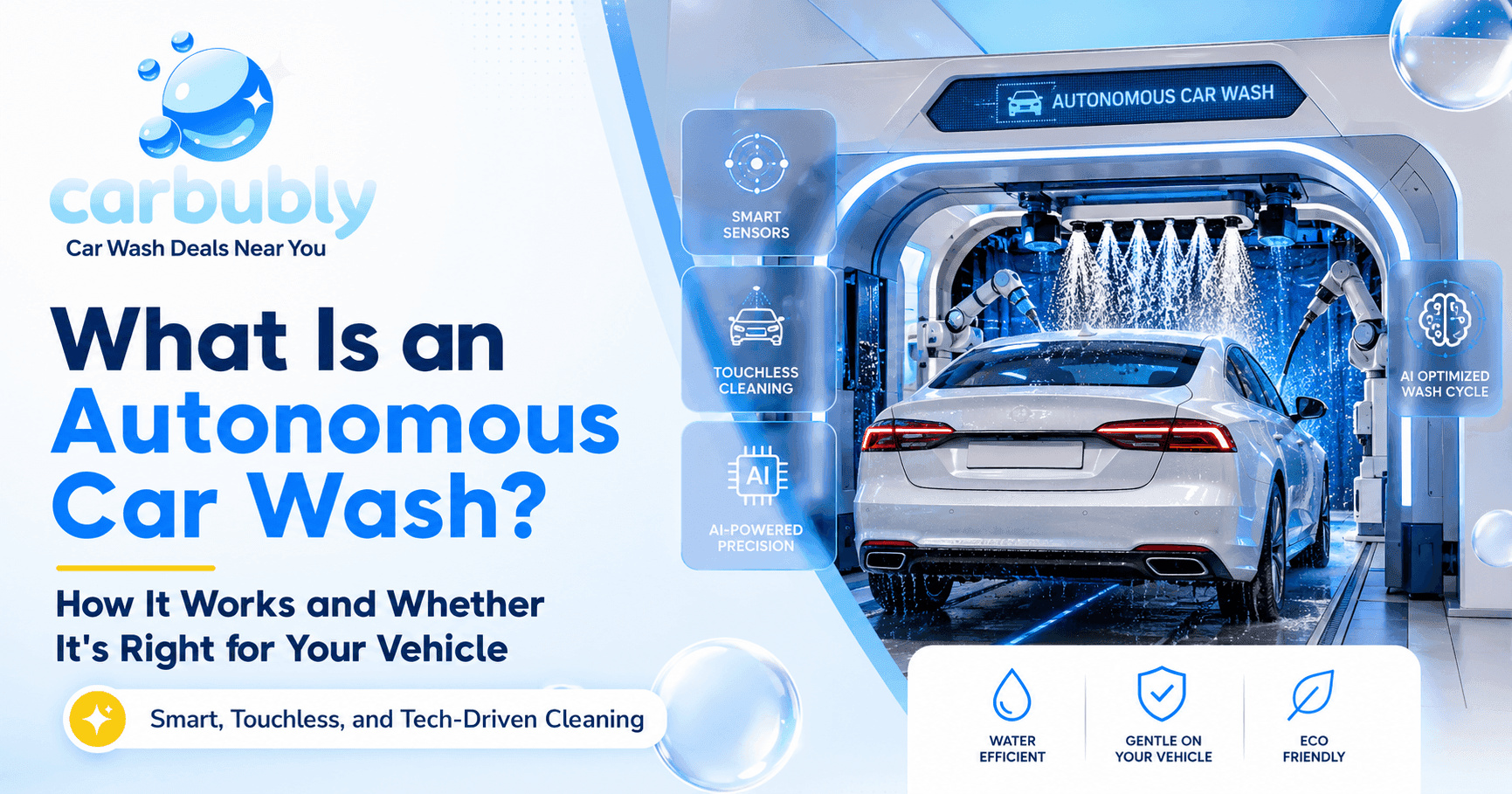
An autonomous car wash is a fully automated vehicle cleaning system that operates without any human attendants guiding or assisting the process. You drive in, pay at a kiosk, and the equipment handles everything from pre-soak to drying with no staff involvement at the wash itself.
Key Takeaways
- Autonomous car washes use sensors, conveyor systems, and automated spray equipment to clean your vehicle without human involvement.
- They are faster and often cheaper per wash than full-service or hand wash options.
- The format works best for routine exterior cleaning, not deep cleaning or interior detailing.
- Touchless and soft-touch are two distinct types of autonomous systems, each with trade-offs.
- Not all autonomous washes are equal in terms of equipment quality, water pressure, and chemical formulations.
- If your vehicle has heavy contamination, paint correction needs, or interior mess, you will likely need a more hands-on service.
How an Autonomous Car Wash Actually Functions
The term "autonomous" in this context refers to the wash system itself, not self-driving vehicles. These facilities rely on a combination of sensor arrays, programmable logic controllers (PLCs), conveyor belt or rollover mechanisms, and precisely timed chemical application to move your car through a sequence of cleaning stages.
Here is what a typical tunnel-style autonomous wash sequence looks like:
- Pre-soak: High-pressure water mixed with a degreasing agent loosens surface dirt and road grime.
- Foam bath: A thick detergent layer encapsulates contaminants to reduce friction during the wash.
- Scrubbing or blasting: Either soft cloth strips/brushes physically agitate the surface, or high-pressure water jets do the work in a touchless system.
- Rinse cycle: Fresh water removes detergent and loosened debris.
- Spot-free rinse: Deionized or reverse-osmosis water prevents water spots from forming.
- Air drying: Powerful blowers remove most of the remaining moisture before you exit.
The entire process typically takes between 3 and 8 minutes depending on the package you select and the equipment configuration of the facility.
Modern autonomous facilities also use RFID-based monthly membership systems where you can access services through Carbubly. You pay a flat monthly fee, typically between $20 and $50 depending on your market and wash tier, and scan a tag or barcode on your windshield each visit for unlimited washes.
Autonomous vs. Other Car Wash Types: A Direct Comparison
Understanding what is an autonomous car wash becomes clearer when you put it side-by-side with other common wash formats. Each type has a specific use case, and choosing the wrong one for your situation wastes money or leaves your vehicle under-cleaned.
| Wash Type | Human Involvement | Avg. Cost Per Wash | Best For
| Autonomous Tunnel | None | $8 - $25 | Routine exterior maintenance |
| Touchless Automatic | None | $10 - $20 | Paint-sensitive vehicles |
| Self-Service Bay | You do the work | $3 - $8 | Spot cleaning, wheel work |
| Hand Car Wash | Full staff involvement | $20 - $50+ | Thorough exterior detail |
| Full-Service Detail | Staff inside and out | $100 - $300+ | Deep cleaning, restoration |
If you want real human attention to your vehicle's paint, gaps, door jambs, and trim, a hand car wash is going to deliver results that no automated system can replicate.
On the other end of the spectrum, if your vehicle has a recent ceramic coating or paint protection film, you may want to look at a touchless car wash to avoid any physical contact that could cause micro-abrasions.
For anyone dealing with interior grime, stained seats, or odor issues, neither option is sufficient. That is a job for full service car detailing, which addresses both the exterior and interior in detail.
The Two Main Types Within Autonomous Systems
Not every autonomous car wash uses the same cleaning method. The two most common formats have meaningfully different effects on your paint and finish.
Soft-Touch Autonomous Washes
These systems use rotating cloth strips or foam brushes to physically contact and scrub the vehicle. They are highly effective at removing stubborn road grime, bird droppings, and bug splatter that chemical soaking alone may not break down. However, the physical contact does create a small risk of swirl marks or light scratches over time, especially if the cloths are not properly maintained or if the vehicle has a delicate single-stage paint.
Touchless Autonomous Washes
These rely entirely on water pressure and chemical action, meaning nothing physically touches your car. The trade-off is that they require stronger, more acidic or alkaline chemical formulations to compensate for the lack of mechanical agitation. Over time, those chemicals can affect certain clear coat finishes, plastics, and rubber trim if the vehicle is washed very frequently.
Your choice between the two should depend on your vehicle's paint condition, coating status, and how often you wash.
What Autonomous Car Washes Do Well and Where They Fall Short
Knowing the real-world limitations of these systems helps you set accurate expectations and spend your money wisely.
Where autonomous washes excel:
- Speed and convenience for weekly or bi-weekly maintenance washes
- Consistent water usage (modern systems use roughly 25 to 45 gallons per wash, far less than a garden hose at home)
- Affordable unlimited monthly memberships
- Available 24/7 at many locations with minimal wait times
- Consistent results for straightforward exterior dirt
Where autonomous washes fall short:
- They cannot clean door jambs, gas caps, or trunk edges
- No ability to handle interior messes, stains, or odors
- Automated blowers leave some water in mirrors, grilles, and tight panel gaps
- They cannot assess paint-specific issues like oxidation or scratches
- Heavily soiled vehicles (mud, construction debris, animal waste) may need pre-treatment or a hand wash first
Is an Autonomous Car Wash Safe for All Vehicles?
This is one of the most common concerns among car owners, and it is worth addressing directly. For the majority of daily drivers with standard factory paint, modern autonomous washes are safe when used properly. The equipment at reputable facilities is calibrated regularly, the chemical solutions are pH-balanced for automotive surfaces, and the drying systems are designed to minimize streaking.
That said, there are specific situations where you should proceed with caution:
- Custom or aftermarket accessories: Roof racks, oversized side mirrors, spoilers, or antennas can interfere with tunnel equipment.
- Freshly painted panels: New paint typically needs 30 to 90 days to fully cure before being safe for any automated wash.
- Convertibles: Soft tops and older weatherstripping can allow water intrusion in high-pressure systems.
- Lifted trucks: Height clearance varies by location, and a truck exceeding 7 feet may not fit.
Most facilities post maximum vehicle dimensions and a list of restrictions at the entry point. Reading those before pulling forward saves you from potential damage and unexpected billing disputes.
Finding Autonomous Car Washes Near You
Location matters when you are building a routine car care habit. If the wash is inconvenient to your commute or errands, you are less likely to use it consistently. Many autonomous car wash chains have expanded significantly across California and other high-traffic states over the past decade.
If you are based in central California, there are several resources and service providers that can help you find the right wash facility for your needs in sacramento. You can also search specifically by city to find options near you. For example, if you are looking for car wash services in folsom, there are multiple automated and full-service options available across the metro area.
When evaluating any autonomous wash location, look at the following before committing to a membership:
- How recently was the equipment installed or last serviced?
- Do they use reclaimed water systems (which indicates an environmentally conscious operation)?
- What chemicals do they use, and are those chemicals safe for coated or wrapped vehicles?
- Is there a dedicated line for larger vehicles or trucks?
Things to Know
- Some autonomous car washes use water reclamation systems that recycle up to 85% of the water used per wash, making them more eco-friendly than washing at home with a hose.
- Unlimited monthly membership plans typically restrict you to one wash per day to prevent abuse of the system.
- Many autonomous tunnels use laser or ultrasonic sensors to detect your vehicle's dimensions and adjust equipment clearance automatically.
- The "spot-free" rinse at the end of a wash cycle uses specially treated water, and skipping this rinse (by choosing a lower-tier package) will often result in water spots on darker paint colors.
- Swirl marks from soft-touch washes are cumulative. If you notice paint degradation over time, switching to a touchless format or a professional hand wash can slow that process.
- Not all membership plans transfer between locations, even within the same brand, so confirm portability before signing up.
Ready to Build a Smarter Car Care Routine?
Take 10 minutes this week to evaluate your current wash habits. If you are washing at home with a bucket and garden hose, you are likely using two to three times more water per wash than a modern autonomous facility uses. If you have not had your vehicle professionally cleaned in over six months, book a full detail appointment to reset the baseline, then maintain it with regular autonomous washes going forward. Start by identifying the closest facility to your home or workplace, check whether they offer a free first wash with membership signup (many do), and run one test wash before committing to a monthly plan.
Frequently Asked Questions
Q: Is an autonomous car wash safe for new cars?
Yes, autonomous car washes are generally safe for new cars as long as the paint has fully cured.
Most manufacturers recommend waiting at least 30 days after any fresh paint application before using any automated wash system. For brand-new factory vehicles, the paint is cured before delivery, so you can typically use an autonomous wash right away without concern.
Q: How often should you use an autonomous car wash?
For most drivers, washing every one to two weeks is sufficient to maintain a clean exterior.
If you live near the coast, drive on salted winter roads, or frequently park under trees, weekly washing helps prevent long-term paint and undercarriage damage. Unlimited membership plans make this more economical than paying per wash.
Q: Do autonomous car washes clean the undercarriage?
Many autonomous car washes offer undercarriage wash as an add-on or include it in premium packages.
This feature is particularly useful during winter months in states that use road salt, or after off-road driving. Not all facilities offer it, so confirm availability when selecting your service tier.
Q: Can you stay in your car during an autonomous car wash?
Yes, in tunnel-style autonomous washes, you remain in your vehicle for the entire process.
You put the car in neutral, release the steering wheel, and the conveyor carries you through. Rollover systems, where the equipment moves around a stationary vehicle, also allow you to stay inside.
Q: What is an autonomous car wash membership actually worth?
A membership pays for itself quickly if you wash more than twice a month.
At most facilities, a single wash costs between $10 and $20, while monthly unlimited plans range from $20 to $50. If you wash three or more times per month, the math strongly favors a membership over paying individually each visit.
The Bottom Line on What Is an Autonomous Car Wash
What is an autonomous car wash comes down to this: it is the most efficient and affordable way to maintain your vehicle's exterior on a regular basis, but it is not a substitute for professional detailing or the thoroughness of a hand wash. It fills a specific role in a well-rounded car care routine.
Use autonomous washes for your weekly or bi-weekly maintenance needs, and schedule a professional detail service two to four times a year depending on how heavily you use your vehicle. That combination keeps your paint protected, your resale value higher, and your car looking clean without spending excessive time or money on either extreme.