


What Does 'Touchless' Mean at a Car Wash in Citrus Heights
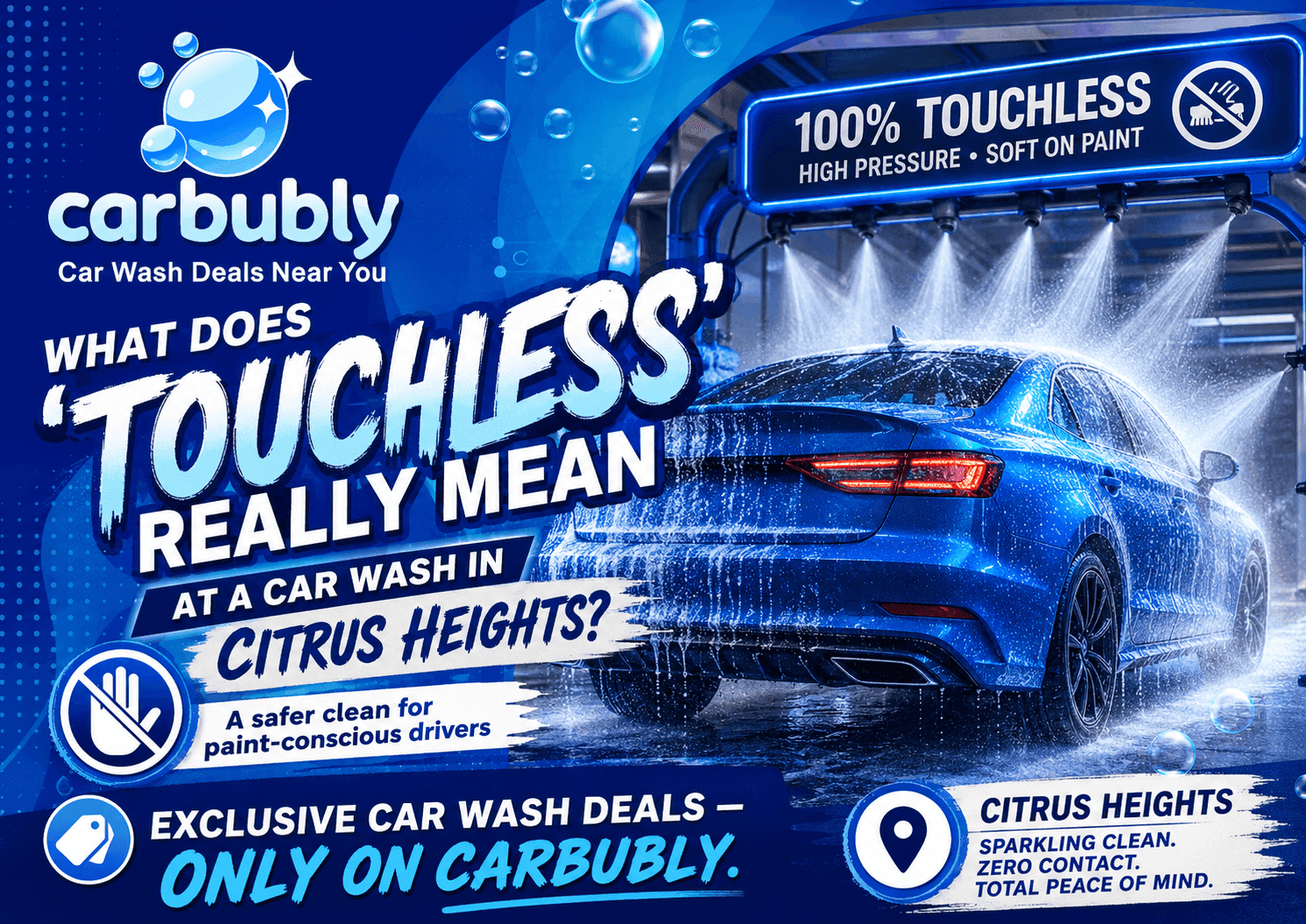
A touchless car wash cleans your vehicle using high-pressure water jets and chemical detergents, with zero physical contact from brushes, cloths, or rollers. For drivers in Citrus Heights, understanding exactly what that means — and what it does not mean.
Key Takeaways
- Touchless systems rely entirely on pressurized water and chemical solutions, not friction, to remove dirt.
- The method is gentler on paint but may leave behind stubborn grime, bird droppings, or road tar without additional treatment.
- Not all touchless washes are the same; chemical strength, water pressure, and equipment quality vary significantly between providers.
- Citrus Heights drivers deal with specific environmental factors like valley dust, tree sap, and summer heat that affect how well a touchless wash performs.
- Touchless is not a substitute for periodic detailing, especially for older vehicles or those with existing paint issues.
- Pricing typically ranges from $10 to $25 per session, depending on add-ons and the facility.
How the Touchless System Actually Works
When you pull into a touchless car wash, the process looks simple from the outside, but there is a lot happening beneath the surface. The system starts with a pre-soak application of alkaline or pH-balanced detergent. This chemical solution is designed to loosen and lift dirt, road grime, and organic material from your paint surface before water even hits the car.
After the chemical soak, high-pressure water jets, sometimes operating at pressures between 1,000 and 2,000 PSI, blast the loosened debris off the vehicle. The jets move around the car in a precisely calibrated pattern, covering the hood, roof, doors, bumpers, and wheel wells. A rinse cycle follows, and most systems finish with a spot-free rinse using deionized or reverse-osmosis water to prevent water spots from forming on the paint.
Some higher-end facilities add an air-dry stage using heated forced air, which reduces the chance of mineral deposits settling on the surface. The touchless car wash format was specifically designed to address the scratching problems that plagued older brush-based tunnel systems, where stiff nylon bristles dragged contaminants across the clear coat and created fine swirl marks over time.
According to the International Carwash Association, the professional car wash industry has invested heavily in touchless technology over the past decade, largely in response to consumer demand for paint-safe cleaning methods offered at facilities like Carbubly.
The Chemistry Behind the Clean
The chemicals used in a touchless system do the heavy lifting that brushes and mitts would otherwise handle. Most facilities use a two-stage chemical process. The first stage applies a high-pH (alkaline) pre-soak that attacks petroleum-based contaminants like oil, exhaust residue, and road film. The second stage uses a low-pH (acidic) solution to break down mineral deposits, calcium buildup from hard water, and oxidation.
This chemical approach is effective for everyday dirt. However, it has real limitations. Baked-on bird droppings, tree sap, rail dust, and brake dust that has bonded to wheel surfaces often resist chemical loosening during a standard cycle. The National Institute of Standards and Technology has published research on surface adhesion forces showing that certain organic compounds form exceptionally strong bonds with painted surfaces under heat, which is a daily reality for Citrus Heights drivers in the Sacramento Valley summer.
This is also why many detailing professionals recommend pairing regular touchless visits with at least one or two sessions of full service car detailing per year. Chemical decontamination clay bars, hand polishing, and paint sealant application go far beyond what any automated touchless system can achieve.
What Touchless Does Not Do (And Why That Matters in Citrus Heights)
Citrus Heights sits in the Sacramento Valley, an area known for dry, dusty conditions, wildfire smoke residue during late summer, and seasonal pollen. These environmental factors deposit fine particulate matter on vehicle surfaces in ways that high-pressure water alone cannot always address.
Here is a clear breakdown of what touchless handles well versus where it falls short:
| Cleaning Task | Touchless Effective? | Notes |
| Everyday dust and light dirt | Yes | Standard pre-soak handles this easily |
| Road grime and exhaust film | Yes | Two-stage chemical process works well |
| Bird droppings (fresh) | Mostly | Works if caught within 24-48 hours |
| Bird droppings (baked on) | No | Requires manual treatment |
| Tree sap | No | Needs solvent-based hand removal |
| Brake dust on wheels | Partial | May need wheel-specific product |
| Water spots from minerals | Partial | Spot-free rinse helps, but hard water areas can still cause issues |
| Interior cleaning | No | Touchless only covers the exterior |
| Paint swirls or scratches | No | These require polishing and correction |
| Wildfire ash residue | Partial | May need additional rinse cycles |
For drivers near the sacramento metro area, where construction zones kick up silica dust and freeway driving deposits thick exhaust grime, the limitations of touchless become relevant more quickly than they might for someone in a rural area.
Touchless vs. Soft-Touch vs. Hand Wash: Choosing the Right Method
Not every wash is created equal, and knowing the difference between your options helps you make the right call for your specific vehicle.
- Touchless: No physical contact. Best for newer vehicles with pristine paint, vehicles with aftermarket wraps or ceramic coatings, and weekly maintenance washes where the car is not heavily soiled.
- Soft-touch (friction) wash: Uses foam rollers, cloth strips, or brushes that make direct contact with the paint. More effective at removing stubborn grime but carries a higher risk of fine scratching over time, particularly in automated tunnel formats where equipment is shared across dozens of vehicles per hour.
- Hand car wash: A skilled technician physically washes the vehicle using microfiber mitts, dedicated wheel brushes, and pH-balanced soap. A proper hand car wash service gives you the best of both worlds: mechanical cleaning without the automated abrasion risk, provided the technician uses proper two-bucket method technique and clean cloths.
According to Consumer Reports, hand washing remains the safest method for paint preservation when done correctly, but it requires more time and cost. For busy Citrus Heights residents who wash their vehicles weekly or bi-weekly, touchless is a practical middle ground that balances convenience with reasonable paint safety.
Drivers in nearby folsom face similar trade-offs, particularly those who commute on Highway 50 and deal with consistent road film buildup.
Things to Know
- Touchless washes are generally safe for ceramic coatings and paint protection film, but check with your coating installer first, as some chemicals can degrade certain sealants over time.
- Water recycling systems at touchless facilities mean the rinse water may contain trace contaminants from previous vehicles; the final spot-free rinse typically uses fresh deionized water to compensate.
- If your vehicle has a fresh paint job or recently applied wax, wait at least 48-72 hours before running it through any automated wash, touchless included.
- Vehicles with exterior damage, loose trim, or cracked window seals carry additional risk in any automated system because high-pressure jets can force water into gaps.
- Many touchless facilities in the Citrus Heights area offer monthly unlimited memberships, which typically range from $20 to $40 per month and can offer significant savings for frequent washers.
- The EPA's WaterSense program recognizes professional car washes as significantly more water-efficient than washing a car at home, using as little as 15 to 45 gallons per vehicle versus the 80 to 140 gallons a typical home hose wash uses.
How to Get the Most Out of a Touchless Wash
If you are going to use a touchless system regularly, a few simple habits will extend its effectiveness and keep your paint in better shape between deeper cleaning sessions.
- Wash more frequently. Dirt and grime that sits on the surface bonds more tightly over time. Short-interval touchless washes, once every one to two weeks, prevent heavy buildup that the system cannot handle.
- Pre-rinse heavily soiled areas manually. If you have driven through mud, hit a bug swarm on the interstate, or parked under trees, knock off the bulk of debris with a garden hose before entering the tunnel.
- Apply a spray sealant regularly. Many touchless facilities offer a polymer sealant add-on at the end of the cycle. These products add a thin hydrophobic layer that makes the next wash more effective.
- Inspect after each wash. Get in the habit of checking specific problem spots like the front bumper, lower door panels, and wheel wells after each session to catch anything the system missed.
- Schedule deep cleaning periodically. Plan for professional detailing at least twice a year to address what the automated system leaves behind.
The CDC's guidance on vehicle sanitation during respiratory illness seasons also highlights the value of regular exterior cleaning in reducing surface contamination for drivers who frequently use shared vehicles or family cars.
Ready to Book a Touchless Wash in Citrus Heights?
Visit carbubly.com to find available touchless and full-service options near you. Check current pricing, membership plans, and service packages before your next visit, and book online in under two minutes to avoid waiting in line.
Frequently Asked Questions
Q: Is a touchless car wash safe for cars with ceramic coatings?
Generally yes, but the specific chemicals used can vary between facilities, so always verify with your coating installer.
Most professional ceramic coatings are designed to resist the alkaline and acidic solutions used in touchless systems, but lower-quality coatings or DIY applications may be more vulnerable. Ask your detailing provider which pH range is safe for your specific product.
Q: How often should Citrus Heights drivers use a touchless wash?
Every one to two weeks is a reasonable baseline for most drivers in the Sacramento Valley.
The combination of valley dust, pollen season, and freeway grime means contaminants accumulate quickly here. Drivers who park outdoors or commute long distances may benefit from more frequent washes to prevent bonding of organic material.
Q: Will a touchless wash remove water spots already on my car?
Standard touchless cycles will not remove existing water spots that have already etched into the clear coat.
Once mineral deposits bond with the paint surface, they require a chemical decontamination product or light machine polishing to remove. A touchless wash prevents new water spots from forming via its spot-free rinse but does not reverse existing damage.
Q: Can I use a touchless wash on a car with a vinyl wrap?
Yes, touchless is one of the recommended wash methods for vinyl-wrapped vehicles.
The 3M vehicle wrap care guidelines specify avoiding high-friction washes that can lift wrap edges or cause peeling. The no-contact nature of touchless systems makes them a practical choice, though very high pressure directed at wrap seams should still be avoided.
Q: What is the difference between touchless and brushless car wash systems?
Brushless systems replace stiff nylon brushes with soft foam or cloth materials, meaning they still use physical contact, while touchless systems use no contact at all.
Both options are improvements over traditional brush tunnels in terms of paint safety. However, brushless systems still carry a small risk of friction-based scratching from dragged particulate matter, whereas touchless systems eliminate that risk entirely by relying solely on water and chemicals.
The Bottom Line on What Does 'Touchless' Really Mean at a Car Wash in Citrus Heights?
A touchless car wash is a smart, paint-safe option for regular maintenance cleaning, but it works best when you understand its boundaries. It handles everyday grime efficiently and protects your finish from friction-based damage, but it is not a replacement for periodic hand washing or professional detailing when your vehicle faces stubborn contaminants.
For Citrus Heights drivers, the practical answer is a layered approach: use touchless for weekly or bi-weekly maintenance, book a hand wash for medium-level cleaning between seasons, and invest in full detailing at least twice a year to keep the paint in peak condition. Your vehicle is likely one of the most expensive assets you own, and protecting that investment with the right cleaning method for each situation is a straightforward decision.