


What Are the Drawbacks of Using a Self Car Wash?
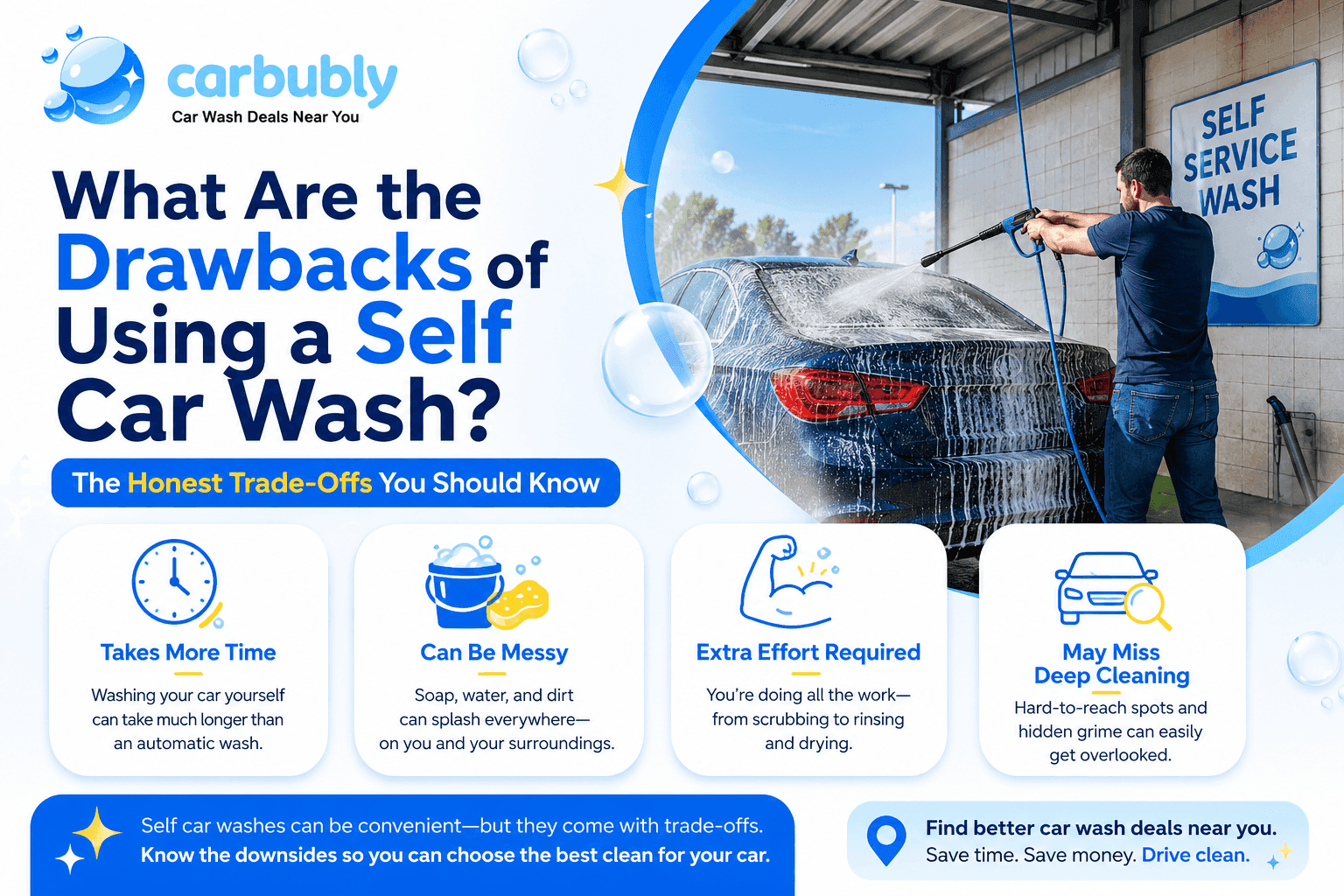
Self car washes seem like a budget-friendly, convenient option, but they come with a surprising number of hidden pitfalls that many drivers overlook. What are the drawbacks of using a self car wash? In short: inconsistent cleaning results, potential paint damage, unexpected costs, and a time investment.
Key Takeaways
- Self car washes can scratch or swirl your paint if you use incorrect technique or shared equipment that hasn't been properly maintained.
- The total cost of a self wash, once you factor in quarters, time, and repeat visits, often exceeds what people budget for.
- Shared wands and brushes at self-service bays may harbor dirt, grit, and bacteria from previous vehicles.
- Water spots, streaking, and missed areas are common outcomes when you rush or lack the right tools.
- Professional alternatives like hand car wash and touchless options deliver more reliable, safer results for your vehicle's finish.
- Location matters: access to quality car care services in cities like Sacramento and Folsom makes skipping the DIY bay a realistic option for most drivers.
Why Self Car Washes Are More Popular Than They Should Be
Self car washes occupy a peculiar space in American car culture. They're everywhere, they're open late, and they cost just a few dollars per session. According to the International Carwash Association, there are more than 60,000 car wash locations across the United States, and a significant portion of those are self-service coin-operated bays. The appeal is obvious: you show up, insert your quarters, and scrub on your own schedule with [](https://carbubly.com/).
But the gap between perception and reality is wide. Most drivers who use these facilities regularly don't realize they may be doing more harm than good to their vehicle's exterior. The equipment is shared, the water pressure is fixed, and the soaps used are often industrial-grade formulas that weren't designed with your specific paint type in mind.
The result? A car that looks clean at first glance but has sustained microscopic damage over dozens of washes.
The Real Risk to Your Paint and Clear Coat
This is where the conversation gets serious. Your vehicle's clear coat is a thin, protective layer that guards the base color underneath. It doesn't take much to compromise it.
Shared Brushes and Contaminated Equipment
The foam brushes available at self-service bays are used by dozens, sometimes hundreds, of vehicles before they're cleaned or replaced. Each car that came before yours may have left behind brake dust, road tar, fine gravel, or industrial fallout embedded in those bristles. When you run that brush across your hood, you're essentially dragging abrasive particles over your paint.
This is one of the primary reasons professional detailers warn against them. The American Detailing Institute and similar professional bodies consistently flag shared wash equipment as a leading cause of preventable paint swirl marks.
Incorrect Technique Under Pressure
High-pressure wands, when used incorrectly, can strip wax, force water into door seals and window trim, and even chip paint near panel edges. Most self-wash users hold the wand too close, move it too fast, or skip pre-soaking the vehicle entirely. Without a proper two-bucket wash method or a controlled rinse sequence, you're creating conditions for scratches and water streaking with touchless car wash being a safer alternative.
If you're serious about protecting your vehicle's resale value, the risks here aren't theoretical. A single bad wash session can leave swirl marks that require professional paint correction, which typically runs between $150 and $500 depending on your vehicle's size and the severity of damage.
The Hidden Cost Problem
Self car washes appear cheap on the surface. A standard session might cost $2 to $8, depending on your location and how many additional functions you activate. But that number rarely tells the whole story.
Time as a Real Expense
A typical self-wash session, from parking to driving away, takes 20 to 40 minutes. If you value your time at even $20 per hour, a 30-minute session costs you $10 in time alone, on top of the quarters you've already fed into the machine. Do that twice a month, and you're spending the equivalent of $240 annually in time, not counting the actual machine fees.
Repeat Visits and Inconsistent Results
One of the most underappreciated drawbacks of self-service washing is that it rarely cleans a vehicle completely in a single visit. Wheel wells, lower door panels, and rear bumpers are notoriously difficult to reach with a handheld wand, which is why many drivers consider full service car detailing instead. Many drivers return within days because they notice missed spots or streaking from improper drying.
| Cost Factor | Self Car Wash | Professional Hand Wash |
| Average session cost | $2-$8 | $20-$40 |
| Time per session | 25-40 min | 10-20 min (drop-off) |
| Paint damage risk | Moderate to High | Low |
| Consistency of results | Variable | High |
| Wheel/undercarriage cleaning | Limited | Thorough |
| Drying quality | DIY (streaks likely) | Professional towel dry |
Environmental and Practical Complications
Beyond paint and cost, there are other real-world problems that make self-service washing less practical than it sounds.
Water Runoff and Environmental Compliance
When you wash your car at home or in a non-compliant self-wash bay, dirty runoff containing oil, detergent, and road chemicals can enter storm drains and local waterways. The U.S. Environmental Protection Agency has guidelines specifically addressing vehicle washwater discharge. Reputable professional car wash facilities are required to collect and treat wastewater, which is a significant advantage over self-service operations. Many self-service facilities do comply, but it's worth confirming before assuming yours does.
Cold Weather Limitations
In many parts of the United States, self-service car wash bays become impractical or outright dangerous during winter months. Water can freeze in door seals, lock cylinders, and around rubber trim. Wet brakes in freezing temperatures are a safety hazard. Professional indoor facilities manage temperature and drying conditions in ways a coin-operated outdoor bay simply cannot.
Lack of Interior Cleaning
A self car wash addresses only the exterior, and often incompletely. Vacuuming, interior surface wiping, window cleaning from the inside, and odor treatment all require either separate equipment (if the bay has coin-operated vacuums) or a professional visit. If your goal is a genuinely clean vehicle, the self-wash is only a partial solution.
For drivers who want comprehensive results, comprehensive services like those offered in professional facilities can cover everything from paint decontamination to interior conditioning in a single appointment, eliminating the piecemeal approach entirely.
What the Better Alternatives Actually Look Like
Understanding what are the drawbacks of using a self car wash naturally leads to the question: what should you use instead?
Hand Washing by Professionals
A proper professional hand wash performed by trained technicians uses pH-balanced soaps, dedicated wash mitts per vehicle, and controlled drying techniques, which is why sacramento residents often prefer this method. This approach eliminates the cross-contamination problem entirely. Technicians are trained to handle panel gaps, wheels, trim, and glass with the appropriate tools for each surface.
Touchless Wash Systems
For drivers who prioritize speed and paint safety, a touchless car wash system uses high-pressure water jets and specialized chemical formulas to clean the vehicle without any physical contact. There's no risk of brush abrasion, and the process typically takes under five minutes. The trade-off is that touchless systems may not remove heavy clay contamination or caked-on mud as effectively as hand washing, but for routine maintenance washing, they're an excellent option.
Regional Access Is Better Than You Think
A common reason drivers default to self-service bays is the assumption that professional options are inconvenient or too expensive. That assumption has become increasingly outdated. If you're in California's Central Valley, quality professional car care is easy to find. Drivers based near folsom have straightforward access to professional washing and detailing services that fit regular maintenance schedules without requiring advance planning.
Things to Know
- Self-service wash timers pressure you to rush, which increases the likelihood of skipping important steps like pre-rinse and proper drying.
- The quarters-only payment model at many bays means if you run out mid-wash, your car may sit soapy while you scramble for change.
- High-pressure wands can void certain manufacturer warranties if they're used to force water into sensitive electronics or sensors near the wheel wells.
- Self car washes rarely offer any form of quality guarantee. If you leave with streaks or missed areas, there's no recourse.
- According to Consumer Reports, hand washing with quality microfiber tools remains the gold standard for protecting automotive paint over the long term.
- Many self-service facilities in urban areas have limited operating hours or are frequently out of service during peak demand times.
Ready to Protect Your Vehicle's Finish?
The next time you're thinking about pulling into a self-service bay, take a moment to check whether a professional hand wash or touchless option is nearby. Look up your local car wash location, confirm pricing, and book a session that actually covers your vehicle from bumper to bumper. It takes less effort than feeding quarters into a machine, and your paint will thank you for it.
Frequently Asked Questions
Q: Can a self car wash actually damage my paint?
Yes, self car washes can damage your paint, particularly if you use shared foam brushes or incorrect wand technique.
Shared brushes accumulate abrasive particles from previous vehicles, and dragging them across your clear coat creates swirl marks and micro-scratches. Over time, repeated sessions can dull your paint's finish noticeably, especially on darker-colored vehicles.
Q: Is a self car wash cheaper than a professional wash in the long run?
Not necessarily, especially when you factor in time, repeat visits, and potential paint correction costs.
A single professional hand wash session may cost $20 to $40, but it delivers thorough, consistent results in one visit. Self-service bays can accumulate similar or higher costs per month when you account for multiple sessions and the time investment involved.
Q: Are touchless car washes safer than self-service washes?
Yes, touchless systems eliminate the physical contact that causes most paint damage at self-service bays.
Because touchless washes use pressurized water and chemical solutions rather than brushes or wands, there's no risk of abrasion. They're a strong choice for regular maintenance washing between deeper professional cleanings.
Q: What are the drawbacks of using a self car wash in winter specifically?
Cold weather amplifies most of the standard problems, adding risks like frozen door seals, icy brakes, and water intrusion into sensitive trim areas.
Many outdoor self-service bays become genuinely hazardous in freezing temperatures. Professional indoor facilities manage environmental conditions to prevent these issues, making them a safer choice year-round.
Q: How often should I get my car professionally washed?
Most automotive care experts recommend a professional wash every two to four weeks, with a full detail every three to six months.
The National Highway Traffic Safety Administration and consumer automotive bodies both note that regular exterior care preserves paint integrity and vehicle resale value over time. Establishing a consistent schedule with a trusted provider is more effective than irregular self-service visits.
The Bottom Line on What Are the Drawbacks of Using a Self Car Wash
Self-service car washes have their place for quick, low-stakes rinses when no other option is available. But as a regular car care strategy, they carry real risks to your paint, unpredictable costs, and results that rarely match what a professional wash delivers. The combination of shared contaminated equipment, user error, and incomplete cleaning makes them a poor long-term choice for drivers who care about their vehicle's condition and resale value.
The smarter move is to treat your vehicle with the consistent, professional care it deserves. Whether that means scheduling a routine hand wash, using a touchless system for quick maintenance, or booking a full detail every season, the alternatives are accessible, affordable, and far more effective than feeding quarters into a machine.