


Touchless Car Wash in Citrus Heights for a Brush-Free Clean
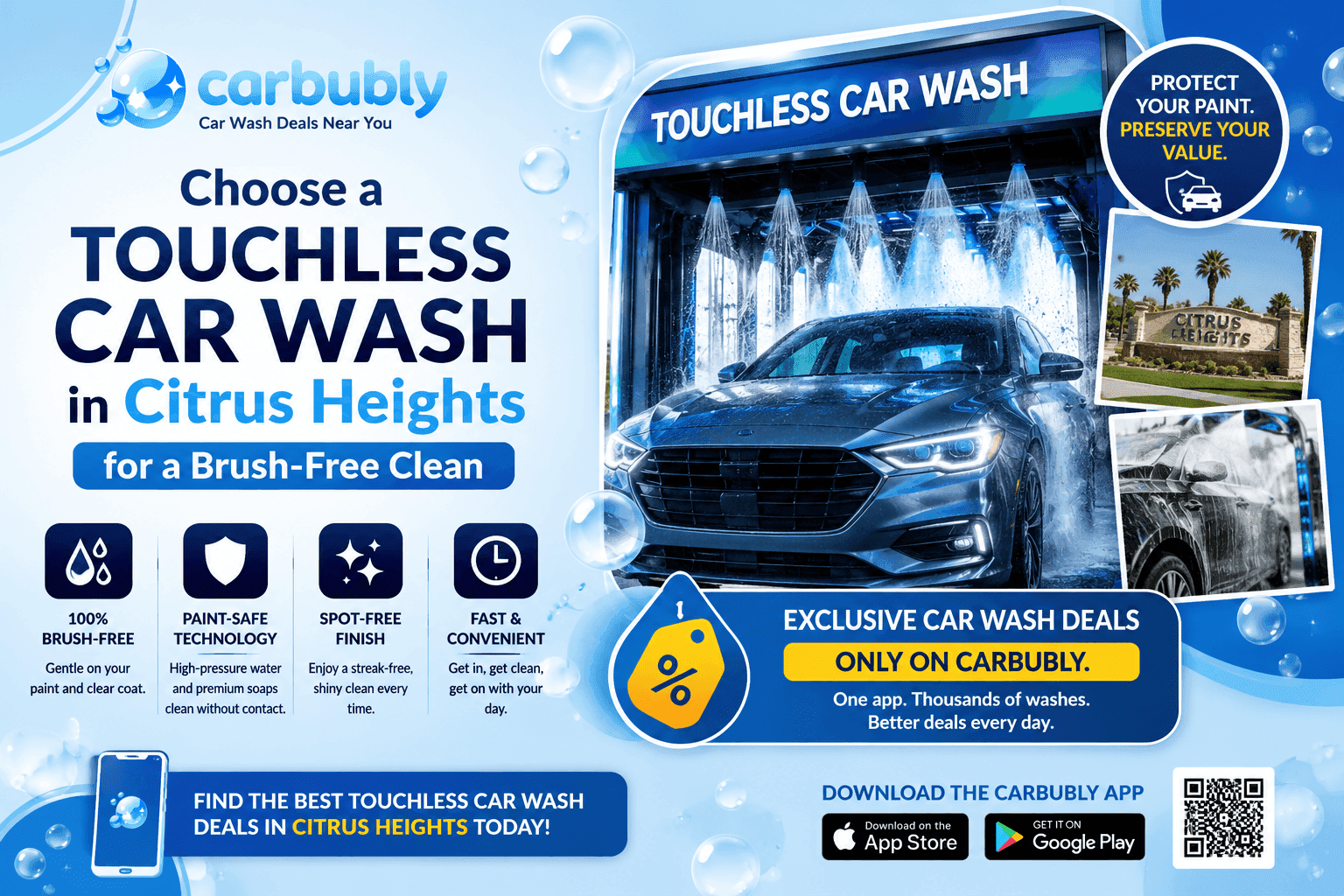
If you care about your vehicle's paint and finish, a touchless car wash is one of the smartest choices you can make. Unlike traditional brush-based tunnels, touchless systems use high-pressure water and specialized detergents to clean your car without any physical contact, eliminating the risk of swirl marks, scratches, and paint damage.
Key Takeaways
- Touchless car washes use high-pressure water and chemical cleaning agents instead of brushes or cloth strips, making them safer for your vehicle's paint and clear coat.
- Citrus Heights drivers benefit from this wash style year-round, especially during dry, dusty Sacramento Valley summers when fine particles can cause micro-scratches if scrubbed incorrectly.
- Newer and leased vehicles, freshly wrapped cars, and vehicles with ceramic coatings are particularly well-suited to touchless washing.
- Not all touchless washes deliver the same clean, and choosing the right provider means looking at equipment quality, detergent formulas, and rinse technology.
- Price, convenience, and add-on services like tire shine and spot-free rinse vary widely between providers in the Citrus Heights area.
- If your car has significant built-up grime or road tar, a single touchless pass may not be enough, and you may need to consider hand car wash as a complement.
Why Brush-Based Car Washes Can Damage Your Vehicle
Before getting into what makes a touchless system superior, it helps to understand exactly why traditional brushes are a problem. The rollers and cloth strips used in older tunnel washes can trap dirt and debris from previous vehicles. When those dirty bristles or strips contact your car's surface, they act like sandpaper, leaving behind fine scratches and swirl marks that are often only visible under direct sunlight or a detailing light.
According to the International Carwash Association, the professional car wash industry in the United States washes more than 8 million vehicles every day. That's a massive volume, and it means brush-based equipment sees hard use. Even so-called "soft cloth" washes can cause paint damage on vehicles with delicate finishes, fresh wraps, or aftermarket paint jobs.
For residents in Sacramento and the broader region, there's an additional concern: the area's dry climate means vehicles frequently accumulate fine dust, pollen, and agricultural particulate. These fine particles, when scrubbed by a rotating brush, become abrasive agents against your clear coat.
How a Touchless Car Wash Actually Works
The cleaning process in a touchless system combines two primary forces: high-pressure water jets and chemical action. Here's how a typical cycle breaks down:
- Pre-soak application: A high-pH alkaline detergent is sprayed across the vehicle's surface. This chemical begins breaking down road film, grease, and organic matter on contact.
- High-pressure rinse: Water jets operating at pressures typically between 1,000 and 2,000 PSI blast away loosened debris without touching the paint.
- Low-pH acid rinse: A second chemical pass neutralizes the alkaline pre-soak and helps remove mineral deposits and water spots.
- Spot-free final rinse: Deionized or reverse-osmosis treated water is used in the final rinse to prevent water spots as the vehicle dries.
- Optional add-ons: Many providers offer tire shine, rain-repellent coating applications, or a hot-air blower dry cycle.
When you choose a touchless car wash operated by a reputable provider, the chemistry and pressure settings are calibrated for your vehicle type, which means a much safer and more consistent clean compared to outdated brush systems with full service car detailing alternatives available when needed.
It's worth noting that the quality of water matters significantly. Hard water, which is common in parts of California, can leave mineral deposits even after a wash. This is exactly why spot-free rinse systems using treated water are a key feature to look for in any provider you consider.
What to Look for When Choosing a Provider in Citrus Heights
Not every touchless system is created equal. Equipment age, chemical quality, and water treatment infrastructure all vary significantly. When evaluating your options, use the checklist below to make a smarter decision.
Equipment and Technology
- Laser or sensor-guided arches: Modern systems use sensors to adjust spray patterns based on the vehicle's size and shape, ensuring even coverage on trucks, SUVs, and sedans alike.
- Multiple chemical stages: A quality wash uses at least two chemical passes (pre-soak and acid rinse) for effective cleaning. Single-stage systems often leave residue.
- High-pressure nozzle configuration: Look for systems with rotating or oscillating nozzles that reach into wheel wells and lower body panels.
Water Quality and Rinse Technology
- Spot-free rinse: Reverse osmosis or deionized water in the final rinse stage is critical to preventing water spots, especially in a hard-water region like Northern California.
- Water reclaim systems: Environmentally responsible providers recycle and treat wash water, which is increasingly required under California's water conservation regulations.
Service Options and Pricing
| Feature | Basic Touchless | Mid-Tier Touchless | Premium Touchless |
|---|---|---|---|
| Pre-soak chemical | Yes | Yes | Yes (triple foam) |
| Spot-free rinse | No | Yes | Yes |
| Tire shine | No | Optional | Included |
| Rain repellent coating | No | Optional | Included |
| Air dry cycle | No | Yes | Yes |
| Average price range | $8-$12 | $15-$22 | $25-$35 |
Touchless vs. Hand Wash: When Each One Makes Sense
Many vehicle owners wonder whether they should choose a touchless tunnel or a hand wash instead. The answer depends on your vehicle's condition and what you're trying to achieve in Roseville or surrounding areas.
A touchless wash excels at routine maintenance cleaning. If you wash your car every one to two weeks and just need road grime, dust, and bird droppings removed quickly, a touchless system is efficient, affordable, and gentle on your paint. The average touchless wash takes between five and ten minutes from start to finish.
A hand wash, on the other hand, offers more control and attention to detail. Trained technicians can address specific problem areas, use the correct products for different surfaces (glass, rubber trim, wheels), and spot issues like paint chips or rust before they worsen. Hand washing is the better choice after long road trips, before a car show, or when your vehicle has accumulated particularly heavy soiling in Folsom.
For vehicles that need deep cleaning of the interior, stain removal, or paint correction, neither option alone is enough. That's when a professional detailing service becomes the right call, combining thorough exterior washing with interior restoration, paint protection, and more across locations like Elk Grove.
According to the Consumer Reports auto care section, regular washing is one of the most effective ways to preserve your vehicle's resale value, and choosing a method that doesn't cause paint damage is central to that benefit.
The Citrus Heights Advantage: Local Context Matters
Citrus Heights sits in a part of California that presents specific challenges for vehicle maintenance. The Sacramento Valley experiences hot, dry summers with temperatures frequently exceeding 100°F. During these months, bird droppings, tree sap, and UV radiation accelerate paint oxidation. Regular washing is not just cosmetic; it's protective.
The region also sees significant traffic on corridors like Sunrise Boulevard and Madison Avenue, where road debris, construction dust, and brake dust accumulate quickly on vehicles. A touchless system can handle this type of surface contamination efficiently without the risk of grinding particles into your clear coat in areas like Rancho Cordova.
If you're located in or around the region and considering wash options across multiple locations, Carbubly provides service options across Northern California, including coverage in the broader Sacramento market for drivers who commute or travel frequently through the metro area.
For those who travel east toward the foothills or commute through the Gold Line corridor, there are also service options available in the Davis area, making it easy to integrate a quality wash into your regular driving routine regardless of where you're headed toward West Sacramento.
Things to Know
- Touchless washes are not always the best option for extremely heavy soiling: Caked mud, road tar, or tree sap adhesive sometimes requires agitation or a pre-treatment that touchless pressure alone cannot handle.
- Frequency matters more than intensity: Washing your vehicle every one to two weeks with a quality touchless system is more effective for paint preservation than infrequent deep washes.
- Ceramic-coated vehicles benefit significantly from touchless washing: Physical contact can degrade ceramic coatings faster, so if you've invested $500 to $1,500+ in a ceramic coat, touchless is the right routine maintenance choice.
- Not all "touchless" claims are equal: Some budget operations use reduced pressure to cut costs, which means dirtier results and potentially more streaking.
- California's water regulations affect wash operations: Under California State Water Resources Control Board guidelines, commercial car washes must meet specific water reclaim requirements, which can influence the quality and consistency of rinse water.
- Wheels and tires need extra attention: Most touchless arches are optimized for body panels. Always confirm that the system you choose has dedicated wheel-well jets or request a tire shine add-on for complete coverage at your nearest place.
Ready to Book Your Next Brush-Free Wash?
Take 60 seconds right now to look up the nearest touchless provider in Citrus Heights that uses a spot-free rinse system and at least two chemical wash stages. Check reviews specifically for comments about water spots and paint condition after washing. If you have a newer vehicle, a leased car, or a recent paint job, call ahead and ask what pressure settings and chemical formulations the system uses, similar to how you might consult the Tesla vehicle-specific guidance. Your paint investment is worth that one extra question.
For a straightforward comparison of local options and service tiers, the NIH's National Library of Medicine on vehicle chemical exposure and automotive care resources from AAA's car care advice can also help you understand the long-term impact of wash chemistry on vehicle surfaces.
Frequently Asked Questions
Q: How often should I use a touchless car wash to protect my paint?
Washing every one to two weeks is the general recommendation for most drivers in dusty or high-traffic environments like Citrus Heights.
Waiting longer allows contaminants like bird droppings, brake dust, and road salt to etch into your clear coat, which becomes harder to reverse the longer they sit. Consistent short-interval washing is far less damaging than infrequent heavy scrubbing sessions.
Q: Will a touchless car wash remove all road tar and bugs from my vehicle?
Most touchless systems will remove light to moderate bug splatter and road film, but heavy tar or adhesive residue may require a manual pre-treatment.
If your vehicle has significant tar spots, ask the provider if they offer a pre-treatment spray or bug and tar remover as an add-on. Alternatively, a hand wash session may be more appropriate for that level of soiling before returning to routine touchless maintenance.
Q: Is a touchless car wash safe for vehicles with ceramic coatings or paint protection film?
Yes, touchless washing is generally considered the safest routine wash method for vehicles with ceramic coatings or PPF.
Physical contact from brushes or wash mitts can cause micro-abrasions that degrade both ceramic coatings and paint protection film over time. The SEMA (Specialty Equipment Market Association) recommends touchless or hand washing for coated and wrapped vehicles to preserve the investment.
Q: What is a spot-free rinse and why does it matter?
A spot-free rinse uses deionized or reverse osmosis-treated water in the final wash stage to eliminate the minerals that cause water spots during drying.
In hard-water areas like much of California, regular tap water leaves calcium and magnesium deposits as it evaporates. These show up as white or cloudy spots on dark paint and glass. A true spot-free rinse system addresses this directly, which is why it's one of the most important features to confirm before choosing a provider.
Q: How does a touchless car wash compare in price to a hand wash?
Touchless washes typically range from $8 to $35 depending on the tier, while professional hand washes generally start at $25 to $50 for a basic exterior wash.
For routine maintenance, touchless systems offer the better cost-to-time ratio. Hand washes and full detailing services command higher prices because of the labor involved, but they deliver a deeper and more customized clean that touchless automation simply cannot replicate for all scenarios.
The Bottom Line on Choosing a Touchless Car Wash in Citrus Heights
When you choose a touchless car wash in Citrus Heights for a brush-free clean, you're making a decision that protects your vehicle's paint, saves you time, and aligns with smart long-term car ownership. The key is choosing a provider that invests in quality equipment, uses multi-stage chemistry, and offers a spot-free rinse system.
Start by identifying providers that clearly list their equipment features and wash stages. Ask about water treatment technology, and don't hesitate to choose a higher service tier for a newer or more valuable vehicle. Your paint finish, resale value, and overall satisfaction will reflect the difference.