


Fully Automated Car Washes Explained
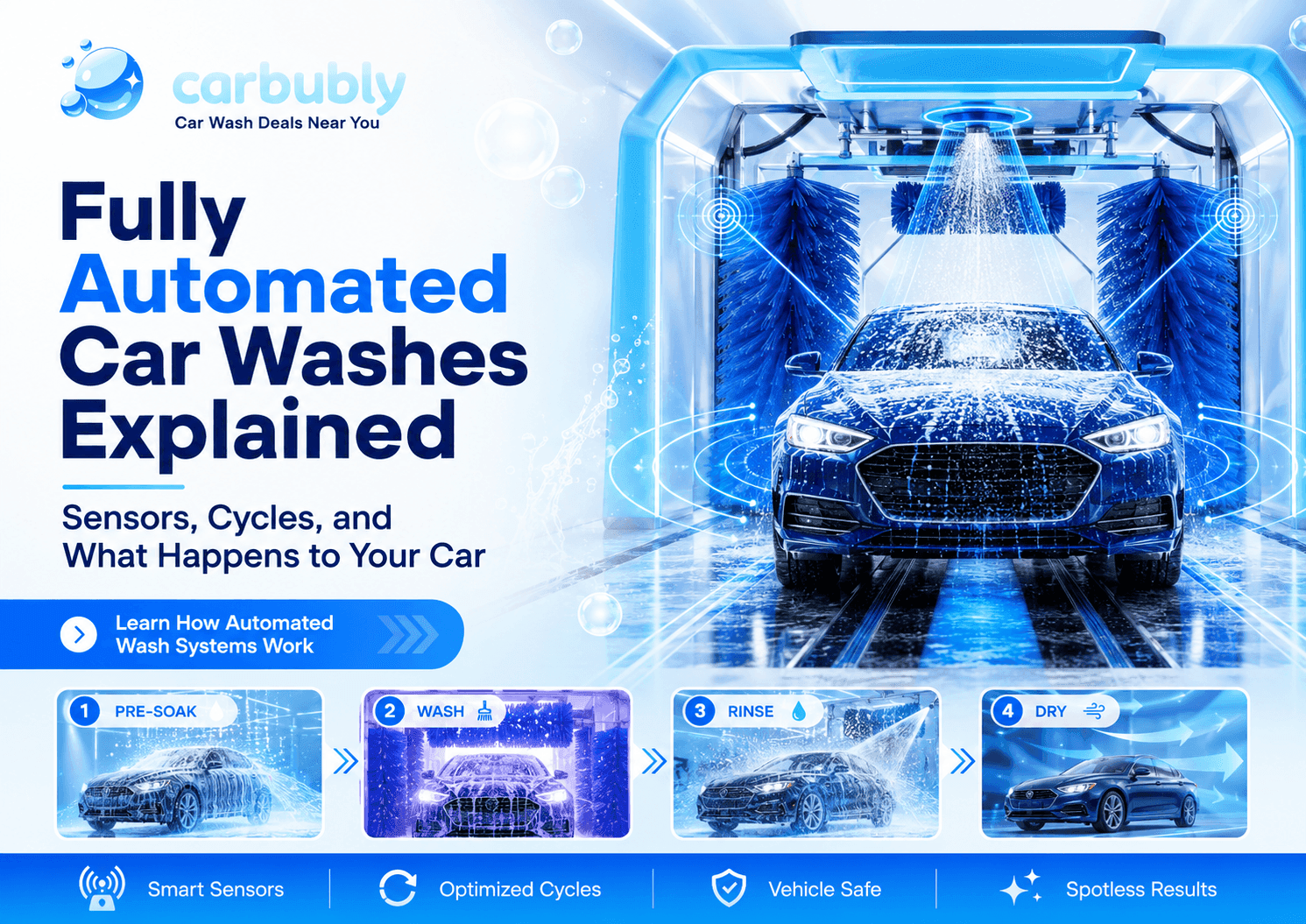
Fully automated car washes use a combination of sensors, conveyor systems, and programmed spray equipment to clean your vehicle from entry to exit without any human involvement. The process typically takes between 3 and 10 minutes, depending on the wash package you select and the technology the facility uses.
Key Takeaways
- Fully automated car washes rely on laser and infrared sensors to measure your vehicle and guide equipment precisely.
- There are two main types: tunnel (conveyor) washes and in-bay automatics, each suited to different needs.
- Soft-cloth and touchless systems use different cleaning approaches, with real trade-offs in paint safety and cleaning power.
- Chemical selection, water pressure, and rinse quality all significantly affect your car's finish.
- Automated washes are convenient but have limitations compared to hand car wash services for detailed cleaning.
- Understanding the full cycle helps you choose the right wash type and avoid common damage risks.
How the Entry System Detects and Prepares Your Vehicle
Before a single drop of water touches your car, the automated system needs to know exactly what it's dealing with. Most modern automated facilities use a combination of laser curtains, infrared sensors, and ultrasonic detectors positioned at the tunnel entrance. These sensors measure your vehicle's length, height, and width within seconds of your front tires rolling onto the conveyor or stopping in the bay.
This profiling step matters more than most drivers realize. If the system underestimates your vehicle's height, spinning brush arms could strike roof racks, antennas, or cargo carriers. High-quality installations use redundant sensor arrays to cross-check measurements. Some premium tunnels, particularly those installed after 2020, capture a rough 3D outline of the car to adjust equipment clearance throughout the wash cycle.
Once your vehicle is profiled, the control system sends instructions to each piece of equipment in the tunnel. Brush arm extension, spray nozzle angle, and dryer positioning are all adjusted dynamically based on the data collected at entry. According to the International Carwash Association, modern tunnel systems can process more than 100 cars per hour while maintaining this level of individual vehicle calibration.
The Conveyor and In-Bay Automatic: Two Different Systems
Not every automated wash works the same way. There are two primary formats in widespread use across the United States, and understanding the difference helps you set realistic expectations before you pull in.
Tunnel (Conveyor) Washes
In a tunnel wash, your vehicle is placed on a conveyor track and pulled through a fixed series of stations. You shift into neutral, take your foot off the brake, and the conveyor does the rest. Each station in the tunnel is dedicated to a specific task: pre-soak, soap application, agitation, rinse, spot-free rinse, and drying. Because equipment is fixed at each station and your car moves past it, the tunnel format allows for very high throughput and a consistent, repeatable process.
In-Bay Automatics
In an in-bay automatic, your vehicle stays stationary. A gantry, which is the overhead frame that holds all the spray and brush equipment, moves back and forth over your car. These systems are common at gas stations and standalone locations. They require less space than tunnel systems but typically take longer per vehicle and can handle fewer cars per hour. If you've used a touchless car wash at a fuel station, you've likely experienced an in-bay automatic.
| Feature | Tunnel (Conveyor) | In-Bay Automatic |
| Vehicle movement | Car moves, equipment is fixed | Car stays still, equipment moves |
| Throughput | 80-120+ cars/hour | 10-20 cars/hour |
| Typical wait time | 3-5 minutes | 5-10 minutes |
| Common locations | Standalone wash facilities | Gas stations, small lots |
| Cost range | $8 to $30+ | $5 to $20 |
| Touchless option available | Yes | Yes, common format |
What Actually Happens During Each Wash Stage
This is where the mechanics get interesting. A full tunnel wash typically runs through six to eight distinct stages, each engineered for a specific cleaning function.
Pre-Soak Application
The cycle begins with a low-pressure spray of alkaline pre-soak solution. This chemical loosens road grime, brake dust, and organic debris before any physical contact occurs. Higher-end facilities apply two pre-soak stages: one for the underbody and one for the body panels. The American Chemical Society notes that surfactant chemistry in car wash pre-soaks has advanced considerably, allowing effective soil removal at lower concentrations to reduce environmental impact.
Foam and Soap Application
After the pre-soak dwell time, a foam bath coats the vehicle. This stage typically uses a colored, scented detergent for marketing appeal, but its functional job is lubrication. The soap creates a slick surface layer so that brush or cloth contact during the next stage causes minimal friction against paint.
Agitation (Brushes or High-Pressure Jets)
This is the stage that generates the most debate among car care enthusiasts. Soft-cloth systems use strips of treated cloth or foam attached to spinning cylinders and horizontal curtains to physically scrub the vehicle. When maintained properly, modern microfiber cloth systems pose very low scratch risk. Touchless systems skip physical contact entirely, relying on high-pressure water jets, sometimes exceeding 1,200 psi, combined with stronger chemical concentrations to achieve cleaning without touching the paint.
Rinse and Spot-Free Rinse
A high-volume fresh water rinse removes soap and loosened dirt. Premium facilities follow this with a spot-free rinse using reverse osmosis (RO) or deionized water. According to the U.S. Geological Survey's water quality data, many parts of the country have hard water that leaves mineral deposits on paint as it dries. Deionized water removes those minerals, which is why spot-free rinse upgrades are worth the extra cost if you care about your finish.
Wax, Sealant, or Polish Application (Optional)
Many automated systems offer optional protective coatings applied as a spray during the final rinse stages. These include carnauba wax blends, ceramic-infused sprays, and paint sealants. While they don't match the durability of professionally applied products, they do add a layer of hydrophobic protection that can last one to two weeks.
High-Velocity Dryers
The tunnel exit features a bank of high-powered blowers that remove most surface water. These blowers can move air at speeds exceeding 100 mph in some installations. Residual moisture in panel gaps, mirror housings, and trim edges will still need attention if you're aiming for a completely dry finish.
Soft-Cloth vs. Touchless: The Real Trade-Offs
The question of soft-cloth versus touchless comes up constantly, and the honest answer is that neither system is perfect for every situation.
Soft-cloth systems generally do a better job of removing heavy grime because physical agitation is more effective than chemical action alone. However, if the brushes are not cleaned and inspected regularly, accumulated grit in the cloth media can create fine surface scratches over time. A well-maintained soft-cloth facility is typically safer than a poorly maintained one.
Touchless systems are gentler by nature because nothing physically contacts the paint. The downside is that removing stubborn contamination like bug splatter, tree sap, or road tar often requires either multiple passes or significantly stronger chemicals. Those chemicals, when used repeatedly, can dull rubber trim and strip previously applied wax coatings faster than soft-cloth systems.
If your car's paint is in excellent condition and you've invested in professional protection, pairing regular automated washes with periodic full service car detailing is one of the smartest maintenance strategies you can follow.
Water Usage, Recycling, and Environmental Considerations
One fact that surprises many drivers: professional automated car washes are significantly more water-efficient than washing your car at home. The EPA's WaterSense program has highlighted that home driveway washing can use 80 to 140 gallons of water per wash, while a modern automated facility uses 30 to 45 gallons per vehicle, thanks largely to water reclaim systems.
Most commercial tunnel washes recapture and filter rinse water, recycling it for pre-rinse and undercarriage stages. Fresh water is typically reserved only for the final spot-free rinse. This closed-loop approach also means that wash runoff, which contains detergents and heavy metals from road grime, is treated before disposal rather than flowing directly into storm drains, which is a requirement under the Clean Water Act for commercial wash operators.
Things to Know
Roof racks, spoilers, and external antennas pose a real risk in automated washes. Remove or retract anything that protrudes before entering.
Convertibles and vehicles with soft tops should use caution in tunnel washes, as high-pressure water can infiltrate seals over time.
Many subscriptions at automated wash facilities pay off in as few as three visits per month, especially in muddy or salty road conditions.
The "express exterior" option at most tunnels skips wax and sealant stages, but adding a spot-free rinse upgrade is worth it if your local water is hard.
Automated systems cannot clean door jambs, wheel wells thoroughly, or interior surfaces. Those areas require manual attention.
Tire shine products applied during automated washes are largely cosmetic and can actually make floors slippery if you walk near freshly washed tires.
Finding a Quality Automated Wash Near You
Location matters when you're choosing a facility. The equipment age, maintenance schedule, and chemical quality vary enormously between operators, even within the same brand. Reading recent reviews with specific mentions of scratch incidents or equipment quality will give you more useful information than star ratings alone.
If you're in Northern California, CarBubly provides automated and professional wash services across the region. Drivers in sacramento and nearby folsom can find location-specific service options and pricing through their site, making it easier to compare what's available close to home.
Ready to Choose the Right Wash for Your Car?
Take five minutes before your next wash visit to check whether the facility uses maintained soft-cloth media or a high-pressure touchless system, then match that choice to your paint condition and how recently you've had protective coatings applied. If your vehicle hasn't had a full detail in the past six months, that's the best place to start before committing to a regular automated wash routine.
Frequently Asked Questions
Q: How do fully automated car washes handle large trucks and SUVs?
Most modern automated systems are calibrated to accommodate vehicles up to 7 to 8 feet tall, but you should always confirm height restrictions before entering.
The sensor array at the tunnel entrance measures your vehicle's dimensions and adjusts equipment clearance accordingly. Oversized trucks, vehicles with rooftop cargo boxes, or those with lifted suspensions may exceed the posted height limits and should not enter without verifying clearance.
Q: Can an automated car wash damage my car's paint?
An automated car wash can cause minor scratches if the equipment is poorly maintained or the vehicle enters with large, abrasive debris still on the surface.
Pre-rinsing before the brush stage and choosing facilities with documented maintenance schedules significantly reduces this risk. Touchless systems eliminate contact-based scratching but rely on chemical strength that can affect coatings over time.
Q: How often should I use an automated car wash?
Washing your car every one to two weeks is a reasonable baseline for most driving conditions in the United States.
Drivers in areas with heavy salt use during winter months, or regions with significant dust and pollen, benefit from more frequent washing to prevent accelerated paint and undercarriage corrosion.
Q: Are automated car wash subscriptions worth the cost?
For drivers who wash regularly, monthly subscription plans typically break even after three to four visits, making them cost-effective for most people.
Subscriptions also encourage more frequent washing, which is better for paint and metal surfaces. Most plans range from $20 to $50 per month depending on the wash level included.
Q: Why does my car still look dirty after an automated wash?
Automated systems can miss areas like door jambs, lower rocker panels, and deeply soiled wheels if the pre-soak wasn't sufficient or the vehicle was heavily contaminated before entering.
Selecting a higher-tier wash package that includes additional pre-soak stages and a spot-free rinse often resolves this issue. For persistent contamination, a professional hand wash is the more effective option.
The Bottom Line on How Do Fully Automated Car Washes Work
How do fully automated car washes work comes down to a coordinated sequence of sensors, chemistry, and mechanical equipment that processes your vehicle in minutes with no human labor required. The technology is more sophisticated than it appears from the driver's seat, and the differences between facility types, wash formats, and chemical programs have real consequences for your car's finish and long-term appearance. Choosing the right facility and wash type for your specific vehicle and driving conditions is the decision that matters most.
Start by identifying whether the facilities near you are tunnel or in-bay systems, check for recent maintenance reviews, and consider pairing regular automated visits with a professional detail twice a year to keep your paint in the best possible condition.