

Benefits of Using an Express Car Wash Over Hand Washing
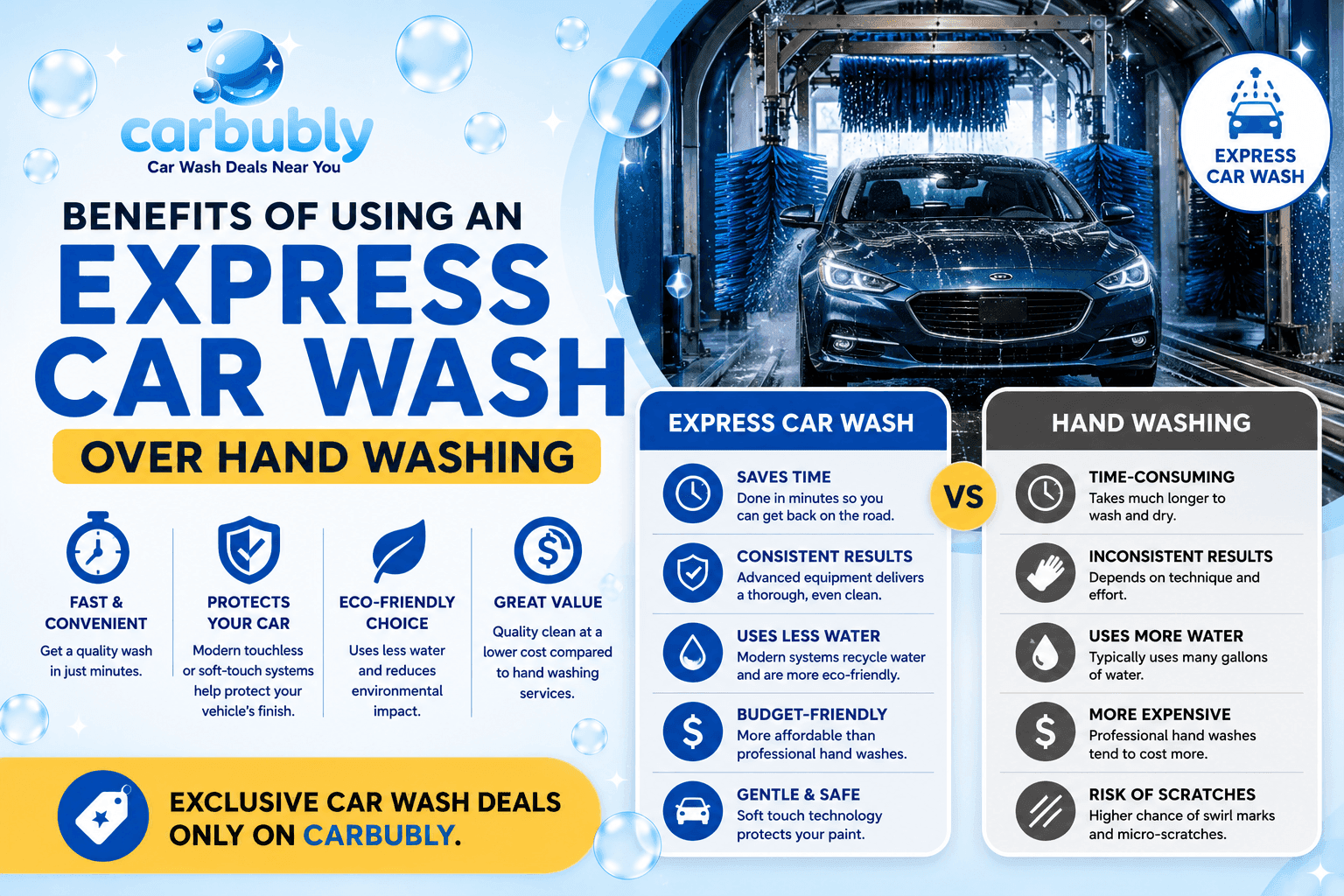
Express car washes clean your vehicle faster, use less water, and often produce more consistent results than hand washing at home. The benefits of using an express car wash over hand washing go well beyond convenience, touching on paint safety, environmental responsibility, and long-term cost efficiency.
Key Takeaways
- Express car washes typically complete a full cycle in 3-5 minutes, compared to 30-60 minutes for hand washing.
- Professional wash systems use significantly less water per vehicle than the average home hand wash.
- Modern express tunnels use pH-balanced soaps and soft materials that reduce the risk of swirl marks on paint.
- Hand washing with improper technique or household products can void paint warranties and cause gradual surface damage.
- For drivers in high-dust or high-pollen regions, regular express washing protects clear coat integrity over time.
- Membership programs at express washes can reduce per-wash costs to under $10 per visit for unlimited monthly plans.
Why Most Drivers Underestimate What an Express Wash Actually Does
Walk past any gas station forecourt and you might still picture the old-school spinning brush tunnels that scratched paint and left streaks on windows. Modern express car washes bear almost no resemblance to those systems. Today's facilities use cloth or foam media specifically engineered to be gentler than a microfiber hand cloth, combined with high-pressure rinse arches, spot-free rinse systems, and reclaimed water technology.
The average American household hand wash uses between 80 and 140 gallons of water, according to data cited by the International Carwash Association. A commercial express wash, by contrast, typically uses 15-45 gallons per vehicle due to water reclamation and recycling systems. That difference matters both for your utility bill and for local water conservation efforts, especially in drought-prone states like California.
Beyond water use, there is the question of what actually touches your paint. At home, many drivers reach for dish soap, a stiff-bristled brush, or an old cotton rag. These materials are too harsh for automotive clear coat finishes. The American Detailing Institute and automotive paint manufacturers consistently warn that improper washing is one of the leading causes of micro-scratching and swirl marks on vehicle surfaces.
Time, Convenience, and the Real Cost Per Wash
How Express Washes Win on Speed
A standard express car wash tunnel takes between 3 and 5 minutes from entry to exit. Add in the queue and payment time and most visits run under 15 minutes total. Hand washing, done properly, takes 30 to 60 minutes minimum. If you factor in drying, wheel cleaning, and a basic tire shine, you are looking at closer to 90 minutes. For someone working a full-time job or managing a family schedule, that time difference is significant.
This speed advantage is why many commuters in high-density areas around cities like sacramento and folsom rely on express washes on a weekly or bi-weekly basis instead of reserving a Saturday afternoon for a home wash.
Breaking Down the Real Cost
Hand washing seems cheaper at first glance because you are not paying a service fee. But add up the true costs and the picture changes:
| Cost Category | Hand Wash (Home) | Express Car Wash |
|---|---|---|
| Water per wash | 80-140 gallons | 15-45 gallons |
| Soap and supplies | $3-$8 per wash amortized | Included in price |
| Time cost (at $20/hr) | $10-$30 | $1-$2.50 |
| Equipment replacement | $50-$200 annually | $0 |
| Total per wash estimate | $15-$40+ | $8-$20 |
When you factor in your time at even a modest hourly rate, hand washing frequently ends up costing more than an express tunnel visit. Many facilities also offer unlimited monthly membership plans ranging from $20 to $35 per month, which drops your effective per-wash cost dramatically if you visit more than twice a month in areas like roseville.
Paint Protection: Where the Science Gets Specific
What Clear Coat Damage Actually Looks Like
Your car's paint system consists of several layers: the primer, the base color coat, and the clear coat on top. The clear coat is what gives your paint its gloss and protects it from UV rays, bird droppings, tree sap, and oxidation. Micro-scratches in the clear coat scatter light and make paint look dull over time, a process that accelerates significantly with improper washing.
According to paint protection research shared by the National Institute of Standards and Technology, surface abrasion at the micro level is cumulative. Every swirl mark from a rough towel or stiff brush is permanent unless polished out professionally. An express car wash using engineered foam or cloth media does not carry the same grit contamination risk that a reused home bucket does in communities like citrus heights.
The Touchless Option for Sensitive Paint
For drivers with ceramic coatings, fresh wraps, or delicate factory finishes, a touchless car wash is worth considering. These systems use high-pressure water jets and chemical detergents without any physical contact with the surface. There is a trade-off: touchless washes may not remove heavy dirt as thoroughly as soft-touch tunnels. But for vehicles that have had recent paint correction work or specialty coatings applied, the no-contact approach minimizes risk.
Environmental Factors That Favor Express Washes
The environmental case for express car washes is stronger than most drivers realize. When you wash your car in the driveway, all of the runoff, including soap, oil residue, road grime, and heavy metals from brake dust, flows directly into storm drains. The U.S. Environmental Protection Agency classifies this kind of residential runoff as a significant non-point source pollutant that reaches local waterways without treatment.
Commercial car washes, by federal and state regulation, are required to route all wash water to the sanitary sewer system or to on-site water reclamation systems for treatment. In California specifically, the State Water Resources Control Board enforces strict guidelines on commercial car wash discharge, which applies to facilities throughout the region including elk grove. This means every express tunnel wash is, by design, more environmentally compliant than a home wash, regardless of how eco-conscious the individual driver tries to be.
For drivers who care about environmental impact, visiting a professional facility is the more responsible choice, not just the more convenient one.
When Hand Washing Still Makes Sense
To be fair about the comparison, hand washing is not without its advantages in specific situations.
Situations where hand washing may be preferable:
- Your vehicle has significant pre-existing damage like loose trim, a cracked antenna, or damaged molding that could catch on tunnel equipment.
- You are preparing for a car show and need precision detailing at every panel edge.
- You want to inspect the vehicle closely while cleaning and address specific problem spots.
- You are applying a wax or sealant by hand and want full control over product placement.
For these scenarios, a hand car wash performed by a professional detailer is a better fit than a DIY driveway job. Trained technicians use proper two-bucket wash methods, pH-neutral soaps, and dedicated wheel cleaners that protect both the paint and the wheel finish.
If your vehicle needs deeper work beyond a routine wash, such as interior cleaning, paint decontamination, or full paint correction, that is where full service car detailing becomes relevant. A full detail is not a substitute for routine washing, but it is the right tool when seasonal buildup, water spots, or oxidation have gone beyond what any wash tunnel can address.
Things to Know
- Not all express washes are equal. Older facilities may use worn brushes or outdated chemical blends that can cause mild scratching. Look for newer tunnels that advertise soft-cloth or foam-media systems.
- Rinse-aid matters. Spot-free rinse arches that use reverse-osmosis-filtered water leave significantly fewer water spots than standard rinse arches, especially in hard-water areas.
- Underbody flushes are valuable in winter. If you live in a region that uses road salt, choose an express wash that includes an underbody rinse to prevent corrosion on frame components and brake lines.
- Pre-soaking loosens the real dirt. Quality express tunnels apply a pre-soak chemical arch before the main wash media. This step dissolves road film before anything physically contacts the paint, which is the main reason modern tunnels clean without scratching.
- Frequency matters more than intensity. Washing every 1-2 weeks with an express wash causes less cumulative paint damage than washing monthly with an aggressive hand wash method.
- Check for vehicle restrictions. Most express washes cannot accommodate vehicles over 7 feet tall, trucks with extended mirrors, or cars with external roof racks. Confirm clearances before entering.
How to Choose the Right Express Wash for Your Vehicle
Not every vehicle has the same needs, and not every facility offers the same quality. Here is what to look for:
- Cloth or foam media: This should be listed on the facility's website or signage. Avoid older brush systems.
- Water reclamation system: Look for facilities that advertise water recycling. This is a mark of a professionally operated facility.
- Chemical menu: Higher-end express washes let you add tire dressing, ceramic sealant, or rain-repellent glass coating to a basic tunnel wash.
- Staff and equipment condition: A well-maintained facility takes care of its equipment. Worn belts, dirty solution tanks, and unmaintained brushes are red flags.
- Membership value: If you plan to wash more than twice a month, calculate whether a monthly membership makes financial sense versus paying per visit.
Services like Carbubly make it easy to find local express wash options with service details, pricing, and locations in one place so you can compare before you commit, whether you are in rancho cordova, davis, or west sacramento.
Ready to Protect Your Paint the Smarter Way?
The next time your car is due for a wash, skip the driveway bucket and find a reputable express tunnel near you at a place that specializes in modern car care. Compare the monthly membership pricing against your current hand-washing supply costs, and factor in the 45 minutes you will get back. For most drivers washing more than twice a month, the membership math alone makes the switch worth it. If your vehicle is already showing signs of swirl marks or oxidation from past improper washing, book a professional detail first to reset the paint condition, then maintain it with regular express wash visits going forward.
Frequently Asked Questions
Q: Will an express car wash damage my car's paint?
A modern express car wash using soft-cloth or foam media is very unlikely to damage your paint if the facility maintains its equipment properly.
Older tunnel systems using stiff nylon brushes carry a higher risk of light scratching, but current generation facilities are engineered specifically to be gentler than a typical hand wash. The key is choosing a facility that uses soft media and fresh chemical solutions rather than an older brush-style system.
Q: How often should I use an express car wash?
Most automotive experts recommend washing your vehicle every one to two weeks to prevent contaminant buildup that degrades clear coat and paint finish.
In dusty environments, high-pollen seasons, or winter months when road salt is used, washing more frequently is advisable. Consistent light washing is less damaging to paint than infrequent aggressive cleaning sessions.
Q: Is a touchless car wash better than a soft-cloth express wash?
Touchless washes eliminate all physical contact risk but may not remove heavy soiling as effectively as soft-cloth tunnels, so the better option depends on your paint condition and the level of dirt on the vehicle.
If your car has a ceramic coating, fresh wrap, or recently corrected paint, a touchless wash minimizes risk. For everyday maintenance cleaning, a well-maintained soft-cloth tunnel typically provides a more thorough result.
Q: Can an express car wash clean my wheels properly?
Quality express car washes include dedicated wheel-cleaning arches with high-pressure spray and wheel-specific chemical pre-soaks that remove brake dust and road grime effectively.
However, heavily corroded or brake-dust-caked wheels may need an additional hand wheel-cleaning step for best results. Many facilities offer this as an add-on service.
Q: Are express car wash memberships worth the cost?
For drivers who wash their vehicle more than twice per month, an unlimited membership plan almost always pays for itself and reduces the average cost per wash significantly.
Most unlimited plans range from $20 to $35 per month. If a single wash costs $12 to $18 without a membership, two washes per month already puts you near or over the membership price, making any additional washes essentially free.
The Bottom Line on Benefits of Using an Express Car Wash Over Hand Washing
The benefits of using an express car wash over hand washing are clearest when you look at the full picture: less water used, less time spent, less risk to your paint, and lower real-world cost per wash when you account for supplies and your own time. Modern express tunnel technology has closed the gap between convenience and quality in a way that home washing simply cannot match for routine maintenance needs.
For most drivers, the practical next step is straightforward. Find a nearby express facility, ask about their media type and water reclamation system, and consider a monthly membership if you wash frequently. Your car's paint will last longer, your weekends will be freer, and your environmental footprint per wash will be measurably smaller.